AI Hiring Transparency Lawsuit and What Recruiters Must Know
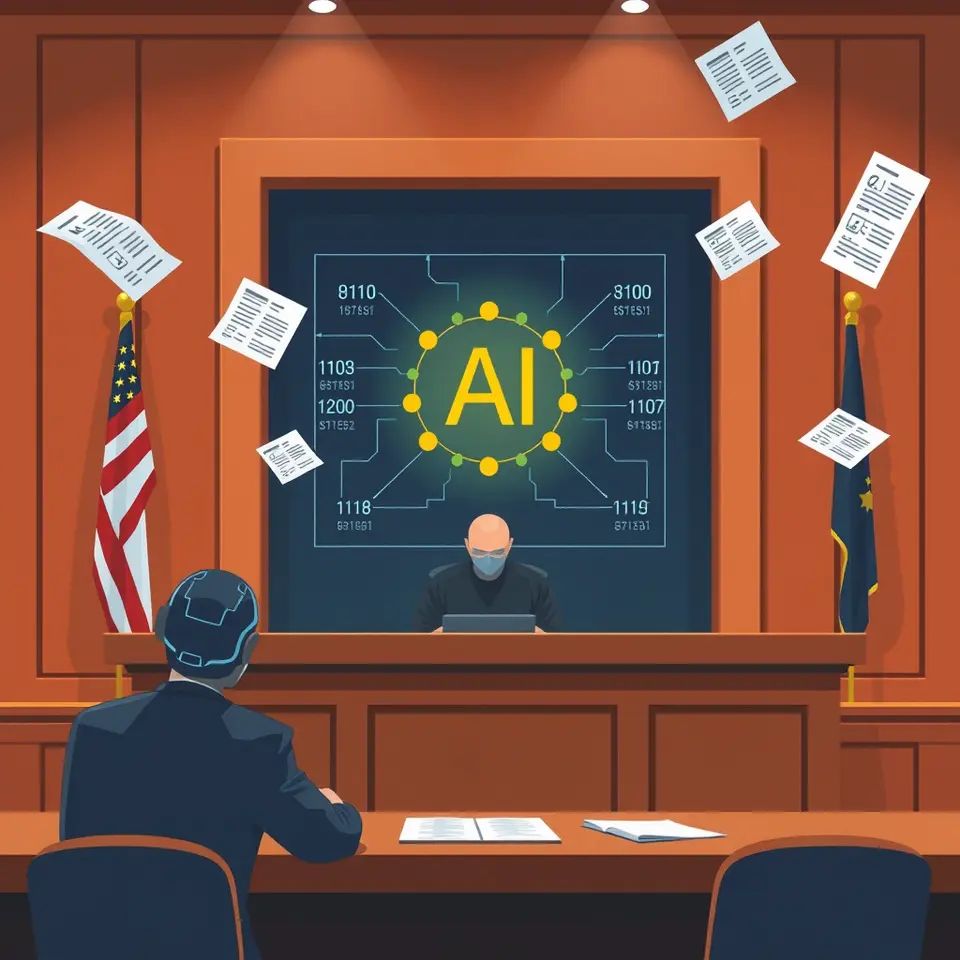
- The landmark lawsuit demands transparency from AI-driven recruitment platforms regarding their screening algorithms.
- Legal arguments emphasize applicants’ rights to understand AI decisions affecting their job eligibility.
- Implications for HR include increased compliance costs and pressures to adopt explainable AI practices.
- Proactive strategies for HR teams involve auditing AI tools and implementing oversight checks.
Table of Contents
- Background of the Lawsuit
- Legal Arguments and Demands
- Implications for AI Hiring Platforms
- Practical Guidance for HR Professionals
- Future Outlook and Industry Trends
Job Applicants Sue to Open the ‘Black Box’ of AI Hiring Decisions – What It Means for Recruiters
Breaking News – January 21, 2026 – A coalition of job seekers has filed a federal class‑action lawsuit demanding that employers and AI‑driven recruitment platforms disclose the inner workings of their automated screening algorithms. The case, filed in the U.S. District Court for the Northern District of California, alleges that the opaque nature of these tools violates applicants’ due‑process rights and perpetuates unlawful discrimination.
Background of the Lawsuit
The plaintiffs, represented by the civil‑rights firm Equal Opportunity Tech Law, claim that dozens of major hiring platforms—including well‑known AI‑screening services used by Fortune 500 firms—refuse to reveal how candidate data is weighted, scored, or filtered. The complaint cites three core grievances:
- Denial of access to the algorithmic logic that determines interview eligibility.
- Insufficient notice about the use of AI in the hiring pipeline.
- Evidence that the black‑box models produce disparate impact on protected classes such as women, minorities, and older workers.
According to the filing, at least 3,200 applicants have been denied interviews after their résumés were processed by AI tools that evaluate factors ranging from keyword density to inferred personality traits. The plaintiffs argue that without transparency, they cannot challenge potentially biased outcomes.
Legal Arguments and Demands
Attorney Maya Patel, lead counsel for the plaintiffs, told reporters, “When a machine makes a decision that can affect a person’s livelihood, the person has a right to understand how that decision was reached.” The lawsuit invokes the Equal Employment Opportunity Commission’s (EEOC) disparate‑impact doctrine and the Federal Trade Commission’s (FTC) unfair‑or‑deceptive practices rule.
The plaintiffs seek a court order compelling:
- Full disclosure of the algorithmic model architecture, training data sources, and weighting schemes.
- Implementation of an independent audit by a certified third‑party to assess bias.
- Compensatory damages for applicants who can demonstrate that the opaque system caused them measurable harm.
Legal experts note that the case could set a precedent similar to the 2020 Carpenter v. United States decision, which expanded privacy rights in the digital age. Professor Daniel Kim of Stanford Law School remarked, “If the court sides with the plaintiffs, we could see a wave of ‘algorithmic transparency’ mandates across all sectors that use AI for decision‑making.”
Implications for AI Hiring Platforms
Recruitment technology vendors are scrambling to assess the potential impact. A spokesperson for HireAI, one of the platforms named in the complaint, said the company “is committed to responsible AI and is already working with external auditors to validate fairness.” However, the company declined to comment on specific model details, citing proprietary concerns.
Industry analysts predict three immediate outcomes:
- Increased compliance costs: Companies may need to invest in explainable‑AI (XAI) solutions, which can add 10‑15% to the total cost of an AI hiring suite.
- Shift toward open‑source models: Start‑ups offering transparent, community‑vetted algorithms could gain a competitive edge.
- Regulatory ripple effects: The European Union’s AI Act, already in force, may inspire similar state‑level legislation in the U.S., such as the proposed Algorithmic Accountability for Employment Act in California.
For HR departments, the lawsuit underscores the need to balance efficiency gains with ethical safeguards. A recent Mumtazawan report on AI data privacy concerns highlighted that 68% of HR leaders feel “moderately prepared” to handle AI‑related privacy issues, indicating a skills gap that must be addressed.
Practical Guidance for HR Professionals
While the legal battle unfolds, HR teams can take proactive steps to mitigate risk:
- Audit existing AI tools: Conduct a thorough review of vendor contracts to identify clauses related to algorithmic transparency and bias mitigation.
- Implement human‑in‑the‑loop (HITL) checks: Ensure that a qualified recruiter reviews every AI‑generated shortlist before final decisions are made.
- Document decision‑making processes: Keep detailed logs of how candidates are evaluated, which can serve as evidence if a dispute arises.
- Invest in training: Upskill talent acquisition teams on explainable‑AI concepts. The Mumtazawan guide on AI tools for workforce education offers a curriculum that can be adapted for internal use.
- Engage with vendors on transparency: Request model cards, data sheets, and third‑party audit reports as part of procurement negotiations.
“Transparency isn’t just a legal checkbox; it’s a trust builder,” says Laura Chen, Chief Talent Officer at a mid‑size tech firm that recently switched to an open‑source screening engine. “Our candidates appreciate knowing exactly how their information is used.”
Future Outlook and Industry Trends
Regardless of the lawsuit’s outcome, the pressure for algorithmic openness is mounting. A 2025 survey by the International Association of AI Professionals found that 74% of enterprises plan to adopt explainable‑AI frameworks within the next two years.
Emerging technologies—such as shadow AI workflow disruption tools that monitor and log AI decisions in real time—are gaining traction as compliance aids. Moreover, the rise of “AI‑first” HR platforms that embed XAI modules from the ground up could redefine the recruitment landscape.
For now, the lawsuit serves as a wake‑up call: the era of opaque, fully automated hiring is under scrutiny, and organizations that prioritize transparency will likely emerge as the industry leaders of tomorrow.
Stay updated on this developing story and explore more insights on AI’s impact across sectors by visiting Mumtazawan’s homepage. Additional reading includes our analysis of the AI adoption reliance gap and the latest on AI tools driving scientific progress.
Frequently Asked Questions
What is the AI hiring transparency lawsuit about?
The lawsuit demands disclosure of AI hiring algorithms used by employers to ensure fairness and transparency in recruitment processes.
Who are the plaintiffs in the case?
A coalition of job seekers represented by the civil‑rights firm Equal Opportunity Tech Law.
What are the core grievances of the lawsuit?
The denial of access to algorithmic logic, insufficient notice about AI use, and evidence of potential discrimination against protected classes.
What outcomes might arise from this lawsuit?
The case could lead to increased costs for compliance, a push toward open-source hiring models, and regulatory changes inspired by the European Union’s AI Act.
How can HR departments prepare for the implications of this lawsuit?
HR teams can audit AI tools, implement human checks, document processes, and engage with vendors to ensure transparency.