OpenAI Prism Launches No‑Code AI Workflow Platform
Key takeaways
- OpenAI’s Prism offers a no-code AI platform for automating workflows.
- Prism features include dynamic prompt engineering, real-time data integration, and compliance guardrails.
- The platform integrates seamlessly with existing automation tools.
- Prism significantly reduces time-to-deployment for automation projects.
- Security and compliance measures are emphasized to protect sensitive data.
Table of contents
What is Prism and How Does It Work?
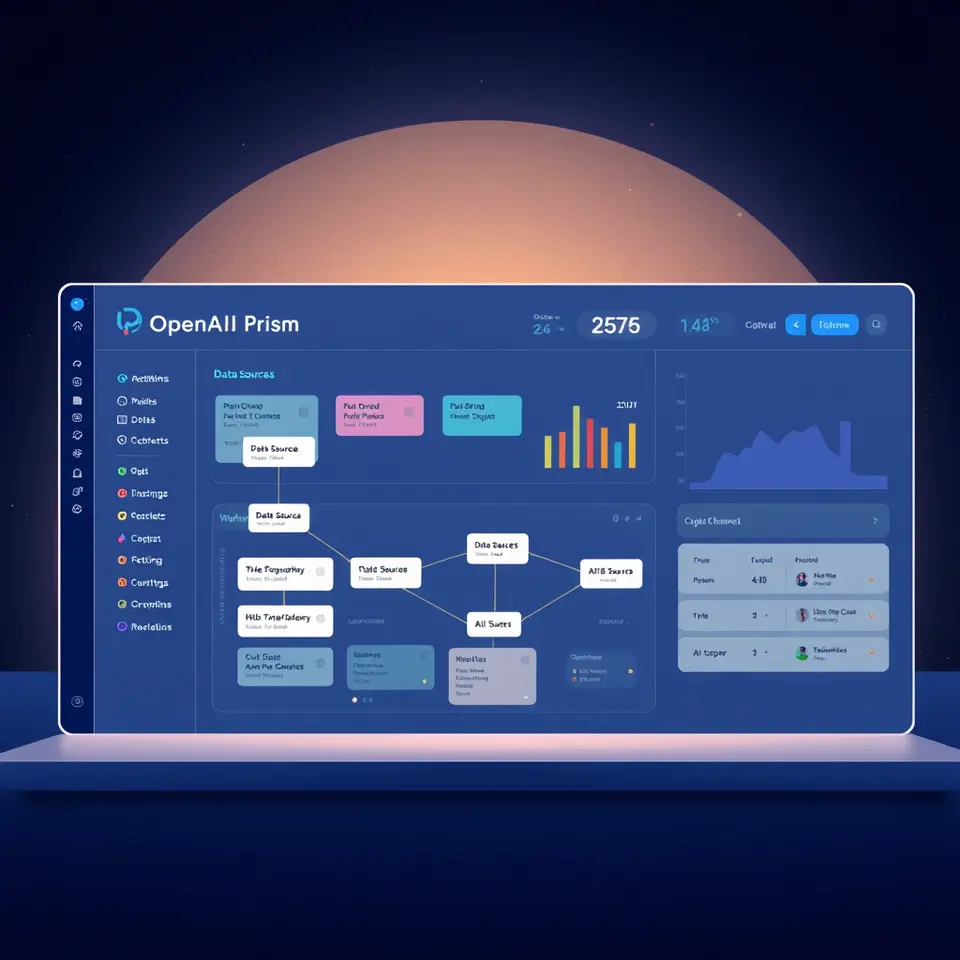
At its core, Prism combines OpenAI’s latest generative models with a visual workflow builder that resembles popular automation tools such as n8n, Zapier, and Microsoft Power Automate. Users can drag and drop nodes representing data sources, AI actions, conditional logic, and output channels, then connect them to create end-to-end processes without writing a single line of code.
Key capabilities include:
- Dynamic Prompt Engineering: The platform automatically tailors prompts to the context of each workflow step, reducing the need for manual prompt tweaking.
- Real-time Data Integration: Native connectors for CRM systems (Salesforce, HubSpot), HRIS platforms (Workday, BambooHR), and cloud storage services (AWS S3, Google Drive).
- Human-in-the-Loop Controls: Built-in review checkpoints let managers approve AI-generated outputs before they reach end users.
- Compliance Guardrails: Pre-configured policies help organizations meet GDPR, CCPA, and emerging AI-specific regulations.
According to OpenAI’s product lead, Dr. Maya Patel, “Prism is the first platform that lets enterprises harness the full power of large-language models while keeping governance, security, and usability front-and-center.” The announcement was made at the company’s annual Future of Work summit, where live demos showcased a recruiting bot that screened resumes, drafted interview questions, and scheduled meetings in under two minutes.
Integration with Existing Automation Ecosystems
Prism does not aim to replace existing automation stacks; instead, it offers a “best-of-both-worlds” approach by providing deep OpenAI model integration alongside compatibility with established workflow engines. Companies already using n8n, for example, can import their existing flows into Prism and enhance them with generative AI capabilities.
“Our early adopters have reported a 30-40% reduction in time-to-deployment for new automation projects,” said Alex Gomez, CTO of AITechScope, a leading provider of virtual-assistant services. “By abstracting the complexity of prompt design and model selection, Prism lets our developers focus on business logic rather than AI plumbing.”
Prism also supports API-first access, allowing developers to call its AI services from custom applications, mobile apps, or internal dashboards. This flexibility is especially valuable for tech firms that need to embed AI features into product suites without exposing raw model endpoints.
Security, Privacy, and Compliance
Security remains a top concern for CIOs; a 2025 Gartner survey found that 78% of senior IT leaders cite data protection as the primary barrier to AI adoption. Prism addresses these worries with end-to-end encryption, role-based access controls, and optional on-premise deployment for highly regulated industries.
Compliance officer Rajesh Kumar of FinTech Corp explained, “Prism’s built-in audit logs and automated privacy checks give us confidence that candidate data and employee records stay within the boundaries of GDPR and the upcoming AI Act.” The platform also offers a data-locality toggle, enabling organizations to keep sensitive information within specific geographic regions.
Implications for HR Professionals and Recruitment Technology
The HR sector is one of the fastest adopters of AI-enabled workflow tools. A recent survey by the Society for Human Resource Management (SHRM) found that 45% of large enterprises plan to invest in AI-driven recruitment automation within the next 12 months. Prism directly addresses several pain points highlighted in that survey:
- Resume Screening at Scale: By leveraging OpenAI’s contextual understanding, Prism can parse unstructured CVs, extract relevant skills, and rank candidates against job requirements.
- Bias Mitigation: Built-in fairness modules audit AI decisions for gender, ethnicity, and age bias, providing audit logs for compliance teams.
- Candidate Experience: Automated, personalized communication keeps applicants informed, reducing drop-off rates by up to 25% in pilot programs.
HR director Lina Chen of GlobalTech Solutions shared her experience: “We built a Prism workflow that handles initial candidate outreach and interview scheduling. The system reduced our recruiter workload by 22 hours per week and improved our time-to-hire metric from 38 days to 27 days.“
For recruitment technology vendors, Prism opens a new revenue stream: offering “AI-as-a-service” modules that can be white-labeled and sold to SMBs lacking in-house data science expertise. This aligns with the broader trend of AI-powered SaaS platforms democratizing access to advanced models.
Case Study: RetailCo Cuts Onboarding Time in Half
RetailCo, a mid-size retailer with 3,200 employees, piloted Prism to automate new-hire onboarding. The workflow collected candidate information, generated personalized welcome packets, scheduled orientation sessions, and provisioned IT accounts—all without manual intervention. After a three-month trial, RetailCo reported a 52% reduction in onboarding cycle time and a 19% increase in new-hire satisfaction scores.
Future Outlook and Industry Adoption
While Prism’s launch marks a significant milestone, analysts caution that widespread adoption will depend on three factors:
- Regulatory Clarity: As governments introduce AI-specific legislation, platforms must adapt quickly to stay compliant. OpenAI’s pre-emptive compliance guardrails could give Prism a competitive edge.
- Data Privacy Concerns: Enterprises must ensure that sensitive employee or candidate data processed by AI models remains protected. OpenAI’s data-usage policies and on-premise deployment options are expected to address these worries.
- Skill Gap: Even with no-code interfaces, organizations need staff who understand AI fundamentals to design effective prompts and interpret model outputs.
In the coming months, OpenAI plans to roll out additional features such as multi-modal support (text, image, and audio), deeper integration with Microsoft Teams, and a marketplace for third-party Prism templates. Early partners, including AITechScope, are already co-creating industry-specific templates for finance, healthcare, and manufacturing.
For HR leaders and tech executives, the message is clear: AI workflow automation is moving from experimental labs into production-grade tools. Prism could become the backbone of next-generation digital workplaces, enabling faster decision-making, higher employee productivity, and more transparent hiring practices.
To stay ahead, organizations should start evaluating their current automation stack, identify low-hanging-fruit processes for AI augmentation, and pilot Prism’s sandbox environment. As Dr. Patel emphasized, “The future of work is collaborative—human expertise guided by intelligent assistants. Prism is our invitation to that future.“
FAQs
What is OpenAI Prism?
OpenAI Prism is a no-code AI workflow platform that allows businesses to design and manage automated workflows using a visual builder.
How does Prism enhance automation?
Prism integrates OpenAI’s generative models with a visual workflow builder to automate tasks without needing code, streamlining processes for various departments.
What security features does Prism include?
Prism includes end-to-end encryption, role-based access controls, and compliance features to ensure data protection and privacy.
Can Prism integrate with existing tools?
Yes, Prism is designed to integrate with existing automation tools and workflow engines, allowing easy import of current workflows.
How can organizations adopt Prism?
Organizations can start by evaluating their current automation processes, identifying opportunities for AI integration, and piloting Prism’s features.