AI Leadership Drives Success in the Second Wave
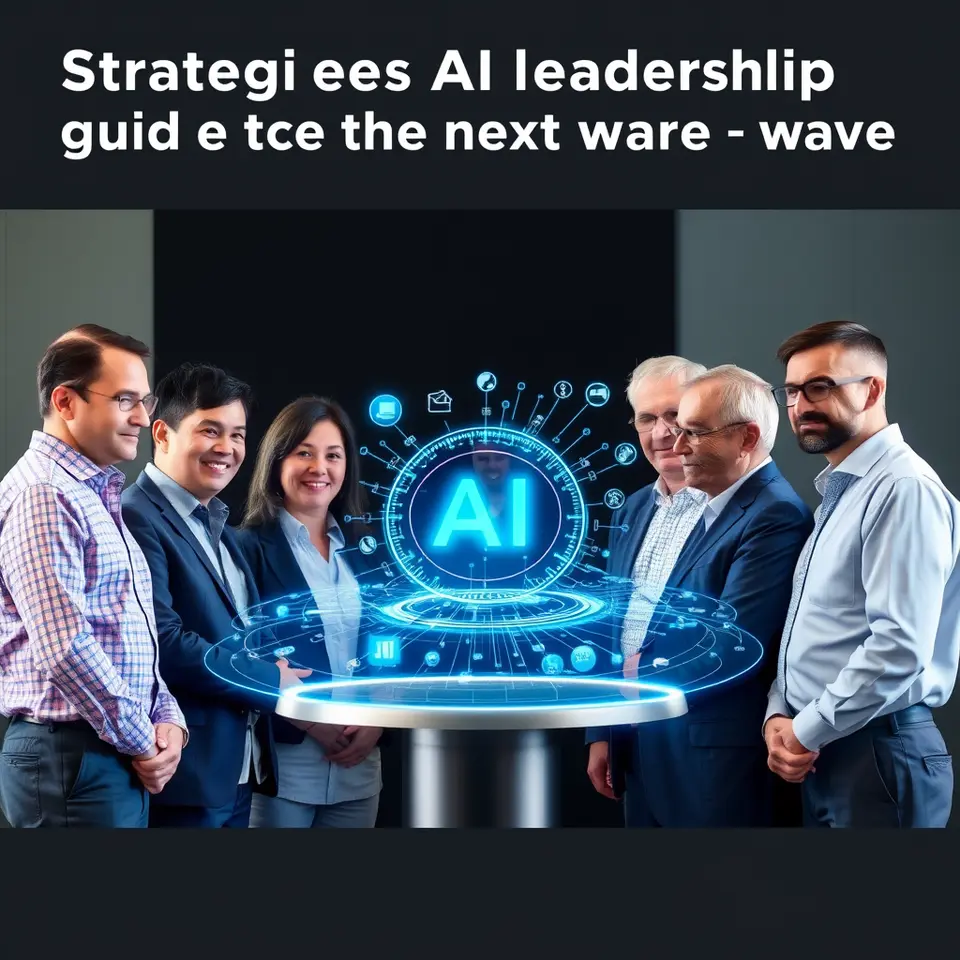
- Leadership quality is pivotal for AI deployment success.
- AI must align with strategic business goals for impactful outcomes.
- Effective governance in AI usage is becoming a regulatory requirement.
- Investing in workforce upskilling is critical for harnessing AI’s full potential.
- Organizations that embrace a culture of experimentation will thrive.
Table of Contents
- Why the Second Wave Matters Now
- Leadership as the Differentiator
- Practical Steps for HR and Tech Leaders
- Future Outlook: What’s Next for the AI-Driven Workforce?
Why the Second Wave Matters Now
Breaking News – 27 January 2026: As enterprises rush to adopt generative AI, a new study from the National CIO Review warns that the forthcoming “second wave” of artificial intelligence will be defined less by the sophistication of algorithms and more by the quality of leadership steering their deployment. The report, titled “The Second Wave of AI: Why Leadership, Not Tools, Will Define The Winners,” underscores a shift from tool‑centric hype to strategy‑centric execution, a transition that could reshape hiring, workforce planning, and competitive advantage across sectors.
During the first AI surge (2018‑2023), organizations invested heavily in large‑language models, vision APIs, and low‑code automation platforms. While many achieved short‑term gains, a Gartner analysis cited in the review reveals that 78% of AI initiatives stalled or failed without strong executive sponsorship. The second wave, emerging in 2025‑2027, is expected to be more integrated, with AI embedded in core business processes, decision‑making engines, and talent management systems.
According to the review, the key differentiators for success will be:
- Strategic alignment: AI projects must tie directly to measurable business outcomes.
- Change‑management capability: Leaders need to orchestrate cultural shifts and reskill workforces.
- Governance and ethics: Transparent AI use will become a regulatory requirement.
For HR professionals, this means moving beyond “AI‑tool scouting” to becoming active partners in defining AI‑enabled talent strategies.
Leadership as the Differentiator
“Technology is a catalyst, not a cure,” says Maya Patel, Chief Digital Officer at a Fortune‑500 manufacturing firm. “What separates the winners from the laggards is a leadership team that can translate AI potential into a clear, organization‑wide roadmap.”
Patel’s observation aligns with findings from the National CIO Review, which identified three leadership traits that correlate with AI success:
- Visionary foresight: Executives who anticipate AI’s impact on market dynamics and workforce composition.
- Data‑driven decision making: Leaders who champion robust data pipelines and quality assurance.
- Collaborative mindset: CEOs and CHROs who break down silos between IT, operations, and people functions.
Companies that have already embraced these traits are seeing tangible returns. A recent case study from AI Automation for SMB Tools shows a mid‑size retailer increasing order‑to‑delivery speed by 32% after senior leadership mandated an AI‑driven inventory optimizer.
Conversely, organizations that treat AI as a plug‑and‑play solution risk “shadow AI” proliferation—unauthorised tools that bypass governance, leading to data leaks and compliance breaches. For a deeper dive on this risk, see Shadow AI Workflow Disruption.
Practical Steps for HR and Tech Leaders
To translate the leadership imperative into actionable plans, HR and technology executives should consider the following framework:
1. Conduct an AI Readiness Audit
Map existing data assets, skill gaps, and process bottlenecks. The audit should answer: Which business outcomes can AI realistically accelerate? The National CIO Review recommends a cross‑functional task force that includes CHROs, CIOs, and line‑of‑business heads.
2. Define Clear Success Metrics
Instead of vague KPIs like “increase AI usage,” set quantifiable goals—e.g., “reduce recruitment cycle time by 25% using AI‑screening bots.” A recent AI Adoption Reliance Gap report shows firms with explicit metrics achieve 2.3× higher ROI.
3. Upskill and Reskill the Workforce
Invest in AI literacy programs for non‑technical staff. Companies such as AITechScope have rolled out n8n workflow bootcamps, enabling business analysts to build automation without writing code. This democratization reduces reliance on scarce data scientists and accelerates time‑to‑value.
4. Embed Governance Early
Adopt AI ethics guidelines, model‑explainability standards, and audit trails from day one. Regulatory bodies in the EU and US are expected to tighten AI transparency rules by 2027, making early compliance a competitive advantage.
5. Foster a Culture of Experimentation
Encourage pilot projects with rapid iteration cycles. Celebrate both wins and learnings to normalize failure as a stepping stone. As highlighted in AI Tools Scientific Progress, organizations that iterate quickly capture 40% more innovation value.
Future Outlook: What’s Next for the AI-Driven Workforce?
Looking ahead, analysts predict three macro‑trends that will amplify the leadership‑first narrative:
- Hyper‑personalized employee experiences: AI will power real‑time skill recommendations, wellness nudges, and career path simulations.
- AI‑augmented decision ecosystems: Boardrooms will rely on AI‑generated scenario modeling for strategic planning.
- Regulatory convergence: Global standards on AI transparency will force firms to adopt unified governance frameworks.
Companies that position their leadership teams at the intersection of technology, people, and policy will not only survive the second wave—they will define it. As Maya Patel concludes, “The future belongs to those who can lead AI responsibly, not just those who can buy the latest model.”
For more insights on how AI is reshaping talent management, visit our homepage and explore the latest articles on workforce innovation.
FAQ
Q: What defines the second wave of AI?
A: The second wave of AI is characterized by the quality of leadership in deploying AI rather than just the tools used.
Q: Why is leadership important in AI adoption?
A: Leadership is crucial as it drives strategic alignment, change management, and ethical governance in AI projects, impacting their success.
Q: What are the practical steps for companies implementing AI?
A: Companies should conduct readiness audits, define success metrics, upskill workforces, embed governance, and foster a culture of experimentation.