Physical AI’s ChatGPT Moment and Its Workforce Impact
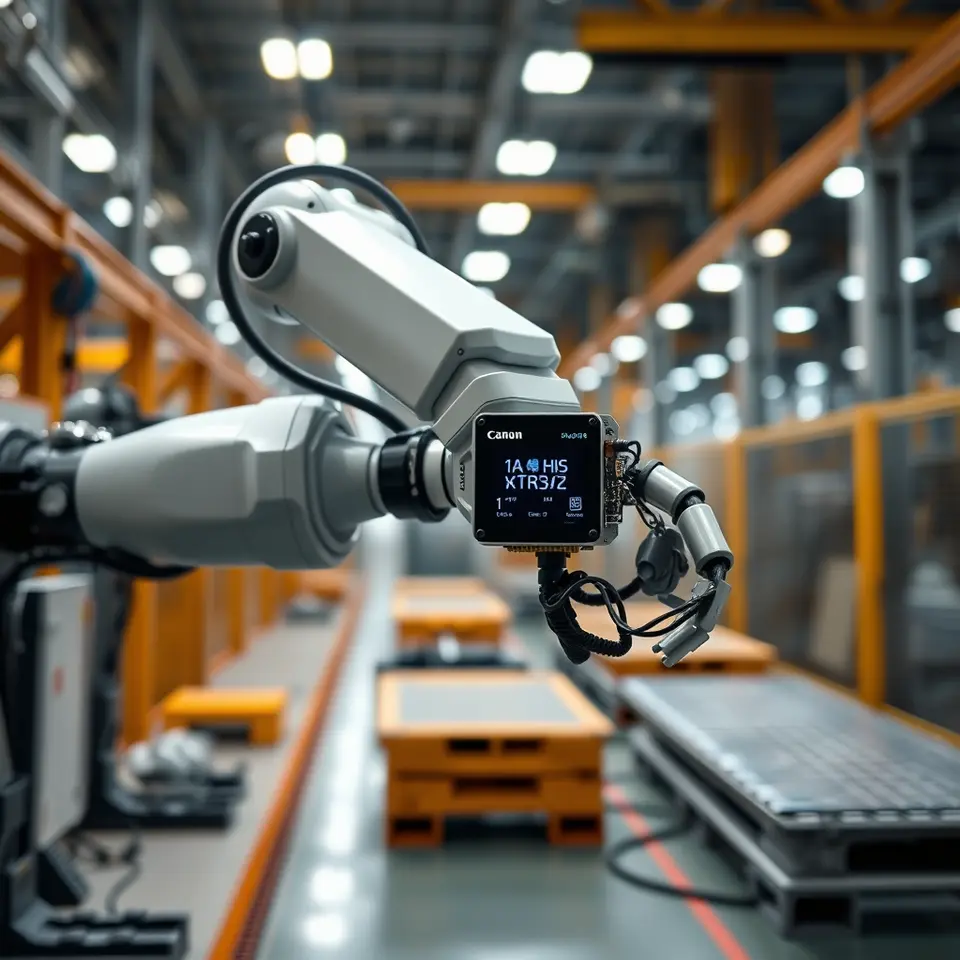
- Nvidia’s CEO declares a significant shift towards physical AI comparable to the ‘ChatGPT moment’.
- Physical AI combines generative models with real-world systems for automation and efficiency.
- HR professionals must strategize for workforce reskilling as automation grows.
- Expect rapid advancements and regulatory frameworks surrounding physical AI in the coming months.
- Breaking: Nvidia’s Bold Claim About Physical AI
- What Physical AI Means for Automation and Workforce Efficiency
- Implications for HR Professionals and Recruitment Technology
- Industry Outlook & Future Trends
Breaking: Nvidia’s Bold Claim About Physical AI
In a statement that has reverberated across the tech ecosystem, Nvidia’s CEO Jensen Huang announced on January 31, 2026 that the “ChatGPT moment” for physical AI is finally here. Huang, speaking at the company’s annual AI Summit in San Jose, suggested that the convergence of advanced generative models with edge‑processing hardware will unlock a new era of intelligent automation, from autonomous manufacturing lines to real‑time medical diagnostics.
“We’ve reached a tipping point where the same breakthroughs that powered ChatGPT are now being embedded into physical systems that interact directly with the world,” Huang said. “This isn’t just about software; it’s about hardware, data pipelines, and the trust people place in machines that can learn and act autonomously.”
Industry analysts note that Nvidia’s claim follows a 30% YoY increase in sales of its DGX‑A100 AI supercomputers and a 45% rise in demand for its Jetson edge platform. The company’s recent partnership with major automotive OEMs and robotics firms signals a shift from cloud‑centric AI to distributed, real‑time intelligence.
What Physical AI Means for Automation and Workforce Efficiency
Physical AI refers to systems that combine generative language models with sensors, actuators, and embedded processors to perform tasks that traditionally required human intervention. For example, a Jetson‑powered robot could read a patient’s vitals, interpret the data with a GPT‑style model, and adjust medication dosage in real time—all without a clinician’s direct input.
AITechScope, a leading provider of virtual assistant services, is already deploying such solutions in mid‑size enterprises. Their platform leverages AI‑powered automation, n8n workflow development, and business process optimization to reduce operational costs by up to 25% and improve task completion speed by 40%.
According to a recent study on SMB AI automation, companies that integrate physical AI into their supply chains report a 30% reduction in error rates and a 20% increase in throughput. These gains translate directly into higher productivity and a more agile workforce.
However, the shift also raises questions about data privacy and ethical use. Data privacy concerns are amplified when AI systems operate in real‑time environments, especially in healthcare and finance. Companies must now navigate not only regulatory compliance but also the social contract of trust between humans and machines.
Implications for HR Professionals and Recruitment Technology
HR leaders are watching the physical AI wave closely. The technology promises to automate routine tasks—scheduling, onboarding, and even performance reviews—freeing HR staff to focus on strategic initiatives. Yet, the same automation could displace roles that have historically been low‑skill, creating a need for reskilling programs.
Recruitment technology firms are already adapting. AI‑driven talent platforms can now assess candidates’ technical aptitude through simulated real‑world scenarios powered by generative models. This allows for a more nuanced evaluation of a candidate’s ability to work alongside autonomous systems.
One notable development is the integration of AI workflow publishing tools, such as those discussed in our coverage of AI workflow publishing. These tools enable HR teams to design and deploy automated hiring pipelines that adapt in real time to candidate responses, improving both speed and quality of hire.
Moreover, the rise of physical AI demands new competencies in the workforce. According to a 2026 Gartner report, 70% of tech roles will require some level of AI fluency by 2030. HR professionals must therefore incorporate AI literacy into training curricula and consider AI‑centric job descriptions when recruiting.
Industry Outlook & Future Trends
While Nvidia’s CEO paints an optimistic picture, experts caution that the transition to physical AI will be uneven across sectors. Manufacturing and logistics are poised to benefit first, thanks to existing automation infrastructure. In contrast, service industries may face a longer adoption curve due to higher regulatory scrutiny and the need for human oversight.
In the coming months, we expect to see:
- Increased collaboration between AI hardware vendors and software developers to create turnkey physical AI solutions.
- Growth in AI‑powered virtual assistants—like those offered by AITechScope—that bridge the gap between generative models and physical execution.
- Stronger regulatory frameworks addressing the safety, accountability, and transparency of autonomous systems.
- Expanded reskilling initiatives to prepare the workforce for roles that blend human judgment with machine intelligence.
For businesses looking to stay ahead, the key will be early experimentation and partnership with AI specialists. As Nvidia’s CEO rightly points out, the “ChatGPT moment” for physical AI is not a distant horizon—it is unfolding today. Companies that embrace this shift early will likely secure a competitive edge in efficiency, innovation, and talent attraction.
To explore more about how AI is reshaping the workforce, visit our AI automation workflows for dealer operations guide or learn about SMB AI tools. For a broader view of AI trends, check out our AI adoption reliance gap analysis. Finally, for the latest on AI governance, read our AI tool governance and business instability piece.
Visit our main page for more tech‑related news and insights.
It refers to a significant breakthrough in physical AI technology, similar to the advancements made by ChatGPT in the language processing field. This shift allows for the integration of AI models into physical systems that can operate autonomously.
Physical AI will automate many routine tasks, potentially displacing some roles while simultaneously creating a demand for new skills and reskilling initiatives to handle more sophisticated tasks.
Manufacturing and logistics are likely to see the fastest benefits due to their existing automation processes, while service industries may face a longer adoption period.
Data privacy and ethical use are significant concerns, especially in sensitive sectors like healthcare and finance. Companies must ensure compliance with regulations and maintain trust with users.
Businesses should engage in early experimentation, partner with AI specialists, and implement reskilling programs for employees to stay competitive in this evolving landscape.