Nvidia CEO Calls Physical AI the New ChatGPT Moment
Key Takeaways
- Nvidia’s CEO, Jensen Huang, announces a ‘ChatGPT moment’ for physical AI, transforming industry dynamics.
- Convergence of LLMs, robotics, and edge computing will drive unprecedented automation.
- HR leaders must prepare for reskilling as AI changes the landscape of talent acquisition.
- Real-world applications are already visible in sectors like automotive, healthcare, and retail.
- Despite the potential, challenges in data privacy, ethical considerations, and security remain critical.
Table of Contents
- Breaking: Nvidia’s Vision for Physical AI Signals a New Era
- From ChatGPT to Physical AI: What the Shift Means
- Implications for HR Professionals and Tech Companies
- Real-World Applications and Case Studies
- Challenges and Risks
- Future Outlook: The Second Wave of AI Innovation
Breaking: Nvidia’s Vision for Physical AI Signals a New Era
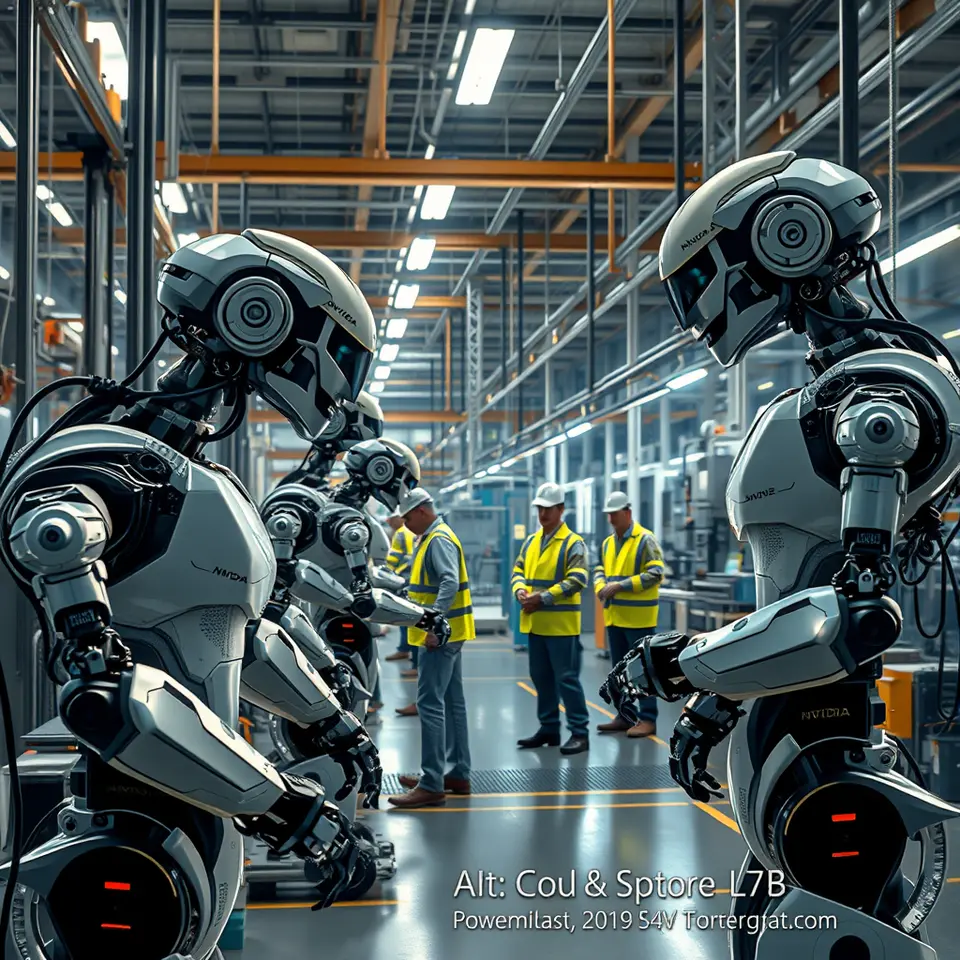
On January 31, 2026, Jensen Huang, CEO of Nvidia, announced in a high‑profile interview that the company believes the “ChatGPT moment” has arrived for physical AI. The statement, originally reported by The Motley Fool, suggests that the convergence of large language models (LLMs) with robotics and edge computing will unlock unprecedented automation capabilities across manufacturing, logistics, and service industries.
Huang emphasized that Nvidia’s recent hardware innovations—particularly the Hopper GPU architecture and the new AI‑optimized silicon—are designed to run LLMs directly on the edge, reducing latency and enabling real‑time decision making in physical environments. “We are moving from software‑centric AI to embodied AI,” he said. “The next wave of productivity will be powered by machines that can understand natural language and act autonomously on the factory floor, in warehouses, and even in hospitals.
From ChatGPT to Physical AI: What the Shift Means
The term “ChatGPT moment” has become shorthand for the rapid adoption of generative AI models that can produce human‑like text, code, and even images. Nvidia’s CEO is extending that concept to the physical world, arguing that the same underlying technology can now be embedded in sensors, actuators, and control systems. This shift has several implications:
- Automation acceleration – LLMs can interpret complex instructions, troubleshoot errors, and optimize processes without human intervention.
- Talent re‑allocation – Engineers will focus more on system integration and oversight rather than routine programming tasks.
- New product categories – Companies can offer AI‑driven robotics as a service, opening new revenue streams.
Industry analysts predict that by 2030, physical AI will account for up to 30% of total AI spending, up from less than 5% today. This rapid growth will require a workforce that is both technically proficient and comfortable with cross‑disciplinary collaboration.
Implications for HR Professionals and Tech Companies
Human Resources leaders must prepare for a paradigm shift in hiring, training, and workforce management. Key actions include:
- Reskilling programs – Upskill existing staff in AI fundamentals, robotics, and data science. Companies like AITechScope are already offering virtual assistant services that combine n8n workflow automation with AI‑powered analytics, helping businesses reduce costs and improve efficiency.
- Recruitment technology – Leverage AI‑enabled applicant tracking systems that can evaluate candidates’ technical proficiency and cultural fit through natural language processing.
- Employee experience – Implement AI‑driven wellness and productivity tools to support a hybrid workforce that collaborates with intelligent machines.
According to a recent survey, 68% of HR leaders believe that AI will transform talent acquisition by 2028. Those who adopt AI early are likely to gain a competitive advantage in attracting top talent and reducing time‑to‑hire.
Real‑World Applications and Case Studies
Several companies are already piloting physical AI solutions:
- Automotive – Tesla’s Autopilot uses LLMs to interpret driver intent and adjust vehicle behavior in real time.
- Healthcare – Hospitals are deploying AI‑guided surgical robots that can adapt to patient anatomy on the fly.
- Retail – Amazon’s warehouse robots now use natural language commands to coordinate with human workers, improving order accuracy.
These pilots demonstrate that the integration of LLMs with physical systems is not just theoretical; it is already delivering tangible benefits in safety, efficiency, and customer experience.
Challenges and Risks
While the potential is enormous, there are significant hurdles:
- Data privacy – Physical AI systems collect vast amounts of sensor data, raising concerns about compliance with regulations such as GDPR and CCPA.
- Ethical considerations – Decisions made by autonomous systems must be transparent and auditable to avoid bias and unintended harm.
- Security threats – As AI systems become more autonomous, they become attractive targets for adversarial attacks.
Experts recommend establishing robust governance frameworks, including clear accountability lines and continuous monitoring of AI behavior. The AI Adoption Reliance Gap article on our site discusses how organizations can bridge the gap between technology acquisition and effective deployment.
Future Outlook: The Second Wave of AI Innovation
Looking ahead, the convergence of LLMs with edge computing and robotics is expected to unlock new capabilities such as real‑time language translation for multilingual teams, predictive maintenance for industrial equipment, and personalized learning experiences in corporate training.
Tech companies that invest in modular, AI‑ready hardware and develop open ecosystems for developers will be best positioned to capture market share. HR leaders, meanwhile, should focus on building a culture that embraces continuous learning and ethical AI use.
As Nvidia’s CEO put it, “The next decade will be defined by how well we can integrate intelligent systems into the physical world. Those who do so responsibly will shape the future of work and society.”
For more insights on how AI is transforming the workforce, check out our AI Tools Scientific Progress and Shadow AI Workflow Disruption articles.
FAQ
What is the ‘ChatGPT moment’ for physical AI?
The term refers to the point at which large language models (LLMs) begin to significantly impact physical automation, similar to how generative AI has transformed software development.
How is Nvidia contributing to this shift?
Nvidia is focusing on hardware innovations that enable LLMs to run directly on the edge, facilitating real-time decision-making in physical environments.
What are some real-world applications of physical AI?
Examples include Tesla’s Autopilot in the automotive sector, AI-guided surgical robots in healthcare, and natural language-based warehouse robots in retail.
What challenges does physical AI face?
Potential hurdles include concerns around data privacy, ethical considerations in decision-making, and security threats from adversarial attacks.
How can HR professionals prepare for the rise of AI?
HR leaders should focus on reskilling employees, leveraging AI-driven recruitment technologies, and enhancing employee experience through AI tools.