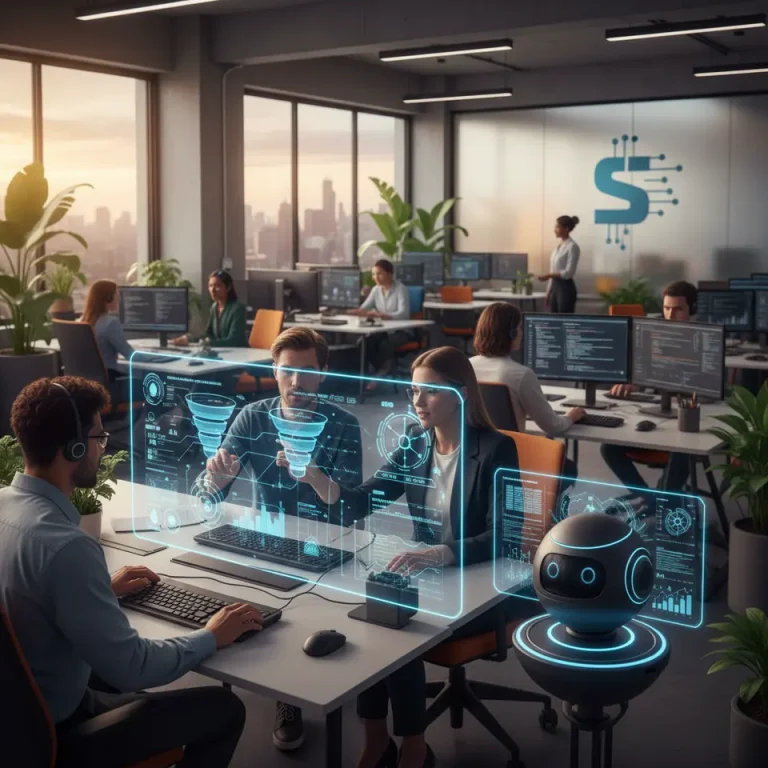
AI Tools Trigger 10% IT Stock Drop – Powerful Insight

Estimated Reading Time: 4 minutes
Key Takeaways
- New AI tools triggered a significant selloff in India’s IT sector, causing major blue-chip stocks to decline by 10-15%.
- Analysts warn that generative AI and low-code platforms are eroding traditional consulting margins by delivering outcomes at a fraction of the price.
- AI tools are reshaping IT services by automating tasks like code generation and customer support, accelerating delivery cycles, and reducing the need for specialized talent.
- The rise of AI demands a shift in HR and recruitment, with increased demand for AI specialists and data scientists, but also concerns about job displacement for routine IT roles.
- To thrive, IT firms must invest in AI talent development, adopt modular AI solutions, re-engineer business processes, and effectively communicate AI’s value to clients.
Table of Contents
AI tools have become the catalyst behind a sudden selloff in India’s IT sector, as investors react to a wave of new automation solutions that promise to reshape the industry’s competitive landscape. Within the first week of February, blue‑chip names such as Tata Consultancy Services, Infosys, Wipro, HCL Technologies and Tech Mahindra saw their market capitalisation shrink by 10% to 15%, triggering a broader sell‑off that rippled across the entire IT services index.
Market Response to AI Tools
Analysts at Bloomberg and ICICI Capital warned that the rapid deployment of generative AI and low‑code platforms could erode traditional consulting margins. “The cost‑to‑serve for many of these firms is falling faster than revenue growth,” said Rajesh Kumar, senior equity strategist at ICICI. “If the AI tools that are now being offered can deliver the same or better outcomes for a fraction of the price, the market will correct the overvaluation of these companies.”
Semafor’s coverage of the selloff highlighted that the new AI tools – ranging from advanced natural language processing engines to workflow automation suites like n8n – are being adopted by a growing number of mid‑market clients. These tools allow firms to automate routine tasks, reduce manual effort and deliver faster time‑to‑value, thereby squeezing the profit margins of traditional IT service providers.
Data from the National Stock Exchange shows that the NIFTY IT index fell 8.3% on February 11, 2026, the steepest decline in the past two years. Meanwhile, the broader NIFTY 50 index slipped 4.5%, underscoring the sector‑specific nature of the sell‑off.
How AI Tools Are Reshaping IT Services
At the heart of the market’s reaction are AI tools that combine machine learning, natural language understanding and robotic process automation. Companies like AITechScope are pioneering the use of AI‑powered virtual assistants and n8n workflow development to streamline operations. These solutions can automatically generate code, orchestrate cloud resources, and even handle customer support tickets – tasks that previously required large teams of developers and analysts.
One of the most compelling use cases is the deployment of generative AI for code synthesis. By feeding a high‑level specification into the system, developers can generate boilerplate code in seconds, cutting development cycles from weeks to days. This not only accelerates delivery but also reduces the need for specialized engineering talent, a trend that is already visible in the hiring data of the top IT firms.
According to a recent survey by NASSCOM, 62% of IT companies have already integrated at least one AI tool into their core service offerings. The survey also found that 48% of respondents expect AI tools to cut project delivery times by 30% in the next 12 months.
Implications for HR and Recruitment
For HR professionals, the rise of AI tools signals a paradigm shift in talent demand. Traditional roles focused on manual coding, testing and documentation are being replaced by positions that require proficiency in AI model training, data engineering and workflow orchestration.
“We’re seeing a surge in demand for AI specialists, data scientists and automation engineers,” said Meera Patel, head of talent acquisition at a leading IT services firm. “The skill gap is widening, and companies are now investing heavily in reskilling programmes to keep their workforce relevant.”
Recruiters are also leveraging AI tools to streamline their own processes. AI‑driven applicant tracking systems can automatically screen resumes, assess cultural fit through sentiment analysis and even predict candidate success based on historical hiring data. This not only speeds up hiring but also reduces bias, a benefit highlighted in the AI automation SMB tools article.
However, the rapid adoption of AI tools has sparked concerns about job displacement. A study by the Centre for Development of Advanced Computing (C-DAC) found that up to 20% of routine IT roles could be automated by 2028. HR leaders must therefore balance the efficiency gains of AI with the need to maintain employee morale and engagement.
Future Outlook and Strategic Recommendations
While the selloff reflects short‑term market sentiment, the long‑term trajectory of India’s IT sector appears to be firmly anchored in AI. Companies that can effectively integrate AI tools into their service portfolios will likely capture higher margins and new revenue streams.
To navigate the transition, firms should consider the following strategies:
- Invest in AI Talent Development: Launch internal bootcamps and partner with universities to upskill existing employees in AI, data science and low‑code development.
- Adopt Modular AI Solutions: Use plug‑and‑play AI modules that can be quickly customized for client needs, reducing time‑to‑market.
- Re‑engineer Business Processes: Identify high‑volume, low‑complexity tasks that can be automated, freeing up human resources for higher‑value activities.
- Monitor Regulatory Landscape: Stay ahead of data privacy and AI governance regulations by aligning with best‑practice frameworks discussed in the AI data privacy concerns article.
- Communicate Value to Clients: Demonstrate how AI tools can deliver measurable ROI, such as cost savings, faster delivery and improved quality.
Industry analysts predict that the adoption of AI tools will continue to accelerate, with the IT services market expected to grow by 12% CAGR over the next five years. Companies that proactively embrace AI will not only survive the current selloff but will also position themselves as leaders in the next wave of digital transformation.
For more insights on how AI is reshaping the workforce, read our coverage on AI adoption reliance gap and AI tools scientific progress.
In conclusion, the recent selloff underscores the disruptive power of AI tools in India’s IT sector. While the market may experience volatility in the short term, the long‑term benefits of AI integration – higher efficiency, lower costs and new service capabilities – will likely drive sustained growth for firms that can adapt quickly.
Frequently Asked Questions (FAQ)
Q: What triggered the recent selloff in India’s IT sector?
A: The selloff was triggered by the rapid emergence and adoption of new AI automation tools, which investors believe will reshape the industry and erode traditional profit margins for IT service providers.
Q: How are new AI tools impacting traditional IT consulting margins?
A: Generative AI and low-code platforms are enabling tasks to be completed for a fraction of the cost, leading analysts to warn that these tools will erode traditional consulting margins and correct overvaluation of IT companies.
Q: What specific tasks can AI tools automate in IT services?
A: AI tools can automate a range of tasks including code generation, orchestration of cloud resources, handling customer support tickets, and streamlining workflow development, significantly reducing manual effort and accelerating delivery times.
Q: How is the rise of AI tools affecting HR and recruitment in the IT sector?
A: AI is causing a paradigm shift in talent demand, with traditional roles being replaced by positions requiring AI model training, data engineering, and workflow orchestration. It’s also streamlining recruitment processes but raising concerns about job displacement for routine roles.
Q: What strategies should IT firms adopt to adapt to the AI-driven market?
A: Firms should invest in AI talent development, adopt modular AI solutions, re-engineer business processes to identify automatable tasks, monitor the regulatory landscape, and clearly communicate the value and ROI of AI tools to clients.