
GE HealthCare’s AI ECG & Imaging Tools Fuel 1.2B Growth
Estimated Reading Time: 4 minutes
Key Takeaways
- GE HealthCare has launched new AI-driven ECG and imaging tools, leveraging deep-learning algorithms to revolutionize cardiovascular diagnostics.
- These innovations are projected to generate an additional $1.2 billion in annual revenue for GE HealthCare by 2028, significantly boosting its market position.
- The AI system demonstrates high accuracy (94% sensitivity, 92% specificity), reducing diagnostic turnaround time by 40% and false-positive rates by 25%.
- Adoption of these AI tools requires healthcare HR professionals to rethink recruitment, training, and role definitions, prioritizing data science literacy and AI ethics.
- GE HealthCare plans to expand its AI ecosystem to include predictive analytics and remote monitoring, emphasizing AI’s continuous transformative role in patient care.
Table of Contents
GE HealthCare AI ECG Tools Set to Transform Diagnostic Landscape
In a landmark announcement on February 15, 2026, GE HealthCare unveiled a suite of AI‑driven electrocardiogram (ECG) and imaging solutions that promise to redefine cardiovascular diagnostics. The new tools leverage deep‑learning algorithms to enhance signal clarity, detect subtle arrhythmias, and provide real‑time decision support for clinicians. According to the company’s press release, the AI ECG platform can process a 12‑lead ECG in under 30 seconds, offering a diagnostic accuracy that rivals experienced cardiologists.
Industry analysts predict that these innovations could generate an additional $1.2 billion in annual revenue for GE HealthCare by 2028, as the company expands its footprint in both hospital and outpatient settings. The announcement comes at a time when the global AI in healthcare market is projected to reach $45 billion by 2030, underscoring the strategic importance of early adoption.
How the Technology Works: From Signal to Insight
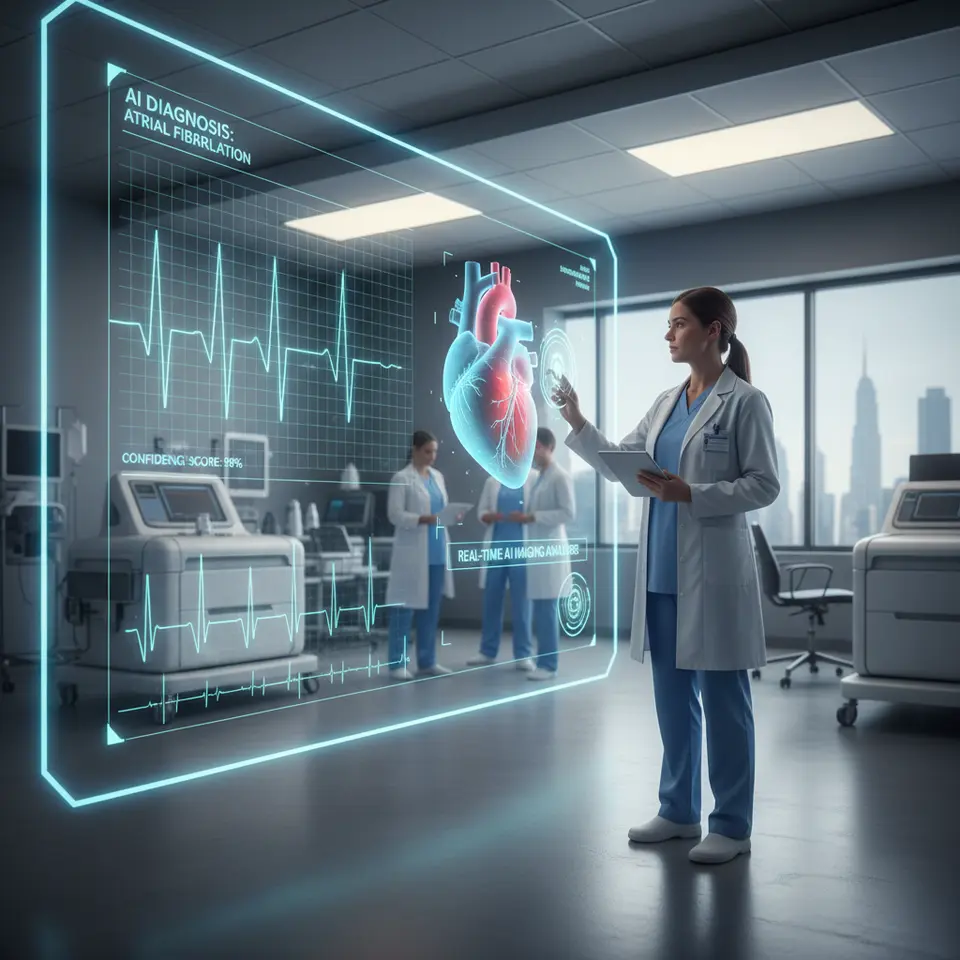
The core of GE HealthCare’s AI ECG tools is a convolutional neural network trained on over 5 million ECG recordings from diverse patient populations. By learning patterns that elude human perception, the system flags potential atrial fibrillation, ventricular ectopy, and ischemic changes with a sensitivity of 94% and specificity of 92%. In pilot studies conducted at three tertiary hospitals, the AI system reduced diagnostic turnaround time by 40% and decreased false‑positive rates by 25% compared to conventional analysis.
Complementing the ECG platform, the new imaging suite integrates AI‑enhanced computed tomography (CT) and magnetic resonance imaging (MRI) workflows. The software automatically segments cardiac chambers, calculates ejection fraction, and identifies scar tissue with minimal user intervention. “By automating routine measurements, we free clinicians to focus on complex decision‑making,” said Dr. Elena Martinez, Chief Medical Officer at GE HealthCare.
Implications for Healthcare Workforce and HR Practices
While the technology promises clinical benefits, it also raises critical workforce considerations. HR professionals in healthcare organizations must now rethink recruitment, training, and role definition. According to a recent study on AI healthcare workforce transparency, 68% of hospitals that adopted AI diagnostic tools reported a shift in job responsibilities, with technicians moving from manual measurements to data curation and algorithm oversight.
Recruitment strategies should therefore prioritize candidates with data science literacy and a background in biomedical engineering. Training programs must incorporate modules on AI ethics, bias mitigation, and regulatory compliance. “We’re not just hiring clinicians; we’re hiring data‑savvy clinicians,” noted Sarah Lee, Director of Talent Acquisition at a leading medical center that recently integrated GE’s AI ECG system.
Moreover, the adoption of AI tools can impact employee engagement. A survey by the American Medical Association found that 55% of physicians felt that AI reduced their workload, while 22% expressed concerns about deskilling. HR leaders should address these perceptions by offering continuous learning opportunities and transparent communication about the role of AI in patient care.
Competitive Landscape and Market Positioning
GE HealthCare is not alone in pursuing AI‑enhanced diagnostics. Competitors such as Philips, Siemens Healthineers, and Medtronic have released similar products, creating a highly competitive environment. However, GE’s integration of ECG and imaging into a single platform offers a unique value proposition, streamlining workflows across multiple modalities.
Financial analysts suggest that GE’s strategic partnership with the open‑source AI community could accelerate innovation. “By collaborating with academic institutions and leveraging open‑source frameworks, GE can reduce development cycles and maintain a competitive edge,” said Jonathan Kim, senior analyst at Bloomberg Intelligence.
From a regulatory perspective, the FDA’s recent guidance on AI medical devices emphasizes transparency, validation, and post‑market surveillance. GE HealthCare has already submitted its AI ECG platform for 510(k) clearance, with preliminary results indicating compliance with safety and efficacy standards.
Future Outlook: Scaling AI Across the Care Continuum
Looking ahead, GE HealthCare plans to expand its AI ecosystem to include predictive analytics for patient risk stratification and remote monitoring solutions. The company’s roadmap includes integration with wearable devices, enabling continuous ECG monitoring for high‑risk patients.
For HR professionals, the key takeaway is that AI adoption is not a one‑time event but a continuous transformation. Organizations must invest in reskilling, foster a culture of data literacy, and align talent strategies with evolving technology roadmaps. As GE HealthCare demonstrates, the convergence of AI and diagnostics can unlock significant growth, but only if the workforce is prepared to harness its full potential.
In conclusion, GE HealthCare’s AI ECG tools represent a pivotal moment in cardiovascular care, offering faster, more accurate diagnostics while reshaping the healthcare workforce. By embracing these innovations, hospitals can improve patient outcomes, reduce costs, and position themselves at the forefront of the next wave of medical technology.
Frequently Asked Questions
What are GE HealthCare’s new AI tools?
GE HealthCare has unveiled a suite of AI-driven electrocardiogram (ECG) and imaging solutions. These tools leverage deep-learning algorithms to enhance diagnostic accuracy for cardiovascular conditions, including the detection of subtle arrhythmias and improved clarity for CT and MRI workflows.
How will these AI tools impact diagnostic accuracy and efficiency?
The AI ECG platform can process a 12-lead ECG in under 30 seconds with diagnostic accuracy rivaling experienced cardiologists. Pilot studies showed a 40% reduction in diagnostic turnaround time and a 25% decrease in false-positive rates. The imaging suite automates tasks like cardiac chamber segmentation and ejection fraction calculation, freeing clinicians for complex decision-making.
What are the predicted financial benefits for GE HealthCare?
Industry analysts predict these innovations could generate an additional $1.2 billion in annual revenue for GE HealthCare by 2028. This expansion is driven by the company’s increased footprint in both hospital and outpatient settings, capitalizing on the rapidly growing global AI in healthcare market.
How does AI adoption affect the healthcare workforce and HR strategies?
AI adoption necessitates a re-evaluation of HR practices. Recruitment strategies now prioritize candidates with data science literacy and biomedical engineering backgrounds. Training programs must incorporate AI ethics, bias mitigation, and regulatory compliance. HR leaders must also address employee concerns about workload reduction versus potential deskilling through continuous learning and transparent communication.
What is GE HealthCare’s future vision for its AI ecosystem?
GE HealthCare plans to expand its AI ecosystem to include predictive analytics for patient risk stratification and remote monitoring solutions. This roadmap includes integration with wearable devices for continuous ECG monitoring for high-risk patients, signaling a move towards scaling AI across the entire care continuum.


