ChatGPT vs Claude AI: Key Insights on Carbon Footprint
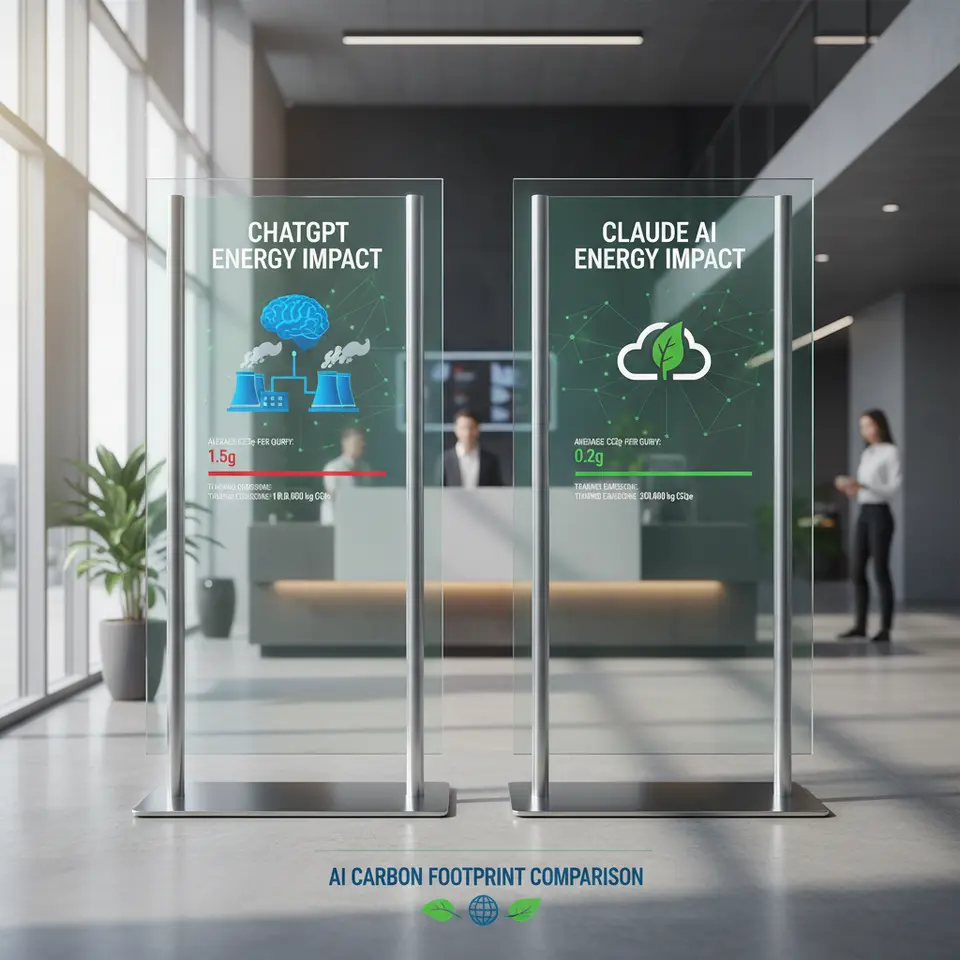
- Comparison of carbon footprints between ChatGPT and Claude AI.
- Recent Pentagon contracts awarded to OpenAI and Anthropic for AI solutions.
- The importance of energy efficiency in AI development.
- Impact of AI on HR, recruitment processes, and operational costs.
- Future trends towards sustainable AI practices.
- Breaking Down the ChatGPT vs Claude AI Carbon Footprint Debate
- The Pentagon’s Strategic Engagement with AI Giants
- Energy Impact and AI Workforce Optimization
- Implications for HR, Recruitment, and Future Prospects
Breaking Down the ChatGPT vs Claude AI Carbon Footprint Debate
The rapidly evolving artificial intelligence landscape continues to capture the spotlight as industry leaders weigh in on the environmental and operational impacts of competing AI models. One of the hottest topics today is the comparison between OpenAI’s ChatGPT and Anthropic’s Claude AI, particularly focusing on their carbon footprints and implications for sustainable AI development.
According to a recent report by CarbonCredits.com, Claude AI is lauded for implementing more energy-efficient training protocols, resulting in a comparatively lower carbon footprint during deployment. OpenAI, while pioneering in generative AI capabilities with ChatGPT, faces increasing scrutiny over the substantial energy consumption demands of its large-scale models.
The Pentagon’s Strategic Engagement with AI Giants
In a significant development, both OpenAI and Anthropic have recently secured contracts with the Pentagon to deliver advanced AI solutions for defense applications. These partnerships underline the strategic importance of AI not only in commercial sectors but also in government and national security frameworks.
The Pentagon’s interest emphasizes the need for accountability in energy usage and ethical AI deployment, prompting technology providers to enhance efficiency and transparency. Industry insiders note that these contracts will likely accelerate innovation in AI-powered automation and workflow optimization technologies, with ripple effects across HR and recruitment technology enabling more intelligent delegation and operational scaling.
Energy Impact and AI Workforce Optimization
Energy consumption remains a critical issue in AI development, as models like ChatGPT demand significant power during both training and inference. Companies like AITechScope are spearheading efforts to integrate AI-powered automation and n8n workflow development tools designed to help businesses reduce operational costs and improve efficiency sustainably.
For HR professionals and tech companies, understanding these developments is crucial as AI tools continue to reshape workforce management, recruitment pipelines, and business process optimization. The drive towards more sustainable AI models aligns with the growing emphasis on responsible AI adoption and compliance, helping organizations future-proof their investments in technology while meeting emerging environmental standards.
Implications for HR, Recruitment, and Future Prospects
The competitive landscape between ChatGPT and Claude AI highlights evolving AI trends that directly impact workforce technologies and recruitment innovations. Enhanced AI efficiency leading to lower carbon footprints represents not only environmental responsibility but also potential reductions in operational costs, a factor vital for scaling HR automation solutions.
With AI-powered automation poised to streamline recruitment technology and workforce workflows, HR leaders must stay informed about energy impacts and ethical considerations that accompany AI adoption. Moreover, enterprises leveraging solutions from providers like AITechScope can capitalize on the combined benefits of cutting-edge AI tools and sustainable practices.
Looking forward, the AI industry’s focus on balancing powerful capabilities with environmental responsibility signals a new chapter in tech innovation. Companies that integrate efficient AI solutions are set to lead in both performance and sustainability, underscoring an imperative for HR and tech decision-makers to adapt to this paradigm shift.
For further insight on AI adoption challenges and opportunities in recruitment and workforce management, readers can explore detailed reports like AI adoption-reliance gap, AI automation-2026 cost efficiency, and AI hiring transparency lawsuit on our platform.
FAQ
Q1: What is the main difference in carbon footprint between ChatGPT and Claude AI?
A1: Claude AI is recognized for its more energy-efficient training protocols, resulting in a lower carbon footprint compared to ChatGPT.
Q2: How has the Pentagon engaged with AI companies?
A2: The Pentagon has awarded contracts to both OpenAI and Anthropic to develop advanced AI solutions for defense applications.
Q3: Why is energy efficiency important in AI development?
A3: Energy efficiency is crucial to reduce operational costs and ensure sustainable practices within AI technologies.