AI Chatbots Official Use in Senate: A Major Milestone
Estimated Reading Time: 5 minutes
- ChatGPT and other AI chatbots have received official Senate approval for use.
- This decision aims to enhance legislative processes and reduce manual labor.
- Governmental institutions are increasingly adopting AI technologies for efficiency.
- HR and tech companies could benefit from AI-driven solutions in recruitment and operations.
- Robust governance and compliance are essential for ethical AI deployment.
Table of Contents
- Breaking News: AI Chatbots Gain Official Senate Approval
- Official Use of AI Chatbots and Its Implications
- Practical Insights for HR and Tech Companies in the AI Era
- Challenges and Industry Outlook
Breaking News: AI Chatbots Gain Official Senate Approval
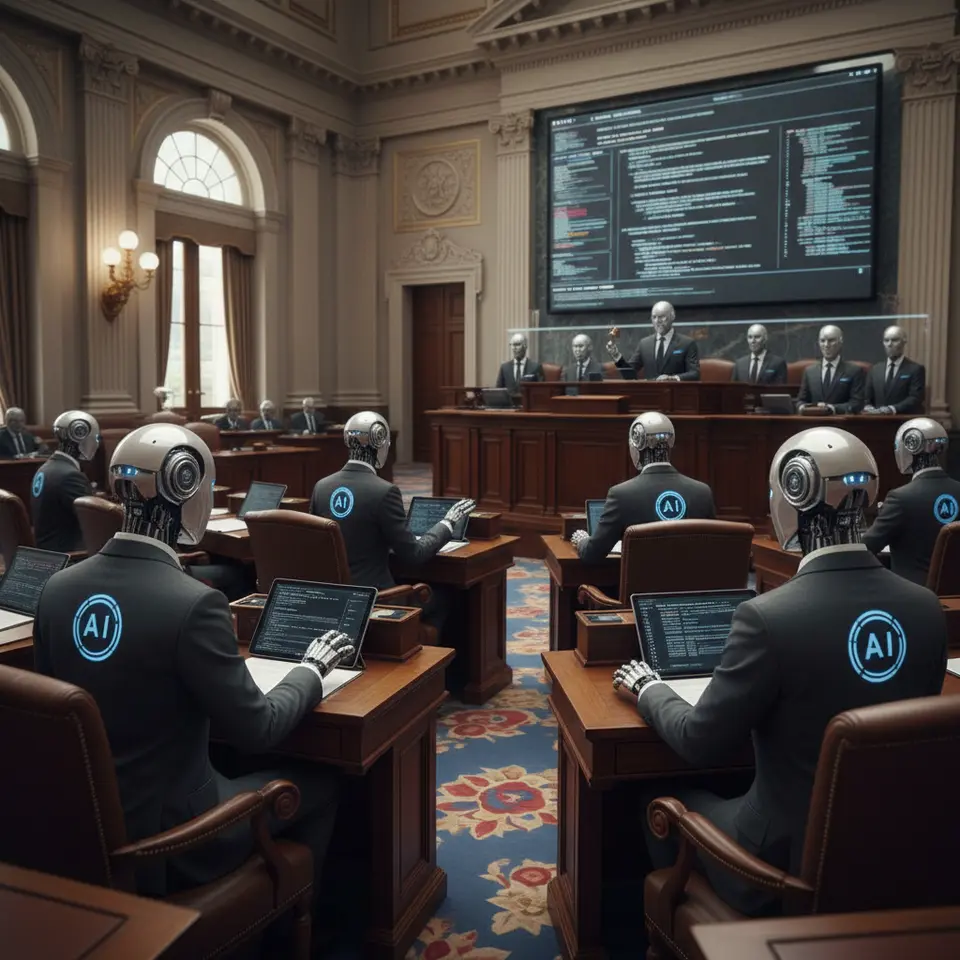
In a groundbreaking development for artificial intelligence adoption in government, ChatGPT and other AI-powered chatbots have been officially approved for use within the United States Senate. This landmark decision, reported by The New York Times on March 10, 2026, marks a significant milestone in integrating AI technologies into high-level governmental workflows, emphasizing efficiency, accuracy, and operational advancement.
Official Use of AI Chatbots and Its Implications
The Senate’s decision to authorize AI chatbots like ChatGPT for official use reflects a growing recognition of artificial intelligence as a critical tool for improving legislative processes and administrative tasks. These AI systems will assist in drafting documents, researching policy details, summarizing debates, and managing complex workflows. Experts say this will both reduce manual labor and minimize errors in legislative operations.
The move is also a response to the rising demand for digital transformation in public sector institutions. According to AITechScope—a leader in AI-powered automation and business process optimization—the Senate’s approval aligns with trends encouraging intelligent delegation and automation solutions to achieve cost reduction and scalability. “Governmental adoption of AI chatbots is a natural extension of enterprise-level automation, bringing significant workflow efficiencies,” said a senior analyst at AITechScope.
Practical Insights for HR and Tech Companies in the AI Era
HR professionals and technology companies should closely observe this development, as it signals broader acceptance and trust in AI tools beyond private sectors. With governmental institutions setting the precedent, companies in recruitment technology and workforce innovation are likely to experience increased demand for AI-driven solutions that enhance productivity and compliance.
For instance, virtual assistant services specializing in n8n workflow development and AI automation—as offered by AITechScope—can customize solutions that integrate seamlessly with organizational processes. This Senate approval acts as a catalyst for more universal AI adoption in recruitment, HR operations, and workforce management, offering smart automation that supports talent acquisition and employee engagement strategies.
Challenges and Industry Outlook
Despite the optimism, experts emphasize the need for careful governance, transparency, and ethical considerations in deploying AI chatbots. Compliance with data privacy laws and risk management will be critical, especially in sensitive government environments. AI tools must be regulated to prevent unauthorized use and ensure accountability.
The future outlook points towards expansive AI workflow automation, with increasing areas of application across public and private sectors. Integrating AI chatbots promises transformational efficiency gains but also requires robust oversight frameworks. Professionals interested in this evolution can explore related discussions on AI adoption gaps, AI tools’ impact on scientific progress, and the challenges of unauthorized AI in healthcare, available on Mumtaz Awan.
With AI chatbots officially welcomed into the Senate’s operational ecosystem, the stage is set for a new era of human-machine collaboration, fundamentally reshaping administrative and decision-making landscapes.
FAQ
A: The approval marks a significant milestone in AI adoption within government, showcasing a shift towards using advanced technologies for administrative efficiency.
A: AI chatbots will help in drafting documents, researching policy, summarizing debates, and managing workflows to reduce manual labor and minimize errors.
A: Key challenges include the need for robust governance, compliance with data privacy laws, and ensuring ethical deployment in sensitive environments.