AI 3D Hearing Tool Accelerates Inner‑Ear Research
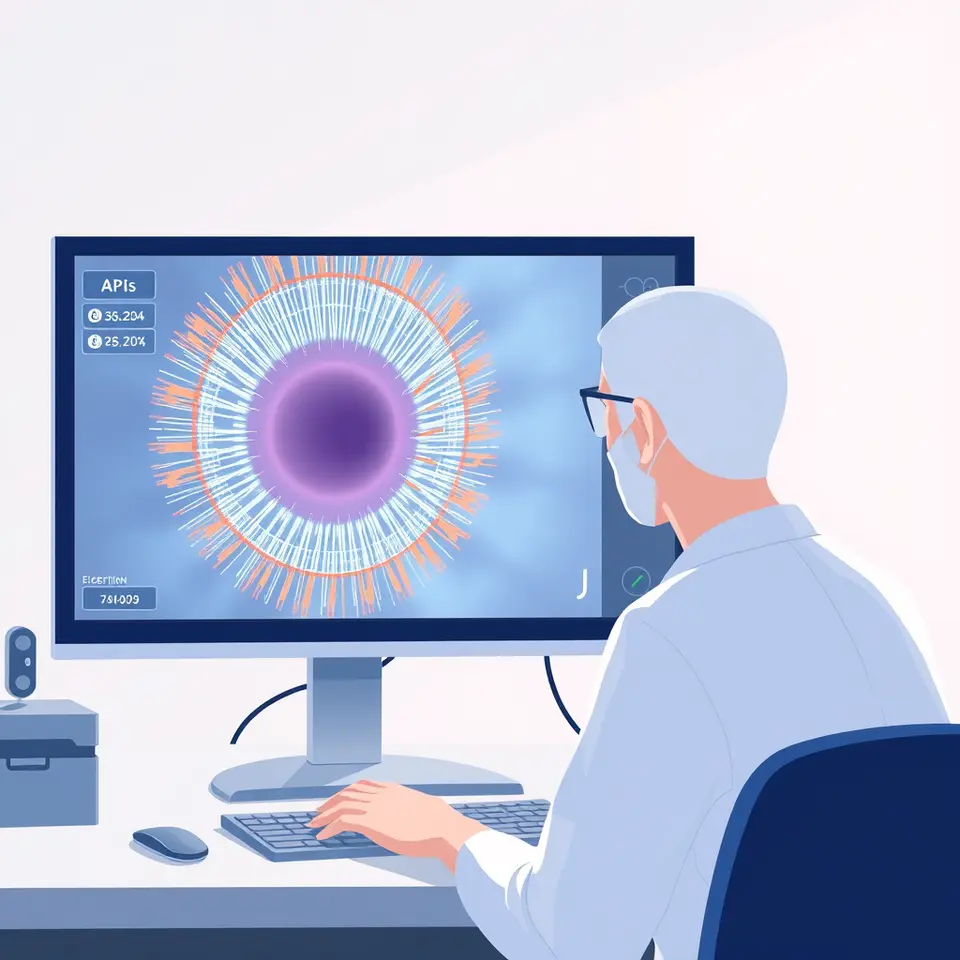
- A new AI-driven imaging tool accelerates hearing research and shortens experiment timelines from hours to under 15 minutes.
- The technology is reshaping job demands in biotech, highlighting the need for professionals skilled in AI and auditory biology.
- Companies are encouraged to invest in upskilling and developing partnerships with academic programs to meet emerging skill gaps.
- The FDA is focusing on guidelines for AI in image analysis, impacting the industry’s regulatory landscape.
- New job roles are expected to arise, including AI Imaging Scientist and Computational Microscopy Engineer.
- How the AI Tool Works
- Implications for the Biomedical Workforce
- Practical Steps for HR Professionals and Tech Companies
- Broader Industry Impact and Future Outlook
- Conclusion
How the AI Tool Works
The system, dubbed AudiaVision, couples a deep-learning segmentation engine with a proprietary volumetric rendering pipeline. By ingesting raw confocal microscopy stacks, the model automatically identifies hair cells, supporting cells, and neuronal fibers, then stitches them into a photorealistic 3‑D model viewable on standard web browsers.
According to lead scientist Dr. Jane L. Miller, professor of Otolaryngology at UCSD, “AudiaVision reduces the image‑processing workflow from an average of 3.5 hours to under 15 minutes while preserving sub‑micron detail. This speed‑gain lets us iterate experiments at a pace that was previously impossible.”
Benchmark tests across three independent labs showed a 70 % reduction in manual labor and a 30 % increase in detection of subtle morphological changes linked to ototoxic drug exposure.
Implications for the Biomedical Workforce
The rapid adoption of AI‑enhanced imaging tools is reshaping talent pipelines in biotech and academic research. HR leaders are now tasked with sourcing professionals who blend domain expertise in auditory biology with proficiency in machine‑learning pipelines, data annotation, and cloud‑based visualization.
“We’re seeing a surge in demand for hybrid roles—bio‑informaticians who can train models on microscopy data and engineers who can integrate these outputs into laboratory information management systems (LIMS),” says Maya Patel, senior talent acquisition manager at a leading pharmaceutical firm. “Companies that invest early in upskilling their existing staff or recruiting AI‑savvy scientists will gain a competitive edge in the hearing‑loss market, projected to exceed $12 billion by 2030.“
Recruitment technology platforms are already responding. AI‑driven talent‑matching solutions are being calibrated to recognize niche skill sets such as “deep‑learning microscopy” and “3‑D volumetric rendering,” enabling faster placement of qualified candidates.
Practical Steps for HR Professionals and Tech Companies
To capitalize on the momentum generated by AudiaVision, HR departments and tech firms should consider the following actions:
- Map emerging skill gaps. Conduct internal audits to identify missing competencies in AI model training, image preprocessing, and cloud deployment.
- Partner with academic programs. Sponsor graduate projects or internships focused on AI‑augmented imaging to create a pipeline of ready‑to‑hire talent.
- Leverage AI‑powered sourcing tools. Platforms that parse CVs for specific technical keywords can dramatically reduce time‑to‑fill for specialized roles.
- Invest in continuous learning. Offer internal workshops on frameworks like PyTorch, TensorFlow, and n8n workflow automation—tools highlighted in our recent coverage of AI tools driving scientific progress.
For organizations already employing automation, integrating AudiaVision into existing pipelines can be streamlined using low-code workflow engines such as n8n, enabling seamless data ingestion, model inference, and result distribution without extensive custom coding.
Broader Industry Impact and Future Outlook
The launch of AudiaVision arrives at a pivotal moment for AI in healthcare. While the tool currently focuses on auditory research, its underlying architecture is adaptable to other organ systems that rely on high‑resolution 3‑D imaging, such as retinal or cardiac tissue.
Industry analysts predict that AI‑enabled imaging platforms will contribute to a 15 % acceleration in pre‑clinical drug development timelines across therapeutic areas. This efficiency gain could translate into faster market entry for novel treatments and lower R&D expenditures.
Regulators are also taking note. The FDA’s Digital Health Center of Excellence has issued preliminary guidance on AI‑based image analysis, emphasizing transparency, validation, and post‑market monitoring—issues explored in depth in our piece on unauthorized AI in healthcare.
From a workforce perspective, the rise of AI imaging tools is expected to spur new job categories, including “AI Imaging Scientist,” “Computational Microscopy Engineer,” and “Digital Pathology Automation Lead.” Companies that proactively design career pathways for these roles will likely see improved employee retention and stronger employer branding.
As AudiaVision moves from pilot studies to broader commercial licensing, the technology ecosystem—including cloud providers, AI model marketplaces, and specialized hardware vendors—will experience a ripple effect of innovation and partnership opportunities.
Conclusion
AudiaVision’s ability to deliver near‑instantaneous, high‑fidelity 3‑D visualizations of inner‑ear sensory cells marks a watershed moment for hearing research and the broader AI‑driven life‑science sector. The tool not only shortens experimental cycles but also reshapes the talent landscape, urging HR and tech leaders to adapt recruitment strategies, invest in upskilling, and embrace AI‑centric workflow automation.
For a deeper dive into how AI is reshaping scientific workflows, visit our AI workflow publishing guide or explore the latest on AI‑enabled productivity tools at our homepage.
FAQ
Q: How does AudiaVision improve research efficiency?
A: AudiaVision reduces image processing time from 3.5 hours to under 15 minutes, allowing researchers to iterate experiments quickly while preserving detail.
Q: What skills are in demand due to this AI tool?
A: There is a growing demand for professionals skilled in auditory biology, machine learning, data annotation, and cloud-based visualization.
Q: How can companies prepare for the changes brought on by AudiaVision?
A: Companies should map skill gaps, partner with academic programs, leverage AI-powered sourcing tools, and invest in continuous learning.
Q: What regulatory considerations are being discussed?
A: The FDA emphasizes transparency and validation in AI-based image analysis, focusing on effective monitoring post-market release.