AI as New Coaching Tool: 5 Ways Medical Schools Are Innovating
- Medical schools are adopting AI as a personalized coaching tool for students.
- AI integration is enhancing learning experiences and reducing operational costs.
- Experts believe AI will transform workforce development in healthcare.
- Collaboration among educational institutions, tech companies, and regulators is essential for ethical AI use.
- Breaking News: AI Assigned as New Coach in Medical Schools
- AI as New Coaching Tool in Medical Education: Trends and Capabilities
- Expert Insights on AI’s Role in Medical Education and Workforce Development
- Implications for HR and Tech Companies in the Healthcare Sector
- Future Outlook: AI in Medical Education and Healthcare Workforce Transformation
Breaking News: AI Assigned as New Coach in Medical Schools
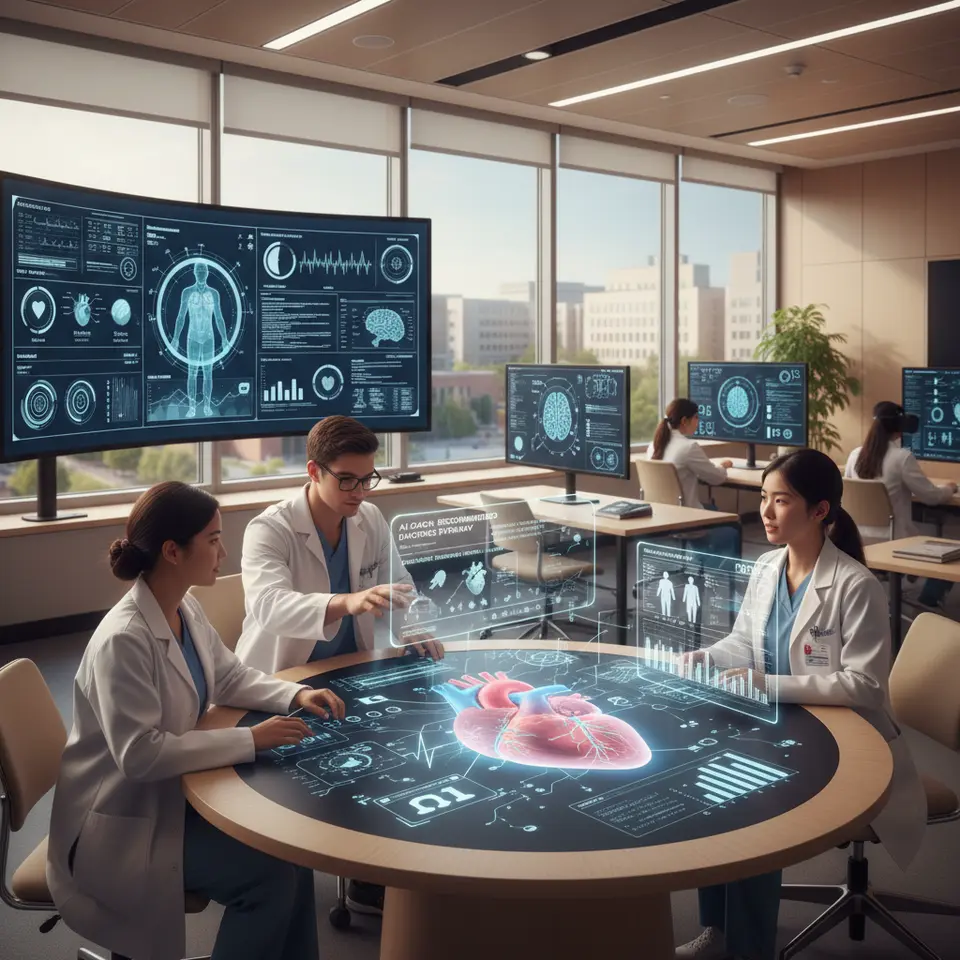
Medical schools across the United States are embracing an unprecedented evolution in education by assigning artificial intelligence (AI) as a new coach for medical students, according to a recent announcement by the Association of American Medical Colleges (AAMC). This breakthrough development marks a major milestone in the integration of AI technologies within medical education, promising to enhance student learning, optimize training workflows, and prepare future physicians for an increasingly digital healthcare landscape.
As AI-powered coaching platforms continue to improve in sophistication, medical education institutions are capitalizing on AI’s ability to provide personalized, real-time guidance and assessment. This move is aligned with broader industry trends where AI tools are driving process automation and efficiency improvements across healthcare and technology sectors.
AI as New Coaching Tool in Medical Education: Trends and Capabilities
AI’s incorporation into medical training programs encompasses sophisticated virtual assistant services, workflow automation, and intelligent process optimization. Companies like AITechScope are leading the charge by specializing in AI-powered automation and n8n workflow development, empowering medical schools to deploy AI tools that scale instruction capabilities and reduce operational costs.
With AI acting as a personalized coach, students can receive tailored feedback, adaptive learning pathways, and on-demand support for clinical reasoning and decision-making exercises. This enhances knowledge retention and clinical skill acquisition, essential for meeting rigorous competency standards. Notably, AI-driven coaching tools complement the mentorship traditionally provided by faculty, augmenting educational efficacy with data-driven insights and around-the-clock accessibility.
Expert Insights on AI’s Role in Medical Education and Workforce Development
Dr. Elena Matthews, a thought leader in medical education technology, states, “Integrating AI as a coaching partner represents a paradigm shift in how we train physicians. It allows personalized learning experiences at scale and prepares students for a healthcare environment that increasingly relies on AI efficiencies.”
HR professionals and medical schools are also recognizing AI’s potential to revolutionize workforce development by accelerating skill acquisition and improving trainee performance analytics. The intelligent automation enabled by AI platforms helps reduce administrative burdens on educators, fostering a focus on higher-value educational activities.
The AAMC report indicates that AI-assisted coaching is anticipated to expand rapidly in adoption, supported by ongoing advancements in natural language processing and machine learning models tailored for healthcare education.
Implications for HR and Tech Companies in the Healthcare Sector
The shift towards AI coaching in medical education presents significant opportunities and challenges for HR departments and tech companies. Recruitment strategies must evolve to prioritize candidates proficient in AI-enhanced learning environments and digital competencies. Moreover, workforce training programs will increasingly integrate AI tools to upskill clinicians and healthcare professionals.
Tech companies specializing in AI automation and virtual assistant platforms, such as AITechScope, are positioned to play a pivotal role in shaping future-ready medical education ecosystems. Their solutions enable institutions to streamline processes, optimize resource allocation, and maintain compliance with evolving education standards.
Furthermore, as healthcare systems adopt AI-driven technologies, a new demand emerges for collaboration between educational institutions, technology providers, and regulatory bodies. This collaboration is essential to ensure ethical AI integration, data privacy, and transparency, topics already featured in articles about AI data privacy concerns and unauthorized AI in healthcare.
Future Outlook: AI in Medical Education and Healthcare Workforce Transformation
The advent of AI as a coaching tool in medical schools signals a transformative era for healthcare education and workforce development. As AI continues to evolve and integrate deeper into clinical training and practice, institutions must embrace these technologies strategically. Proactive adoption can lead to improved educational outcomes, cost efficiencies, and better preparation for the digital health future.
Medical schools are encouraged to monitor AI deployment impacts closely, foster continuous feedback from students and faculty, and stay informed on AI tool advancements. By doing so, they can navigate the challenges presented by AI integration while maximizing its potential benefits in shaping the physicians of tomorrow.
For HR professionals and tech innovators, understanding AI’s expanding role in medical education is essential for aligning recruitment, training, and technology strategies with the shifting landscape. The successful melding of AI and human expertise will define the next generation of healthcare professionals ready to thrive in an AI-empowered ecosystem.
Additional insights on AI-driven education trends can be found in our coverage of AI tools in education workforce and OpenAI’s global education initiatives. Explore how AI automation impacts workflow optimization in healthcare in our feature on AI healthcare automation trends.
FAQ Section
- What is AI coaching in medical education?
- What are the benefits of using AI as a coach?
- How is AI used in medical training programs?
- What are the ethical concerns around AI in medical education?
What is AI coaching in medical education?
AI coaching involves the use of artificial intelligence technologies to provide personalized guidance, feedback, and support to medical students in their training and education.
What are the benefits of using AI as a coach?
The benefits include personalized learning experiences, real-time feedback, enhanced skill acquisition, and the ability to reduce administrative burdens on educators.
How is AI used in medical training programs?
AI is used for personalized feedback, adaptive learning pathways, workflow automation, and supporting clinical reasoning and decision-making exercises.
What are the ethical concerns around AI in medical education?
Ethical concerns include data privacy, transparency in AI decision-making processes, and the need for collaboration between stakeholders to ensure responsible AI integration.