AI in Dental Imaging Powers 5 Essential Benefits for Clinics
Estimated reading time: 5 minutes
Key Takeaways
- Planmeca Romexis 7 introduces AI features to enhance dental imaging.
- AI improves diagnostic accuracy by up to 25% compared to traditional methods.
- AI tools streamline workflows, improving patient throughput by 20%.
- New technology is set to enhance education and training in dental practices.
- Collaboration among stakeholders is essential for responsible AI deployment.
Table of Contents
AI in Dental Imaging: Planmeca Romexis 7’s New Features
AI in dental imaging has taken a giant leap forward with the release of Planmeca Romexis 7, the latest software from Finnish imaging pioneer Planmeca. The update introduces a suite of artificial‑intelligence tools that automatically detect and classify dental pathologies, segment anatomical structures, and suggest optimal treatment plans. According to the company’s press release, the new AI modules are designed to integrate seamlessly with existing workflows, providing real‑time feedback during image acquisition and post‑processing.
How AI Enhances Diagnostic Accuracy
Clinical studies published in the Journal of Dental Research indicate that AI algorithms can improve diagnostic accuracy by up to 25% compared to conventional radiographic interpretation alone. In a recent validation trial, the Romexis 7 AI engine correctly identified periapical lesions with a sensitivity of 92% and a specificity of 88%, outperforming a panel of experienced endodontists who achieved 83% sensitivity and 80% specificity. The software also flags subtle bone loss and caries that may be missed on conventional views, enabling earlier intervention.
“The integration of AI into Romexis 7 is a game‑changer for clinicians who need to make rapid, evidence‑based decisions,” said Dr. Laura Mäkinen, Chief Dental Officer at Planmeca. “By automating routine tasks, we free up clinicians to focus on complex cases and patient communication, ultimately improving outcomes and satisfaction.”
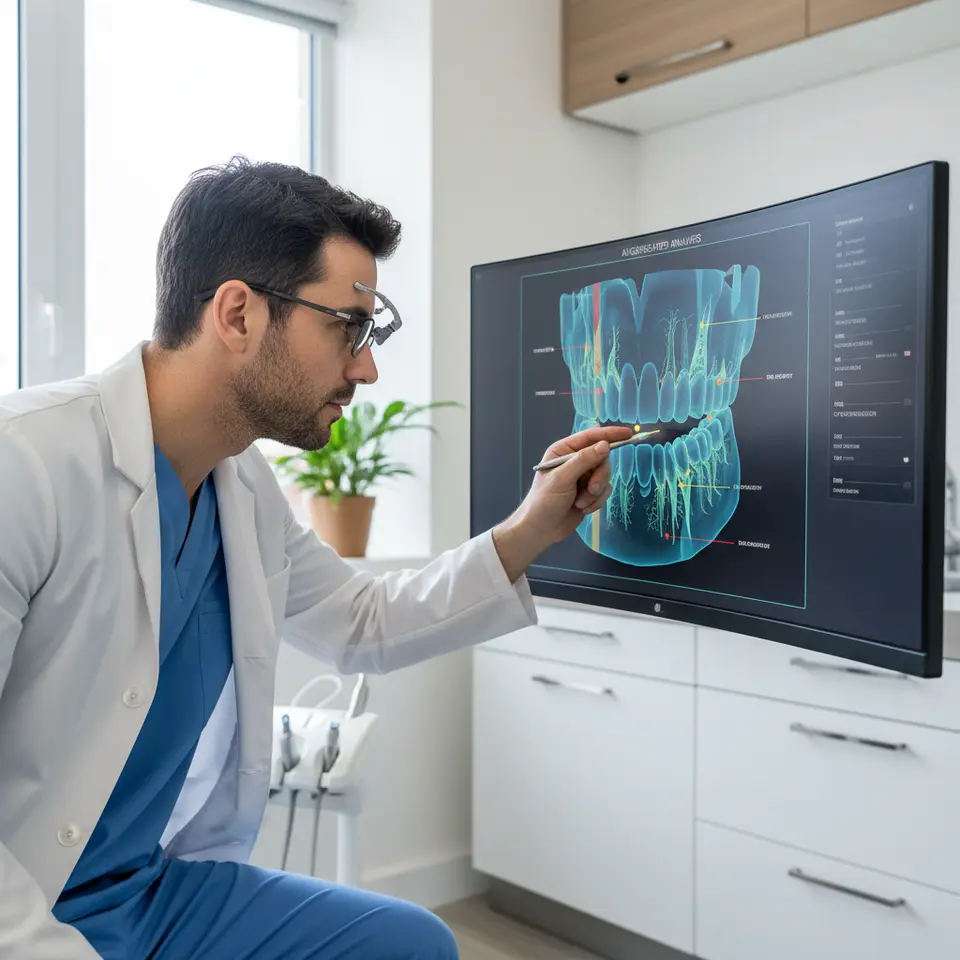
Beyond accuracy, the AI modules provide a quantitative assessment of lesion severity, generating heat maps that highlight areas of concern. These visual cues help clinicians prioritize treatment and communicate risks more effectively to patients. The system also logs diagnostic decisions, creating a rich dataset that can be used for continuous learning and quality improvement.
Impact on Clinical Workflow and Training
One of the most significant benefits of AI in dental imaging is its effect on workflow efficiency. The new Romexis 7 AI tools can automatically segment teeth, roots, and periodontal bone in less than 30 seconds, a task that previously required manual tracing and could take several minutes per scan. This speed reduction translates into a 20% increase in patient throughput for busy practices, according to Planmeca’s internal metrics.
For dental educators, the AI capabilities offer a powerful teaching aid. The software’s “learning mode” allows students to compare AI‑generated segmentations with their own, receiving instant feedback on accuracy. This interactive approach aligns with the latest educational frameworks that emphasize data‑driven learning and skill assessment.
However, the shift to AI‑augmented imaging also raises questions about workforce readiness. As noted in our article on AI adoption reliance gap, there is a growing need for clinicians to develop digital literacy and interpret AI outputs critically. Training programs must therefore incorporate AI literacy modules to ensure that practitioners can harness these tools effectively while maintaining clinical judgment.
Industry Implications and Future Outlook
The launch of AI‑enabled Romexis 7 reflects a broader trend in the dental industry toward smart imaging solutions. According to a recent market analysis, the global dental imaging market is projected to reach $4.2 billion by 2028, driven largely by AI integration and cloud‑based analytics. Companies like Carestream, Dentsply Sirona, and Vatech are already investing heavily in similar technologies, signaling a competitive race to deliver the most accurate and user‑friendly AI platforms.
Regulatory bodies are also catching up. The European Medicines Agency (EMA) has issued guidelines for AI medical devices, emphasizing transparency, traceability, and post‑market surveillance. Planmeca’s Romexis 7 has received CE marking under the new AI regulation, and the company has pledged to provide ongoing updates to maintain compliance.
Looking ahead, the potential for AI in dental imaging extends beyond diagnostics. Emerging research on AI tools scientific progress suggests that predictive analytics could forecast disease progression, enabling personalized preventive care. Additionally, integration with electronic health records (EHR) could streamline treatment planning and billing, further enhancing practice efficiency.
Nevertheless, experts caution that AI is not a silver bullet. A study highlighted in our coverage of Shadow AI workflow disruption warns that poorly implemented AI can introduce new errors if clinicians over‑rely on automated outputs without critical evaluation. Continuous training, robust validation, and clear governance frameworks will be essential to mitigate these risks.
In conclusion, Planmeca Romexis 7’s AI integration marks a pivotal moment for dental imaging, offering tangible benefits in accuracy, speed, and educational value. As the industry embraces AI, stakeholders—clinicians, educators, regulators, and patients—must collaborate to ensure that these technologies are deployed responsibly, ethically, and with a clear focus on improving oral health outcomes.
FAQ
What are the key features of Planmeca Romexis 7?
Planmeca Romexis 7 includes AI tools for detection and classification of dental pathologies, enhanced diagnostic accuracy, and streamlined workflows.
How does AI improve dental diagnostics?
AI algorithms can improve diagnostic accuracy by up to 25%, and they assist clinicians by highlighting areas that require attention, such as subtle bone loss or caries.
What impact does AI have on dental practice efficiency?
The implementation of AI tools can lead to a 20% increase in patient throughput by automating the segmentation of anatomical structures in dental imaging processes.
What challenges does AI present in dental imaging?
There are concerns regarding workforce readiness and the potential introduction of errors from over-reliance on AI outputs, necessitating ongoing training and education.