AI Medical Diagnosis Improves Patient Care and Workflow
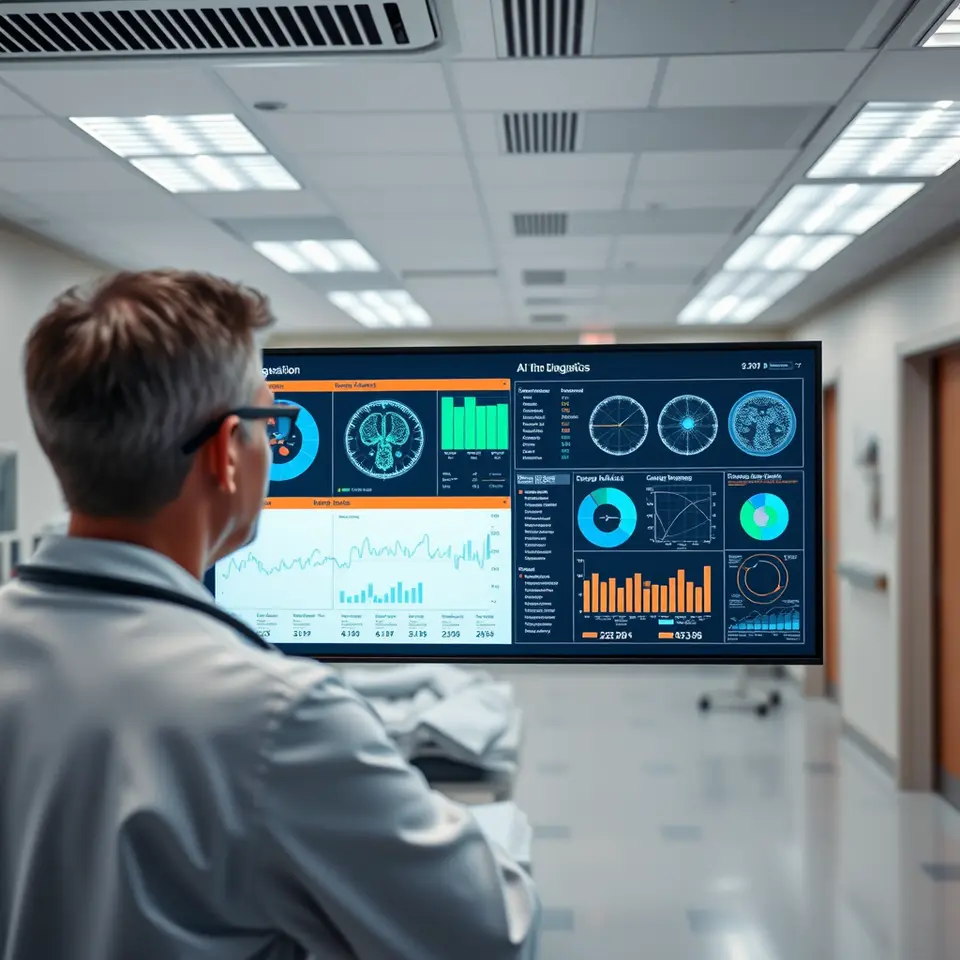
- AI is transforming medical diagnosis, enhancing patient care and operational efficiency.
- Patients leverage AI tools, such as ChatGPT, for better health outcomes.
- Integration of AI presents both opportunities and challenges for healthcare professionals.
- Companies like AITechScope are pivotal in implementing AI in healthcare systems.
- The future of medicine increasingly involves seamless collaboration between AI and human clinicians.
January 30, 2026 – The world of healthcare stands on the precipice of a monumental transformation, driven by the accelerating capabilities of Artificial Intelligence. Recent reports highlight a groundbreaking shift, with individuals crediting AI tools like ChatGPT for life-saving diagnoses, and medical professionals increasingly integrating these platforms into their daily practice. This rapid adoption signifies not just a technological advancement, but a fundamental reimagining of patient care, diagnostic precision, and operational efficiency within the healthcare sector.
The headline-grabbing declaration, ‘ChatGPT saved my life,’ from an NPR report, encapsulates the profound impact AI is beginning to have on personal health outcomes. This isn’t merely anecdotal; it points to a burgeoning trend where patients, armed with unprecedented access to information, are leveraging sophisticated AI models to cross-reference symptoms, explore potential diagnoses, and even challenge conventional medical opinions. Simultaneously, doctors are recognizing the immense potential of AI as a powerful diagnostic aid, a tireless research assistant, and a tool to enhance communication and patient education.
This evolving landscape presents both incredible opportunities and significant challenges for the healthcare industry, demanding innovative solutions for integrating AI responsibly and effectively. Companies like AITechScope, specializing in AI-powered automation and workflow development, are at the forefront, offering crucial services to help organizations navigate this complex yet promising future.
The Rise of AI in Diagnosis: Empowering Patients and Augmenting Doctors
The concept of AI assisting in medical diagnosis has long been a subject of scientific exploration, but recent advancements in large language models (LLMs) have pushed it from theoretical possibility to practical application. Patients are now using tools like ChatGPT to describe complex symptom sets, often receiving surprisingly accurate preliminary assessments or identifying rare conditions that might otherwise be overlooked. This empowerment allows individuals to approach their healthcare providers with more informed questions, potentially accelerating the diagnostic process and leading to earlier intervention.
For medical professionals, AI is proving to be an invaluable extension of their expertise. Doctors are utilizing AI to sift through vast amounts of medical literature, analyze patient data for patterns, suggest differential diagnoses, and even draft personalized treatment plans. Dr. Anya Sharma, a leading AI in medicine researcher, remarks, “AI isn’t replacing the doctor; it’s augmenting their capabilities. It allows clinicians to spend less time on information retrieval and more time on critical thinking, patient interaction, and empathetic care. The ‘ChatGPT saved my life’ stories, while needing careful validation, underscore AI’s potential as a powerful second opinion or a diagnostic catalyst.”
However, the integration is not without its complexities. The ethical implications of AI providing medical advice, the potential for misinformation, and the critical need for human oversight are paramount. As discussed in our previous article on unauthorized AI in healthcare, striking the right balance between innovation and patient safety is crucial. This new paradigm necessitates a robust framework for validation, regulation, and transparent use of AI tools in clinical settings.
Navigating the New Frontier: Challenges and Opportunities in AI-Driven Healthcare
While the benefits are clear, the path to widespread, safe, and effective AI integration in healthcare is fraught with challenges. Data privacy and security remain top concerns, especially given the sensitive nature of patient information. Ensuring the accuracy and reliability of AI diagnoses, particularly for rare diseases or complex comorbidities, requires continuous training, rigorous testing, and transparent algorithms. Furthermore, the issue of ‘shadow AI’ – the use of unsanctioned AI tools within enterprise environments – poses significant risks to data governance and patient outcomes, necessitating clear policies and education.
The workforce implications are also substantial. Healthcare professionals need training on how to effectively use AI tools, understand their limitations, and integrate them into existing workflows without compromising patient trust or clinical judgment. This echoes the broader discussion around AI, transparency, and the healthcare workforce, emphasizing the need for upskilling and clear guidelines.
Yet, these challenges also present massive opportunities for innovation. AI can significantly reduce administrative burdens, automate repetitive tasks, and improve the overall efficiency of healthcare operations. This allows medical staff to focus on higher-value activities, combating burnout and improving job satisfaction. The ability to process and interpret vast datasets promises breakthroughs in preventative medicine, personalized treatments, and public health initiatives. Imagine AI assisting primary care physicians, much like the advancements explored in AI’s role in primary care, dramatically improving accessibility and diagnostic speed.
AITechScope’s Role: Empowering Healthcare and Business Through Intelligent Automation
As AI tools become increasingly sophisticated, the need for seamless integration into existing operational frameworks becomes critical. This is where organizations like AITechScope play a vital role. Specializing in AI-powered automation, n8n workflow development, and business process optimization, AITechScope helps businesses, including those in the rapidly evolving healthcare sector, leverage cutting-edge AI to scale operations, reduce costs, and improve efficiency.
For healthcare providers, this translates to:
- Automated Administrative Tasks: Streamlining patient intake, scheduling, billing, and record-keeping, freeing up valuable staff time.
- Intelligent Data Management: Utilizing AI to organize and analyze electronic health records (EHRs), making patient data more accessible and actionable for clinicians.
- Enhanced Workflow Efficiency: Developing custom n8n workflows that connect various AI tools and existing hospital systems, ensuring smooth data flow and reducing manual intervention in diagnostic pathways and patient management.
- Scalable AI Deployment: Providing the infrastructure and expertise to deploy AI solutions securely and efficiently across multiple departments or facilities, ensuring that the benefits of AI are realized organization-wide.
By offering intelligent delegation and automation solutions, AITechScope empowers healthcare systems to integrate AI from the front lines of diagnosis to the back office of administration, ensuring that the technology serves to enhance, not complicate, the human element of care.
The Future Outlook: An Integrated AI Healthcare Ecosystem
Looking ahead, the trajectory of AI in healthcare points towards an increasingly integrated ecosystem where AI acts as a pervasive, intelligent layer across all facets of medicine. We will likely see further development of specialized AI models tailored for specific medical fields, offering even greater diagnostic precision. The collaboration between human clinicians and AI will become more fluid, with AI serving as a constant, reliable assistant providing real-time insights and support.
For HR professionals and tech companies, this signals a massive demand for new skill sets, ethical AI development, and robust cybersecurity measures. The recruitment technology sector will need to adapt to identify candidates not only with medical knowledge but also with AI literacy and data science expertise. Furthermore, tech companies must prioritize responsible AI development, ensuring fairness, transparency, and accountability in all healthcare applications.
The journey has just begun, but the initial reports from patients and doctors alike suggest that AI is not just a tool for the future; it is actively shaping the present of medical diagnosis. As we move forward, the strategic implementation of AI-powered automation, supported by expert providers like AITechScope, will be paramount in unlocking the full life-saving and efficiency-boosting potential of this revolutionary technology. Visit our main page for more tech related news.
FAQs
AI assists in analyzing patient data, suggesting differential diagnoses, and providing healthcare professionals with valuable insights, enhancing the accuracy and speed of medical assessments.
AI enhances patient care by providing more precise diagnostic tools, facilitating timely interventions, and empowering patients to participate in their own healthcare through informed consultations.
Challenges include ensuring data privacy, preventing misinformation, maintaining regulatory compliance, and training healthcare professionals to effectively leverage AI tools without undermining patient trust.
Companies are integrating AI through automation of administrative tasks, intelligent data management, and developing custom workflows that connect various tech tools to enhance efficiency and reduce human error.