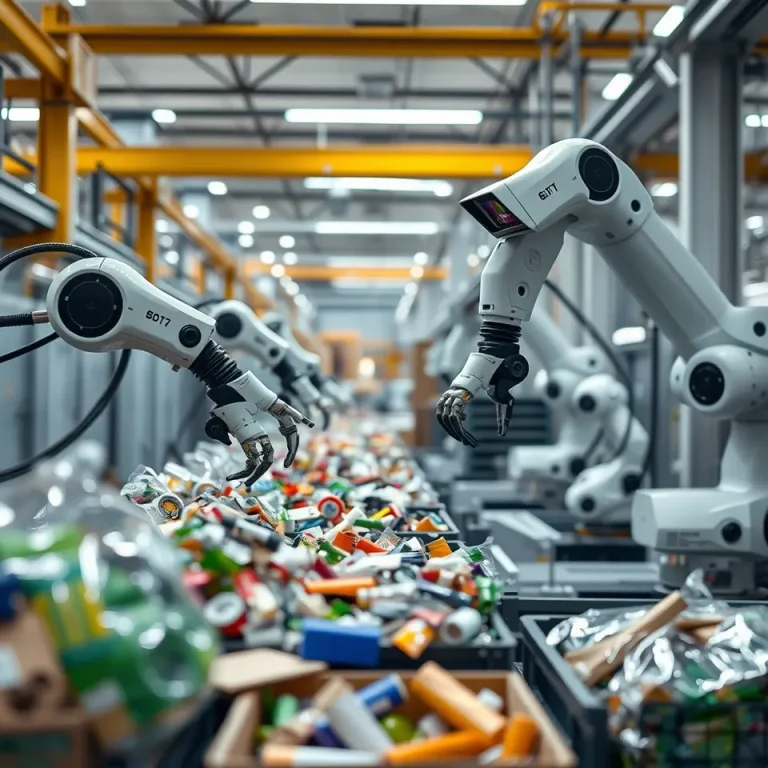
AI-Powered Automation: 5 Ways It Will Revamp Business in 2026

Estimated Reading Time: 5 minutes
- AI-powered automation is reshaping business operations beyond traditional RPA bots.
- Cognitive functions integrated into automation enhance decision-making and adaptability.
- Human resource strategies must evolve to address the implications of AI integration.
- Companies must invest in training and ethical AI use for competitive advantage.
Table of Contents
Breaking Ground: AI-Powered Automation Moves Beyond Traditional RPA Bots
Businesses worldwide are witnessing a pivotal transformation in automation technology as AI-powered automation advances beyond conventional Robotic Process Automation (RPA) bots. This evolution enables machines to not only perform repetitive tasks but to ‘think’ and adapt, revolutionizing operational efficiency and workforce dynamics. Oracle’s recent insights highlight how integrating AI capabilities into automation frameworks is reshaping business process optimization at an unprecedented scale.
The Rise of AI-Powered Automation: What It Means for Businesses
Traditional RPA bots have long automated rule-based workflows across sectors, but their capacity remains limited to preset instructions. The next generation of automation, empowered by artificial intelligence, introduces cognitive functions such as learning, problem-solving, and decision-making into workflows. This shift is drastically transforming how businesses manage complex, variable tasks with speed and accuracy.
AITechScope, a leading provider of virtual assistant services specializing in AI-powered automation and tools like n8n workflow development, exemplifies this new wave of intelligent automation. Their solutions enable enterprises to scale operations, reduce overhead costs, and enhance service delivery through AI-enabled intelligent delegation.
“The integration of AI into automation opens doors to smarter business processes that evolve with changing requirements,” explains an AITechScope spokesperson. “Our AI-powered virtual assistants not only execute tasks but continuously optimize workflows, making businesses more adaptive and agile.”
Implications for HR and Workforce Development
For HR professionals and tech companies, AI-powered automation presents both opportunities and challenges. Automation’s increasing intelligence demands workforce strategies focused on reskilling and collaboration between humans and machines. HR must now prioritize identifying roles that benefit from AI augmentation as well as those to be redefined or created anew.
Experts also stress the importance of transparent AI adoption policies to ensure ethical and efficient integration. Practical insights shared by industry leaders emphasize employee engagement through continuous learning programs and AI literacy initiatives to maximize workforce harmony and productivity.
Moreover, AI-powered tools are reshaping recruitment technology by automating candidate screening while enhancing decision support with predictive analytics, improving overall hiring outcomes.
Looking Ahead: The Future of Automation in Business Operations
As AI-powered automation continues to mature, companies will increasingly adopt comprehensive solutions that combine AI, machine learning, and workflow automation platforms to fully harness intelligent operations. These advancements are expected to deliver unprecedented cost efficiencies, faster time-to-market, and enhanced customer experiences.
Organizations are encouraged to monitor emerging trends in AI automation closely, embrace strategic frameworks for adoption, and invest in the workforce of the future to secure competitive advantage in the evolving technological landscape.
Interested readers can explore additional insights on AI adoption challenges in our AI adoption reliance gap article, deepen their understanding of AI tools accelerating progress in AI tools scientific progress, and evaluate the risks of unsanctioned AI technologies in enterprises through shadow AI workflow disruption.
With AI-powered automation becoming the backbone of modern business operations, the emphasis on innovation, ethical governance, and workforce development will define the next era of corporate success.
FAQ
What are the main benefits of AI-powered automation?
AI-powered automation improves operational efficiency, enhances decision-making capabilities, and allows for better scalability of business processes.
How does AI enhance traditional RPA functionalities?
Unlike traditional RPA bots that follow preset instructions, AI enhances functionalities by incorporating cognitive abilities such as learning and problem-solving, allowing for a more adaptable automation solution.
What strategies should HR adopt in response to AI automation?
HR should focus on reskilling employees, promoting collaboration between humans and machines, and developing transparent AI adoption policies to ensure a smooth transition.