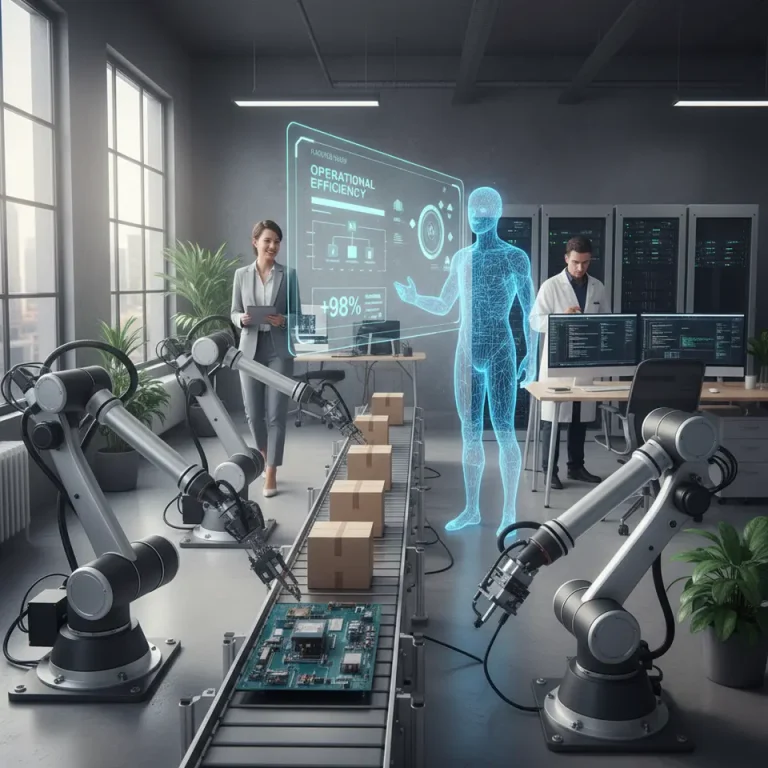
Automation and AI in Drug Development: 5 Key Insights

Estimated Reading Time: 5 minutes
Key Takeaways:
- Automation and digitalization are revolutionizing pharmaceutical R&D.
- AI and machine learning are pivotal in drug candidate identification and treatment personalization.
- The workforce in pharma and biotech will require new skill sets focused on technology and data analysis.
- Pittcon 2026 showcases the importance of early integration of AI-powered automation.
- Future drug development is expected to be smarter, faster, and more cost-effective.
Table of Contents
- Breaking News: Pittcon 2026 Unveils Next-Generation Drug Development Powered by Automation and AI/ML
- Automation and Digitalization Transforming Pharmaceutical R&D
- AI and Machine Learning Driving Innovation and Precision
- Implications for HR and Tech Recruitment in Pharma and Biotech
- Future Outlook: Toward Smarter, Faster, and More Cost-Effective Drug Development
Breaking News: Pittcon 2026 Unveils Next-Generation Drug Development Powered by Automation and AI/ML
The upcoming Pittcon 2026 conference is set to highlight groundbreaking advancements in drug development driven by the synergy of automation, digitalization, and artificial intelligence/machine learning (AI/ML) technologies. These trends signal a paradigm shift in pharmaceutical and biotechnology industries, promising enhanced efficiency, reduced costs, and accelerated innovation cycles.
Automation and Digitalization Transforming Pharmaceutical R&D
At the core of this revolution is automation, facilitating high-throughput experimentation and data collection. Coupled with digitalization, laboratories are transitioning into more integrated and intelligent ecosystems where data is seamlessly captured, stored, and analyzed. This transformation is reducing bottlenecks in drug discovery and clinical trial processes, enabling rapid hypothesis testing and iteration.
AITechScope, a prominent provider of AI-powered automation and workflow development services, exemplifies this evolution by helping organizations optimize business processes and delegate intelligent automation. Their expertise, particularly in developing automation workflows using platforms like n8n, demonstrates how intelligent delegation reduces operational costs while improving scalability and accuracy.
AI and Machine Learning Driving Innovation and Precision
Advanced AI and ML algorithms are now integral to identifying novel drug candidates, predicting efficacy, and personalizing treatments. These technologies analyze vast datasets from genomics, proteomics, and clinical records to uncover insights inaccessible by traditional methods.
Experts at Pittcon emphasize how AI enhances predictive modeling and automates complex analytical tasks, freeing human experts to focus on strategic decision-making. According to industry leaders, this integration of AI/ML enhances the reproducibility and transparency of drug development and regulatory compliance.
Implications for HR and Tech Recruitment in Pharma and Biotech
The rapid adoption of automation and AI in drug development heralds significant changes in workforce composition and skills demand. HR professionals and recruitment technology specialists face the challenge of sourcing talent skilled in AI, data science, automation engineering, and digital workflow management.
Companies must invest in upskilling existing staff and developing roles that bridge domain expertise with technological acumen. Forward-thinking pharma organizations are incorporating AI literacy and process automation proficiency into their hiring and training frameworks to stay ahead in a competitive market.
Future Outlook: Toward Smarter, Faster, and More Cost-Effective Drug Development
The Pittcon 2026 preview underscores a future where drug development is increasingly data-driven and technology-enabled. The convergence of automation, digitalization, and AI/ML is poised to shorten drug discovery timelines, enhance product quality, and lower development costs, ultimately improving patient outcomes.
For businesses aiming to capitalize on these trends, early integration of AI-powered automation platforms like those offered by AITechScope will be pivotal. HR and tech leaders must also anticipate workforce transformation by adopting innovative recruitment technologies and redefining roles to leverage intelligent automation benefits.
For deeper insights on related AI impacts in business and workforce, you can also read our guide on AI Adoption and Reliance Gap, explore innovations in AI-Powered Automation Services, and understand challenges with Shadow AI Workflow Disruption.
FAQ
Q: What is the focus of Pittcon 2026?
A: Pittcon 2026 focuses on showcasing advancements in drug development powered by automation, digitalization, and AI/ML technologies.
Q: How does automation impact drug development?
A: Automation facilitates high-throughput experimentation and improves efficiency in drug discovery and clinical trials.
Q: What skills are in demand in the pharma and biotech sectors?
A: Skills in AI, data science, and automation engineering are increasingly important for roles in pharma and biotech organizations.
Q: Why is AI critical in drug development?
A: AI enhances the modeling, personalizes treatment options, and analyzes extensive datasets, providing insights that traditional methods cannot offer.