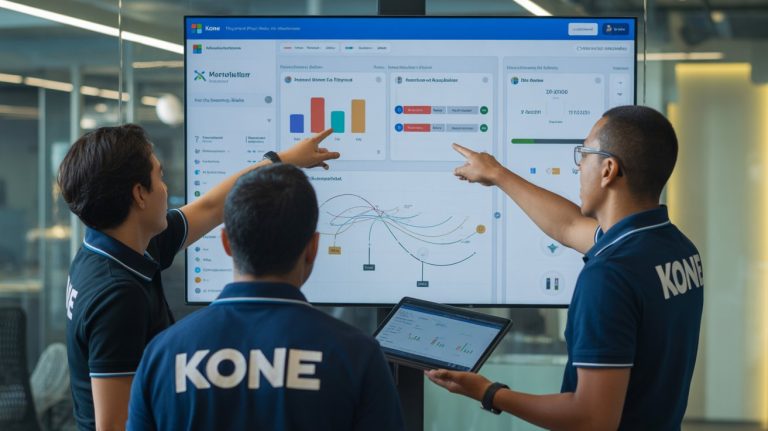
ICE AI Chatbot Accelerates IT Automation and Workforce

- ICE’s new AI chatbot automates 45% of first-line IT support requests.
- The initiative reduces average resolution time from 12 minutes to just 4 minutes.
- HR must adapt by focusing on reskilling in response to automation trends.
- Future expansions include finance queries and generative AI for coding help.
- Why ICE Is Doubling Down on Automation
- How the AI Chatbot Works
- Implications for HR and Workforce Planning
- Future Outlook and Strategic Recommendations
Why ICE Is Doubling Down on Automation
ICE’s internal IT shop has long been a testing ground for cutting‑edge tools, but the pace of digital transformation has forced a reassessment of how support services are delivered. According to John Miller, senior vice president of IT Operations at ICE, “Our ticket volume grew by 38 % in 2025, driven by remote‑work complexities and the proliferation of cloud‑native services. Manual triage simply cannot keep up.”
To address the bottleneck, ICE piloted an AI‑driven virtual assistant in Q3 2025. The bot, built on a large‑language‑model (LLM) platform and integrated with the firm’s n8n workflow engine, now handles up to 45 % of first‑line support requests, ranging from password resets to cloud‑resource provisioning.
Key performance indicators (KPIs) from the pilot period include:
- Average resolution time cut from 12 minutes to 4 minutes.
- Help‑desk staffing costs reduced by an estimated $2.3 million annually.
- User satisfaction scores rising from 78 % to 92 %.
These figures align with a Gartner 2025 forecast that predicts 70 % of enterprise support tickets will be resolved by AI by 2027.
How the AI Chatbot Works
The ICE chatbot leverages a hybrid architecture:
- Natural‑Language Understanding (NLU): Powered by a proprietary fine‑tuned LLM, the bot interprets user intent in real time.
- Workflow Automation via n8n: Once intent is identified, the bot triggers pre‑built n8n workflows that interact with internal APIs (e.g., Active Directory, AWS, Azure).
- Human‑in‑the‑Loop Escalation: Complex cases are automatically escalated to a live technician, preserving context and reducing handoff friction.
Security remains a top priority. All interactions are logged, encrypted, and subject to ICE’s zero‑trust policies. The bot also adheres to GDPR and CCPA standards, ensuring that no personally identifiable information (PII) is stored beyond the session.
“We wanted a solution that could evolve with our tech stack,” says Laura Chen, lead architect for the project. “n8n’s open‑source flexibility let us stitch together legacy systems and modern cloud services without a massive rewrite.”
Implications for HR and Workforce Planning
Automation of routine IT tasks has a ripple effect on the broader workforce. For HR professionals, the ICE rollout offers several actionable insights:
- Reskilling Pathways: As repetitive tickets decline, IT staff can be redeployed to higher‑value projects such as cybersecurity, data analytics, and AI model governance. Companies should develop training programs that transition support engineers into these roles.
- Talent Acquisition Shifts: Recruiters will increasingly look for candidates with experience in LLM integration, workflow orchestration tools (e.g., n8n, Zapier), and AI ethics. Job descriptions should reflect these emerging skill sets.
- Employee Experience (EX) Boost: Faster issue resolution directly improves employee satisfaction and productivity. HR metrics such as eNPS (employee Net Promoter Score) are likely to rise when IT friction points disappear.
Industry analyst Ravi Patel of AITechScope notes, “Automation isn’t about cutting jobs; it’s about reallocating human talent to tasks that require creativity and strategic thinking. Companies that pair AI chatbots with robust upskilling programs will see the greatest ROI.”
Future Outlook and Strategic Recommendations
ICE’s AI chatbot is just the first phase of a multi‑year automation roadmap. The next steps include:
- Expanding the bot’s knowledge base to cover finance‑related queries and compliance checks.
- Integrating generative AI for code snippets, enabling developers to receive instant assistance within IDEs.
- Deploying predictive analytics to anticipate system failures before they trigger tickets.
For technology firms eyeing similar deployments, the following best practices are recommended:
- Start Small, Scale Fast: Pilot the chatbot in a low‑risk department, gather metrics, and iterate quickly.
- Choose Open‑Source Orchestration: Tools like n8n provide cost‑effective, customizable workflow automation that can bridge legacy and cloud environments.
- Embed Governance Early: Define data‑privacy, bias‑mitigation, and escalation protocols before the bot goes live.
- Align with HR Strategy: Coordinate with talent development teams to map new skill requirements and create clear career pathways.
As enterprises continue to grapple with mounting support demands, AI‑driven chatbots are poised to become a cornerstone of the modern IT service model. ICE’s bold step underscores a broader industry trend: automation is no longer optional—it’s a strategic imperative that reshapes how organizations attract, retain, and empower talent.
— End of Report —