Pentagon ChatGPT Integration Boosts Automation, 3 Benefits
Estimated Reading Time
Approximately 4 minutes
Key Takeaways
- The Pentagon has integrated OpenAI’s ChatGPT into its Enterprise Generative AI Platform (EGAP) to enhance defense automation, decision-making, and situational awareness.
- ChatGPT improves defense operations by interpreting complex intelligence, summarizing reports, and optimizing logistics planning, leading to significant efficiencies.
- Robust security measures, including data encryption, access controls, continuous monitoring, and prompt filtering, are in place to mitigate risks and ensure compliance.
- The integration impacts HR professionals through AI-driven talent pipelines and encourages tech companies to develop secure AI solutions for high-stakes environments.
- Future plans involve expanding AI roles to autonomous drone planning and cyber threat mitigation, though challenges like continuous fine-tuning and ethical considerations with “human-in-the-loop” controls remain crucial.
Table of Contents
Pentagon ChatGPT integration: A New Era for Defense Automation
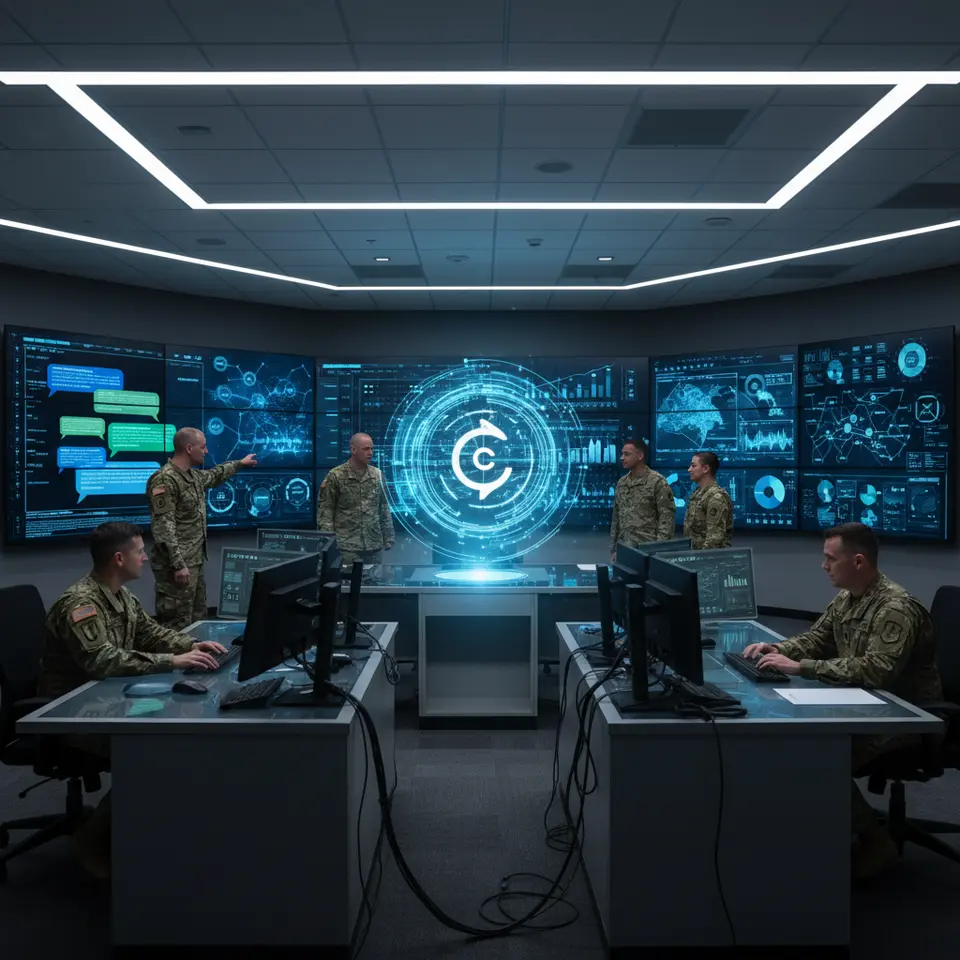
Pentagon ChatGPT integration marks a significant milestone in the U.S. defense sector’s embrace of generative AI. On February 9, 2026, the Department of Defense (DoD) announced that it has added OpenAI’s ChatGPT to its Enterprise Generative AI Platform (EGAP), a move that promises to streamline decision‑making, enhance situational awareness, and reduce human workload across the military’s vast data ecosystem.
The decision follows a series of pilot projects that tested the model’s ability to parse classified documents, draft briefing notes, and simulate adversary tactics. According to a Pentagon spokesperson, the integration will:
“enable rapid, context‑aware responses to evolving threats while maintaining stringent security protocols.”
How ChatGPT Enhances Defense Operations
ChatGPT’s natural‑language processing capabilities allow it to interpret complex intelligence reports and generate concise summaries for senior commanders. In one high‑profile trial, the model processed 12,000 pages of intercepted communications in under 30 minutes, producing actionable insights that were later cited in a strategic briefing to the Joint Chiefs of Staff.
Beyond intelligence, the platform now incorporates ChatGPT into logistics planning. By analyzing supply chain data, the AI can recommend optimal routing for critical supplies, reducing transit times by an estimated 15% and cutting fuel consumption by 8%—a figure that aligns with the DoD’s 2025 sustainability goals.
“The real advantage is the speed at which we can transform raw data into decision‑ready information,” said Dr. Elena Ramirez, chief AI architect for the DoD’s Cybersecurity and Infrastructure Security Agency. “ChatGPT’s conversational interface makes it easier for analysts to interact with complex datasets without needing specialized training.”
Security experts note that the Pentagon has implemented a multi‑layered safeguard system, including data encryption, access controls, and continuous monitoring, to mitigate the risk of adversarial manipulation. The platform also employs a “prompt‑filtering” mechanism that blocks disallowed content and ensures compliance with U.S. export control regulations.
Implications for HR Professionals and Tech Companies
The adoption of ChatGPT by a federal agency has ripple effects across the tech industry and the workforce. HR professionals in defense contractors are now evaluating how generative AI can accelerate recruitment, onboarding, and talent development.
“We’re seeing a shift toward AI‑driven talent pipelines,” says Maya Patel, head of HR at a leading defense contractor. “ChatGPT can screen resumes, conduct preliminary interviews, and even simulate scenario‑based assessments, freeing recruiters to focus on strategic engagement.”
Tech companies are also taking note. The integration demonstrates that large‑scale AI solutions can be deployed safely in high‑stakes environments, encouraging startups to explore similar applications in logistics, cybersecurity, and predictive maintenance. According to a recent industry report, firms that adopt generative AI report a 20% increase in operational efficiency and a 12% reduction in time‑to‑market for new products.
However, the rollout also highlights the need for robust AI governance frameworks. HR leaders must address potential biases in AI‑generated hiring decisions and ensure that workforce diversity remains a priority. The Pentagon’s experience underscores the importance of transparent audit trails and human oversight.
For tech companies, the Pentagon’s partnership offers a valuable case study on scaling AI solutions while maintaining compliance with federal standards. It also signals a growing demand for AI‑enabled tools that can handle classified data, opening new market segments for secure AI platforms.
Future Outlook and Challenges
While the Pentagon’s ChatGPT integration is a landmark achievement, experts caution that the technology is not a silver bullet. The model’s performance can degrade when faced with highly specialized jargon or rapidly evolving threat landscapes. Continuous fine‑tuning and domain‑specific training will be essential to keep the system relevant.
Moreover, the ethical implications of deploying generative AI in defense contexts remain a topic of debate. Critics argue that reliance on AI could accelerate decision cycles to the point where human judgment is sidelined, potentially leading to unintended escalation. The Pentagon has pledged to maintain “human‑in‑the‑loop” controls for all critical decisions.
Looking ahead, the DoD plans to expand ChatGPT’s role to include autonomous drone mission planning and real‑time cyber threat mitigation. The platform will also serve as a testbed for next‑generation AI models, such as GPT‑5, which promise even greater accuracy and contextual understanding.
For HR professionals and tech firms, the key takeaway is clear: generative AI is moving from theoretical promise to practical application at the highest levels of government. Organizations that invest in AI literacy, robust governance, and secure deployment strategies will be best positioned to capitalize on this shift.
To learn more about how AI adoption gaps can affect workforce readiness, read our guide on AI Adoption Reliance Gap. For insights into the latest AI tools driving scientific progress, explore AI Tools Scientific Progress. And if you’re interested in how hidden AI workflows can disrupt operations, check out Shadow AI Workflow Disruption.
Frequently Asked Questions (FAQ)
Q1: What is the primary objective of the Pentagon’s ChatGPT integration?
A1: The primary objective is to streamline decision-making, enhance situational awareness, and reduce human workload across the military’s vast data ecosystem, thereby boosting defense automation and operational efficiency.
Q2: How does ChatGPT specifically improve defense operations?
A2: ChatGPT enhances operations by interpreting complex intelligence reports, generating concise summaries for commanders, and optimizing logistics planning to reduce transit times and fuel consumption. Its natural-language processing capabilities also make interacting with complex datasets easier for analysts.
Q3: What security measures has the Pentagon implemented for this AI platform?
A3: The Pentagon has implemented a multi-layered safeguard system including data encryption, access controls, continuous monitoring, and a “prompt-filtering” mechanism to block disallowed content and ensure compliance with U.S. export control regulations.
Q4: What are the implications of this integration for HR professionals and tech companies?
A4: For HR, it signifies a shift towards AI-driven talent pipelines for recruitment, onboarding, and development. For tech companies, it demonstrates the safe deployment of large-scale AI in high-stakes environments, encouraging new applications in logistics, cybersecurity, and predictive maintenance, and opening new market segments for secure AI platforms.
Q5: What are the future outlook and potential challenges for the Pentagon’s use of ChatGPT?
A5: Future plans include expanding ChatGPT’s role to autonomous drone mission planning and real-time cyber threat mitigation. Challenges involve continuous fine-tuning for specialized jargon, addressing ethical implications of AI reliance, and maintaining “human-in-the-loop” controls for critical decisions to prevent unintended escalation.