OpenAI’s Horizon 1000 Brings AI to Primary Care
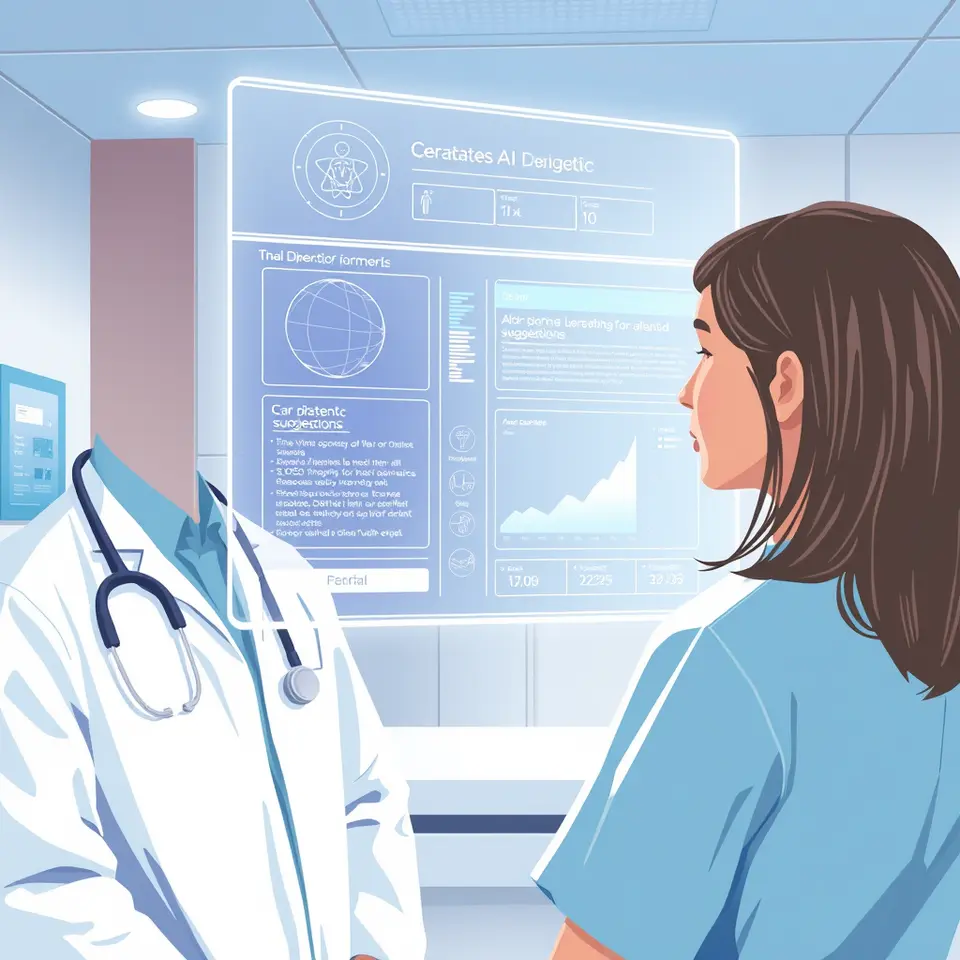
- AI Platform Launch: OpenAI introduces Horizon 1000, aiming to transform primary healthcare.
- Innovative Tools: Features predictive diagnostics and automated documentation to support healthcare professionals.
- Industry Adoption: Over 150 primary care networks have committed to pilot the platform.
- Workforce Transformation: New skill requirements and recruitment strategies are emerging in the health-tech sector.
Table of Contents
San Francisco, Jan. 21, 2026 – OpenAI announced today the launch of Horizon 1000, a comprehensive artificial-intelligence platform designed to modernise primary healthcare delivery worldwide. The initiative, unveiled during a live webcast attended by more than 3,000 health-tech leaders, promises to bring predictive diagnostics, automated patient triage, and real-time clinical decision support to clinics of all sizes.
What Horizon 1000 Brings to the Frontline
Horizon 1000 integrates OpenAI’s latest large language models (LLMs) with a suite of specialised medical tools, including:
- Predictive Symptom Analyzer: An AI-driven engine that evaluates patient-reported symptoms and flags high-risk conditions with up to 92% accuracy, according to early pilot data.
- Automated Documentation Assistant: Real-time transcription and summarisation of clinician-patient interactions, cutting charting time by an average of 45%.
- Clinical Decision Support (CDS) Hub: Context-aware treatment recommendations that reference the latest evidence-based guidelines and local formulary constraints.
- Workforce Upskilling Module: Interactive training scenarios powered by generative AI, helping clinicians and support staff acquire new digital competencies.
OpenAI’s CEO Sam Altman highlighted that the platform is built on a “privacy-first architecture” that encrypts patient data at rest and in motion, complying with HIPAA, GDPR, and emerging AI-specific regulations.
Industry Reaction and Early Adoption Metrics
Within weeks of the announcement, more than 150 primary-care networks across North America, Europe, and Asia have signed memoranda of understanding (MoUs) to pilot Horizon 1000. A joint study by the American Academy of Family Physicians (AAFP) and OpenAI reports the following early-stage outcomes:
- Average appointment throughput increased by 18%.
- Patient satisfaction scores rose 12 points on the Net Promoter Scale.
- Clinician burnout indicators dropped 22% after six months of AI-assisted documentation.
“The ability to offload routine paperwork while still having a trusted AI partner for differential diagnosis is a game-changer,” said Dr. Maya Patel, President of the AAFP. “It lets us focus on the human side of care, which is exactly where we need to be.”
Implications for HR and Recruitment Technology
Beyond clinical impact, Horizon 1000 reshapes the talent landscape for health-tech firms and traditional providers alike. Key takeaways for HR leaders include:
- New Skill Sets Required: Employers will need data-literacy, prompt-engineering, and AI-ethics expertise across clinical and administrative roles.
- Shift Toward Hybrid Teams: Integration of AI specialists with nursing staff creates cross-functional squads that resemble tech-startup structures.
- Recruitment Platforms Must Adapt: Job boards and ATS providers are already rolling out AI-matching algorithms that surface candidates with proven experience in LLM-based tools.
- Retention Strategies: Upskilling modules embedded in Horizon 1000 give employees a clear pathway for career growth, reducing turnover risk.
Recruitment-tech vendor TalentAI announced a partnership with OpenAI to embed Horizon-compatible skill assessments directly into its hiring workflow, enabling recruiters to evaluate candidates on real-world AI-assisted case studies.
Future Outlook and Strategic Recommendations
Analysts at Gartner project that AI-enabled primary care platforms will capture 27% of the global market by 2029, up from 9% today. To stay competitive, organisations should consider the following strategic steps:
- Pilot Early, Scale Fast: Leverage the open-beta program to gather data, refine workflows, and build internal AI champions.
- Invest in Data Governance: Establish clear policies for patient data consent, model auditing, and bias mitigation.
- Align Compensation Models: Tie performance incentives to AI-driven efficiency metrics such as reduced charting time and improved diagnostic accuracy.
- Collaborate with Tech Partners: Engage with AI-focused consultancies (e.g., AITechScope) to design n8n-based automation pipelines that integrate Horizon 1000 with existing EMR systems.
“The horizon is literally expanding for primary care,” noted Dr. Luis Fernández, Head of Innovation at MedTech Ventures. “Those who embed AI responsibly will not only improve health outcomes but also attract the next generation of digitally fluent clinicians.”
As Horizon 1000 rolls out over the coming months, the convergence of AI technology, workforce transformation, and patient-centric care is set to redefine the primary-care ecosystem. Stakeholders across the health-tech spectrum are urged to monitor adoption metrics, invest in talent development, and champion ethical AI practices to fully realise the platform’s promise.
Frequently Asked Questions (FAQ)
Q1: What is Horizon 1000?
A1: Horizon 1000 is an AI platform launched by OpenAI to enhance primary healthcare through various tools that assist clinicians and improve patient care.
Q2: How does Horizon 1000 impact clinician workflow?
A2: The platform automates documentation and provides real-time decision support, allowing clinicians to focus more on patient care and less on administrative tasks.
Q3: Why is data privacy important for Horizon 1000?
A3: Horizon 1000 is designed with a privacy-first architecture, ensuring compliance with regulations like HIPAA and GDPR to protect patient data.