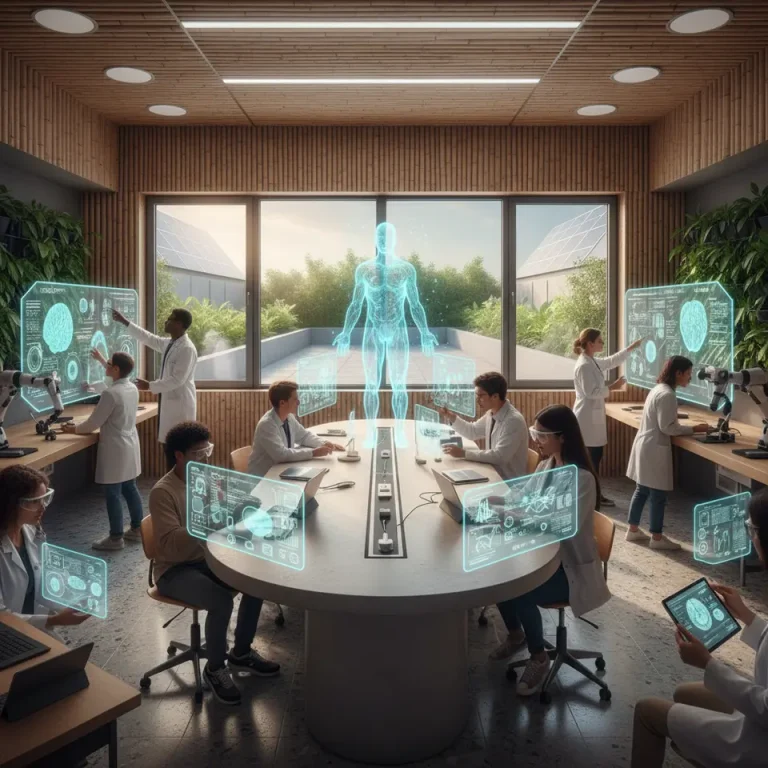
AI ELN Solutions Boost Scientific Research Efficiency
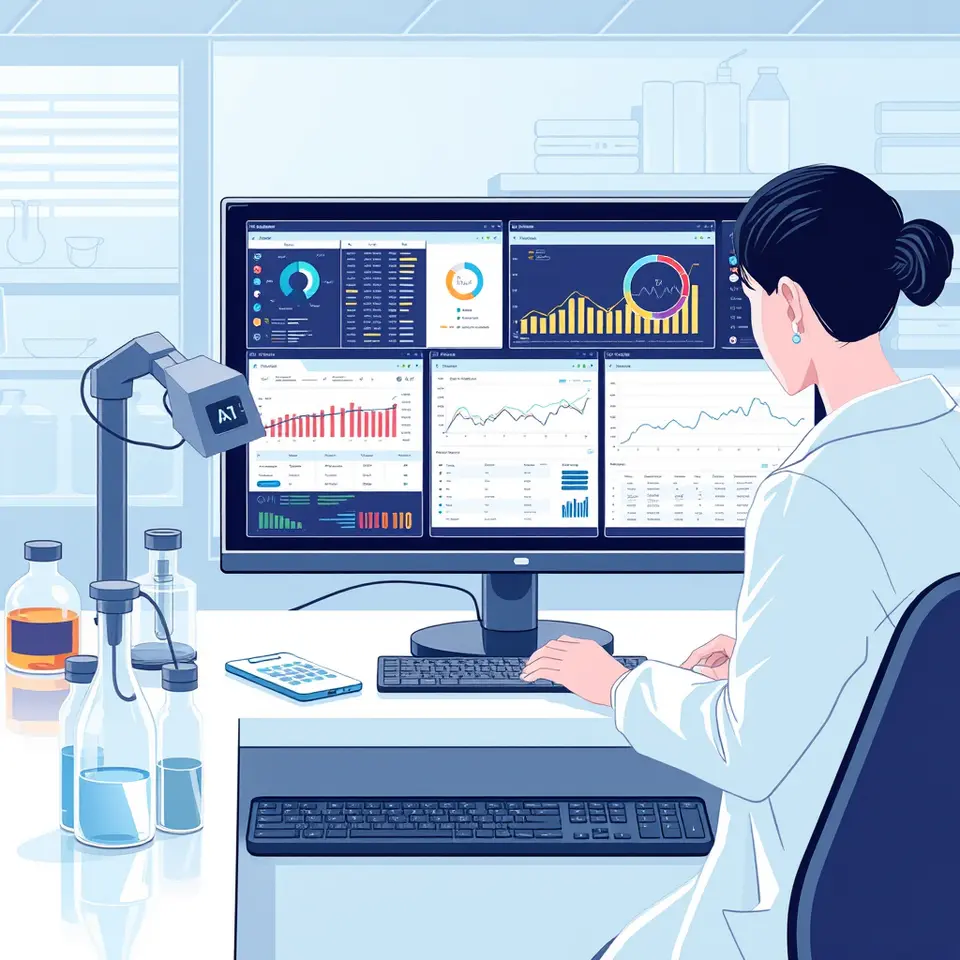
Estimated reading time: 7 minutes
Key Takeaways
- AI tools are set to transform the workflow of Electronic Lab Notebooks (ELNs) in scientific research.
- The limitations of current ELNs hinder scientific progress and lead to inefficiencies.
- AI can automate data management, enhancing experimental design and reproducibility.
- Companies like AITechScope are pioneering the integration of AI into laboratories.
- Future researchers will require new skills emphasizing AI and data science.
Table of Contents
- The Unraveling of the ELN Promise: Why Current Systems Fall Short
- AI’s Transformative Power: From Data Logger to Discovery Engine
- AITechScope at the Forefront: Powering the Intelligent Laboratory
- Industry Implications and the Future Outlook for Scientific Workforce
Main Content
LONDON, UK – January 30, 2026 – A critical fault line has emerged in the bedrock of modern scientific research: Electronic Lab Notebooks (ELNs) are increasingly failing to meet the complex demands of today’s fast-paced laboratories. While once hailed as a digital panacea, the current generation of ELNs is proving cumbersome, inefficient, and often a barrier to discovery. However, a seismic shift is underway, with cutting-edge AI tools rapidly emerging as the indispensable solution, promising to revolutionize data management, workflow optimization, and the very pace of scientific progress.
The urgency of this transformation cannot be overstated. From pharmaceutical development to advanced materials science, researchers worldwide are grappling with ELN systems that hinder rather than help, creating bottlenecks that impede innovation and squander valuable resources. The question is no longer if AI will integrate into the lab, but how swiftly it can redefine the future of scientific inquiry.
The Unraveling of the ELN Promise: Why Current Systems Fall Short
Electronic Lab Notebooks were introduced with the noble aim of replacing paper notebooks, promising improved data integrity, searchability, and collaboration. Yet, their implementation has frequently fallen short of expectations, leading to widespread frustration among scientists. The issues are multifaceted and deeply ingrained in their design and functionality.
Many existing ELNs suffer from rigid structures that fail to adapt to the dynamic nature of experimental science. Researchers often find themselves wrestling with clunky interfaces, struggling to customize templates for diverse experiments, or spending excessive time on manual data entry that offers little real-time analytical feedback. This often leads to shadow workflows and data silos, where critical information is stored in personal files or auxiliary systems, undermining the ELN’s primary purpose of centralization and reproducibility.
Furthermore, traditional ELNs are typically poor at handling the sheer volume and complexity of data generated by modern instrumentation. They lack the intelligence to automatically extract relevant insights from raw sensor data, integrate seamlessly with analytical software, or flag potential anomalies in real-time. This forces researchers into laborious manual data processing, analysis, and interpretation – a significant drain on time and intellectual energy that could be better spent on hypothesis generation and experimental design. The lack of interoperability between different ELN platforms and other lab systems also creates a fragmented data landscape, making collaboration difficult and hindering the crucial validation and reproduction of results.
AI’s Transformative Power: From Data Logger to Discovery Engine
The limitations of conventional ELNs highlight a clear void that AI is perfectly positioned to fill. Artificial intelligence, particularly in areas like Natural Language Processing (NLP), machine learning, and computer vision, offers powerful capabilities to transform the lab notebook from a passive data repository into an active, intelligent assistant.
Imagine an AI-powered ELN that can:
- Automate Data Capture and Annotation: Utilizing NLP, AI can transcribe spoken notes, parse unstructured text, and automatically extract key parameters from experimental descriptions. Computer vision can analyze images and videos from experiments, identifying and logging relevant events or changes without manual input.
- Intelligent Data Integration and Analysis: AI algorithms can seamlessly ingest data from diverse lab instruments, standardize formats, and perform preliminary analysis in real-time. This includes identifying trends, outliers, or potential errors, providing immediate feedback to researchers. For more on this, explore how AI tools are advancing scientific progress.
- Workflow Optimization and Experiment Design: Machine learning models can learn from past experiments to suggest optimal parameters, flag potential issues in experimental design, and even automate routine steps. This intelligent delegation frees researchers to focus on higher-level conceptual work.
- Enhanced Reproducibility and Collaboration: AI can automatically link all data, protocols, and analyses to specific experiments, ensuring a comprehensive and transparent record. Semantic search capabilities can allow researchers to quickly find relevant past experiments, fostering greater collaboration and reducing redundant work.
This level of automation and intelligence moves beyond mere data logging. It empowers researchers with real-time insights, accelerates the experimental cycle, and dramatically improves the integrity and accessibility of scientific data, setting the stage for faster breakthroughs.
AITechScope at the Forefront: Powering the Intelligent Laboratory
As the scientific community grapples with the transition to AI-powered research, companies like AITechScope are emerging as critical enablers of this transformation. A leading provider of virtual assistant services, AITechScope specializes in AI-powered automation, n8n workflow development, and business process optimization – expertise directly applicable to the modernization of scientific laboratories.
AITechScope’s approach involves leveraging cutting-edge AI tools and technologies to create intelligent delegation and automation solutions. For research institutions and biotech companies, this translates into bespoke systems that can:
- Streamline Lab Operations: Through n8n workflow development, AITechScope can build custom automated pipelines that connect instruments, ELNs, LIMS (Laboratory Information Management Systems), and analytical platforms. This eliminates manual data transfers, reduces errors, and ensures a seamless flow of information.
- Boost Researcher Productivity: By offloading repetitive and data-intensive tasks to AI-powered virtual assistants, researchers gain back invaluable time. Imagine an AI assistant managing reagent inventories, scheduling equipment, or even pre-processing complex datasets for analysis.
- Optimize Resource Allocation: AI-driven insights into experimental efficiency and resource utilization can help labs make smarter decisions, reducing waste and accelerating project timelines. This kind of efficiency is vital for businesses of all sizes, including AI automation for SMB tools, demonstrating its broad applicability.
The firm’s focus on scaling operations, reducing costs, and improving efficiency aligns perfectly with the current demands of scientific research. By bridging the gap between existing, often disparate, lab technologies and the transformative power of AI, AITechScope offers a clear pathway for labs to overcome ELN failures and embrace a more intelligent, automated future.
Industry Implications and the Future Outlook for Scientific Workforce
The widespread adoption of AI tools to augment and eventually replace failing ELNs carries profound implications for the scientific industry and workforce. For HR professionals and tech companies, understanding these shifts is paramount.
Firstly, the role of the researcher will evolve. With AI handling the mundane and repetitive aspects of data management and initial analysis, scientists will be free to dedicate more time to critical thinking, experimental design, hypothesis testing, and interpreting complex results. This represents a shift from data clerks to strategic innovators, demanding new skill sets centered around data science, AI literacy, and advanced analytical reasoning.
Secondly, the landscape of recruitment technology will need to adapt. Identifying candidates with hybrid skills – deep scientific knowledge combined with AI proficiency – will become crucial. Training programs will need to be developed to upskill existing workforces, ensuring they are proficient in leveraging AI tools for maximum impact. Tech companies, in turn, will face growing demand for specialized AI solutions tailored for scientific applications, opening new markets and collaboration opportunities.
Looking ahead to 2026 and beyond, the convergence of AI and scientific research promises a new era of accelerated discovery. The inefficiencies exposed by failing ELNs are not merely operational hurdles; they are clarion calls for innovation. AI, with its capacity for intelligent automation and sophisticated data processing, is not just a band-aid solution but the foundational technology for the next generation of scientific exploration. Labs that embrace this change, partnering with experts like AITechScope, will undoubtedly lead the charge in solving humanity’s most pressing challenges and unlocking unprecedented scientific breakthroughs.
For more insights into the future of technology and workforce transformation, visit our main page at mumtazawan.com.
FAQ Section
What are Electronic Lab Notebooks?
Electronic Lab Notebooks (ELNs) are digital tools designed to replace traditional paper lab notebooks to enhance data management, reproducibility, and collaboration in scientific research.
How can AI improve lab workflows?
AI can automate data capture, integrate diverse datasets, optimize workflows, and enhance collaboration, ultimately streamlining research processes and freeing up researchers to focus on more complex tasks.
What role does AITechScope play?
AITechScope specializes in AI-powered automation solutions, enabling laboratories to modernize their workflows, improve efficiency, and effectively manage data.
What skills will future researchers need?
Future researchers will need to possess skills in data science, AI literacy, and advanced analytical reasoning to effectively leverage AI tools for scientific inquiry.