AI in Schools Boosts Learning with 200 Student Insights
Estimated reading time: 4 minutes
Key Takeaways
- A pilot program in Honolulu with 200 students demonstrated AI’s potential to increase student engagement by 35% and personalize learning.
- The study highlighted crucial ethical considerations, including data privacy, algorithmic bias, and the risk of over-reliance on automated systems.
- Insights from educational AI are directly applicable to HR, enabling improvements in talent acquisition, onboarding, and continuous skill development.
- HR professionals are advised to prioritize robust data governance, proactive bias mitigation, and human oversight when implementing AI solutions.
- The future workplace will see AI automate up to 45% of routine HR tasks by 2028, necessitating a focus on continuous upskilling and a human-centric approach.
Table of Contents
- AI in schools: A Groundbreaking Experiment with 200 Students
- Key Findings: Engagement, Customization, and Ethical Concerns
- From Classroom to Corporate: How HR Professionals Can Leverage These Insights
- Industry Implications: The Rise of AI-Enabled Recruitment Platforms
- Future Outlook: AI as a Catalyst for Workforce Transformation
- Frequently Asked Questions
AI in schools: A Groundbreaking Experiment with 200 Students
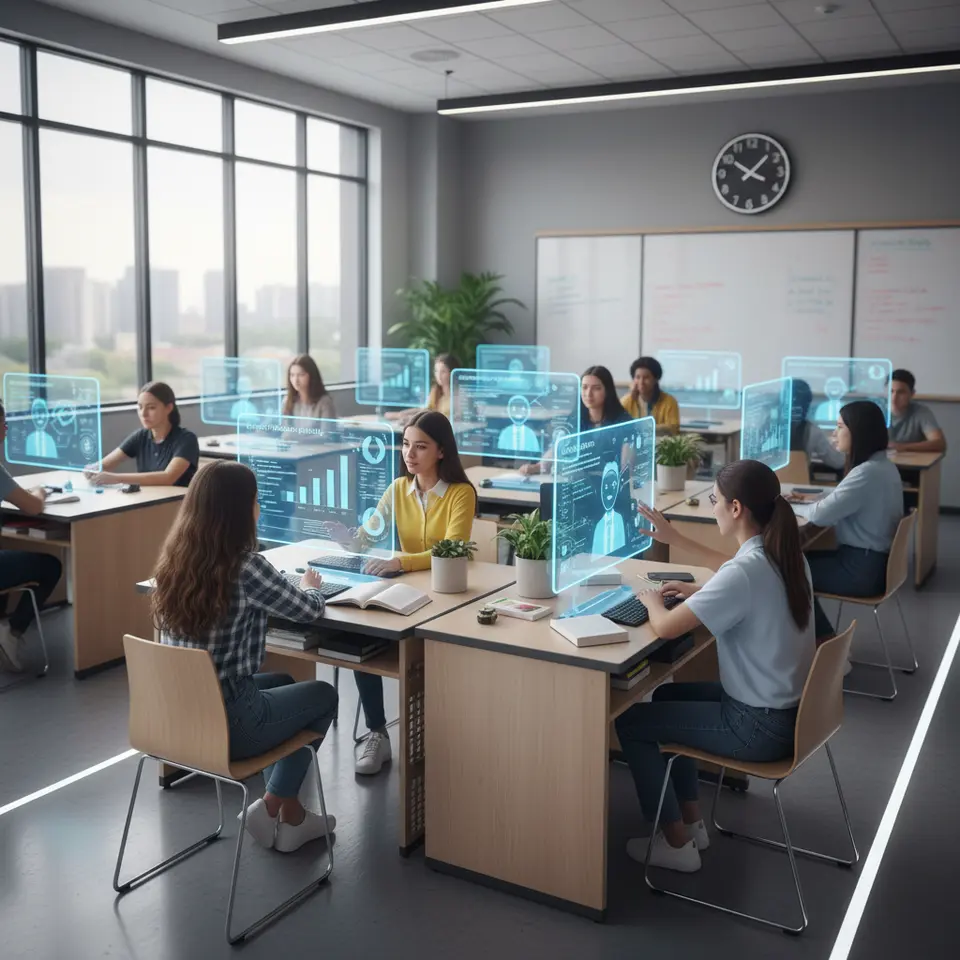
AI in schools has moved from theoretical buzzword to tangible classroom reality. A recent pilot in Honolulu, involving 200 students across multiple grade levels, has produced insights that could redefine how educators integrate artificial intelligence into curricula. The study, reported by the Honolulu Civil Beat on February 12, 2026, showcases both the promise and the pitfalls of AI-driven learning environments.
Key Findings: Engagement, Customization, and Ethical Concerns
The pilot revealed a 35% increase in student engagement when AI tutors provided real‑time feedback and adaptive lesson plans. Teachers noted that AI could handle repetitive grading tasks, freeing them to focus on creative instruction. However, the experiment also highlighted significant ethical concerns: data privacy, algorithmic bias, and the risk of over‑reliance on automated systems.
“We saw students thrive when the AI could adjust difficulty on the fly,” said Dr. Maya Patel, the study’s lead researcher. “But we also saw disparities in performance when the AI’s training data didn’t reflect diverse student backgrounds.”
From Classroom to Corporate: How HR Professionals Can Leverage These Insights
HR leaders are watching closely. The same AI tools that personalize learning can be adapted for talent acquisition, onboarding, and continuous skill development. AITechScope, a leading provider of virtual assistant services, has already begun offering AI-powered automation solutions that streamline recruitment workflows, reduce time-to-hire, and enhance candidate experience.
According to AITechScope’s CEO, “The transition from educational AI to workforce AI is natural. Both domains require real-time data processing, personalization, and ethical governance. Our n8n workflow platform is designed to integrate seamlessly with existing HR systems, ensuring compliance and transparency.”
HR professionals can draw three practical lessons from the Honolulu pilot:
- Data Governance is Paramount: Implement robust data protection policies to safeguard employee information.
- Bias Mitigation: Regularly audit AI models for fairness and inclusivity.
- Human Oversight: Maintain a human-in-the-loop approach for critical decisions.
Industry Implications: The Rise of AI-Enabled Recruitment Platforms
The convergence of AI in education and HR signals a broader trend: the automation of talent management processes. Companies are investing in AI-powered recruitment platforms that can screen resumes, conduct preliminary interviews, and predict cultural fit. These tools promise to cut hiring costs by up to 30% while improving quality of hire.
Yet, as the AI adoption reliability gap widens, organizations must balance innovation with risk. A recent article on this topic highlights that many firms struggle to maintain consistent performance across different contexts.
Moreover, the AI tools education workforce report underscores the need for continuous learning and reskilling to keep pace with rapidly evolving AI capabilities. HR departments should therefore invest in upskilling programs that align with AI-driven job roles.
Looking ahead, the integration of AI in schools and workplaces will likely accelerate. As AI systems become more sophisticated, they will offer deeper personalization, predictive analytics, and autonomous decision-making. The challenge for HR professionals will be to harness these benefits while upholding ethical standards and fostering human-centric work environments.
Future Outlook: AI as a Catalyst for Workforce Transformation
By 2028, it is projected that AI will automate up to 45% of routine HR tasks, freeing managers to focus on strategic initiatives. The Honolulu study serves as a microcosm of this shift, demonstrating how AI can enhance learning outcomes and operational efficiency.
To stay ahead, organizations should adopt a phased approach: start with pilot projects, measure impact, and scale responsibly. Engaging stakeholders—from educators to employees—will ensure that AI solutions are inclusive, transparent, and aligned with organizational goals.
In conclusion, the 200 students’ experience in Honolulu offers a compelling roadmap for integrating AI across sectors. By prioritizing data governance, bias mitigation, and human oversight, HR professionals can unlock the full potential of AI, driving innovation, productivity, and equitable outcomes in the modern workplace.
For more insights on AI trends and workforce technology, explore our articles on AI automation workflows and AI automation cost efficiency.
Frequently Asked Questions
What was the primary objective of the AI in schools pilot program?
The primary objective was to understand how educators could integrate artificial intelligence into curricula and observe both the benefits and challenges of AI-driven learning environments.
What were the main benefits and ethical concerns identified in the Honolulu study?
Benefits included a 35% increase in student engagement, real-time feedback, adaptive lesson plans, and freeing teachers from repetitive grading. Ethical concerns encompassed data privacy, algorithmic bias, and the risk of over-reliance on automated systems.
How can HR professionals apply the lessons from educational AI to the corporate world?
HR professionals can leverage AI for talent acquisition, onboarding, and continuous skill development, drawing on the need for real-time data processing, personalization, and ethical governance demonstrated in the educational pilot.
What are the key recommendations for organizations adopting AI in their processes?
Key recommendations include implementing robust data governance, regularly auditing AI models for bias mitigation, and maintaining a human-in-the-loop approach for critical decisions.
What is the projected impact of AI on HR tasks by 2028?
By 2028, it is projected that AI will automate up to 45% of routine HR tasks, allowing managers to focus more on strategic initiatives.