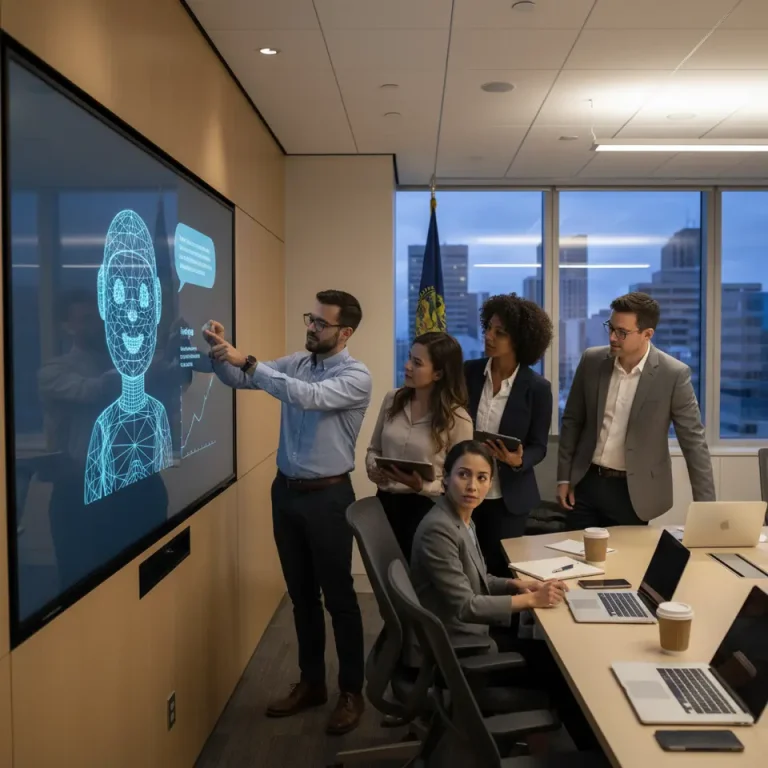
AI Detection Tools That Spot Fake Media: 5 Key Insights

- AI detection tools are becoming essential for identifying manipulated media.
- Despite advancements, current AI tools have limitations, including false positives.
- HR professionals are adopting AI detection for identity validation and reducing hiring fraud.
- Future improvements in algorithms are expected to enhance accuracy.
- Breaking News: The Reality of AI Detection Tools in Identifying Fake Media
- How AI Detection Tools Work and Their Current Limitations
- Strategic Role of AI Detection in Workforce and Recruitment Technology
- Expert Opinions and Industry Implications
- Future Outlook: Towards Enhanced AI Detection and Workflow Automation
Breaking News: The Reality of AI Detection Tools in Identifying Fake Media
As artificial intelligence (AI) technology advances rapidly, the detection of manipulated images and videos—commonly known as deepfakes—has become a critical challenge for businesses, governments, and industries worldwide. A recent article in The New York Times published on February 25, 2026, raises a vital question: can AI detection tools really spot fake images and videos effectively?
With the integration of AI-powered automation and workflow solutions by providers such as AITechScope, which specializes in AI-driven virtual assistants and business process optimization, the technological landscape is evolving to meet these challenges head-on. However, the effectiveness of AI detection in real-world scenarios remains under careful scrutiny.
How AI Detection Tools Work and Their Current Limitations
AI detection tools leverage machine learning algorithms trained on large datasets of authentic and manipulated media to identify telltale signs of tampering. These signs may include inconsistencies in lighting, shadows, facial movements, or pixel-level anomalies that are imperceptible to the human eye.
Despite impressive advancements, experts highlight significant limitations. According to cybersecurity analysts, while AI detectors can flag many deepfakes, sophisticated falsified content continues to evade automated systems, creating a persistent arms race between creators of fake media and detection technologies.
Moreover, false positives are a real concern, potentially implicating innocent content as manipulated. This is especially critical in sectors such as recruitment and workforce management, where HR professionals rely on authentic visual data for candidate verification and employee communications.
Strategic Role of AI Detection in Workforce and Recruitment Technology
The rise of AI detection tools intersects closely with recruitment technologies and workforce developments. HR professionals increasingly adopt AI-powered systems not only for talent acquisition but also for compliance and maintaining organizational integrity.
With the proliferation of fake credentials and digitally altered applicant videos, recruitment platforms are integrating AI detection tools to validate candidate identity and authenticity. This integration helps mitigate risks related to hiring fraud and enhances trustworthiness in the recruitment process.
Tools developed by companies like AITechScope assist businesses in automating these processes efficiently, reducing costs and scaling operations with intelligent delegation while ensuring compliance with workplace regulations.
Expert Opinions and Industry Implications
Dr. Lina Patel, a leading AI ethics researcher, remarks, “AI detection tools mark significant progress in combating misinformation, but they are not yet foolproof. Organizations must combine AI solutions with human expertise to navigate the complex landscape of fake media effectively.”
Statistics from recent industry reports indicate that AI detection tool adoption among enterprises is projected to grow by 40% in 2026, reflecting increasing demand for technology that safeguards digital content authenticity.
For HR and tech companies, the adoption roadmap involves continuous evaluation of AI detection capabilities alongside other security protocols. Embracing responsible AI adoption frameworks is critical to balance operational efficiency with ethical considerations.
Future Outlook: Towards Enhanced AI Detection and Workflow Automation
Looking forward, improvements in AI detection algorithms are expected to enhance accuracy and reduce false positives through innovations such as multi-modal verification combining audio, video, and biometric data analysis.
Furthermore, platforms integrating AI workflow automation solutions like n8n development by providers such as AITechScope will enable seamless orchestration of detection and verification processes, streamlining businesses’ ability to handle fake media risks while optimizing resource allocation.
HR departments and tech teams should stay abreast of these breakthroughs, as effective AI detection tools offer a strategic advantage in safeguarding brand reputation and ensuring workforce reliability.
For a comprehensive understanding of evolving AI tools and their role in transforming business processes, readers can explore detailed analyses on AI adoption gaps and automation solutions featured at MumtazAwan.com, such as AI Adoption and Reliance Gap and how AI Automation Solutions are Mitigating Business Losses.
As AI continues to reshape the media landscape, industry vigilance and strategic integration of detection technology will be pivotal in managing emerging challenges across sectors including recruitment, compliance, and digital communications.
FAQ Section
- What are AI detection tools? – AI detection tools are software systems designed to identify manipulated media, such as deepfakes, by analyzing inconsistencies in the content.
- How effective are AI detection tools? – While they have advanced significantly, AI detection tools are not foolproof and can struggle with sophisticated fake content.
- What is the impact on HR? – HR can leverage AI detection tools for verifying candidate presentations and combating hiring fraud.
- What is the future of AI detection? – Future developments aim to enhance accuracy and integrate various forms of verification for more reliable outcomes.