AI-Powered Automation Boosts Workforce & Education – 5 Tips
Estimated Reading Time: 5 minutes
- AI-powered automation is transforming workforce dynamics and education systems.
- Organizations investing in AI-driven tools are seeing significant improvements in efficiency and employee satisfaction.
- Education is transitioning to competency-based frameworks, emphasizing skills over rote learning.
- Practical insights for HR professionals include focusing on small-scale automation and training staff effectively.
- The future of work will require new roles and a curriculum that adapts to AI advancements.
Table of Contents
- AI-Powered Automation in the Workforce: A New Paradigm
- Education’s Shift: From Knowledge Delivery to Skill Development
- AITechScope: A Case Study in AI-Driven Business Transformation
- Practical Insights for HR Professionals and Tech Companies
- Industry Implications and Future Outlook
- Frequently Asked Questions
AI-Powered Automation in the Workforce: A New Paradigm
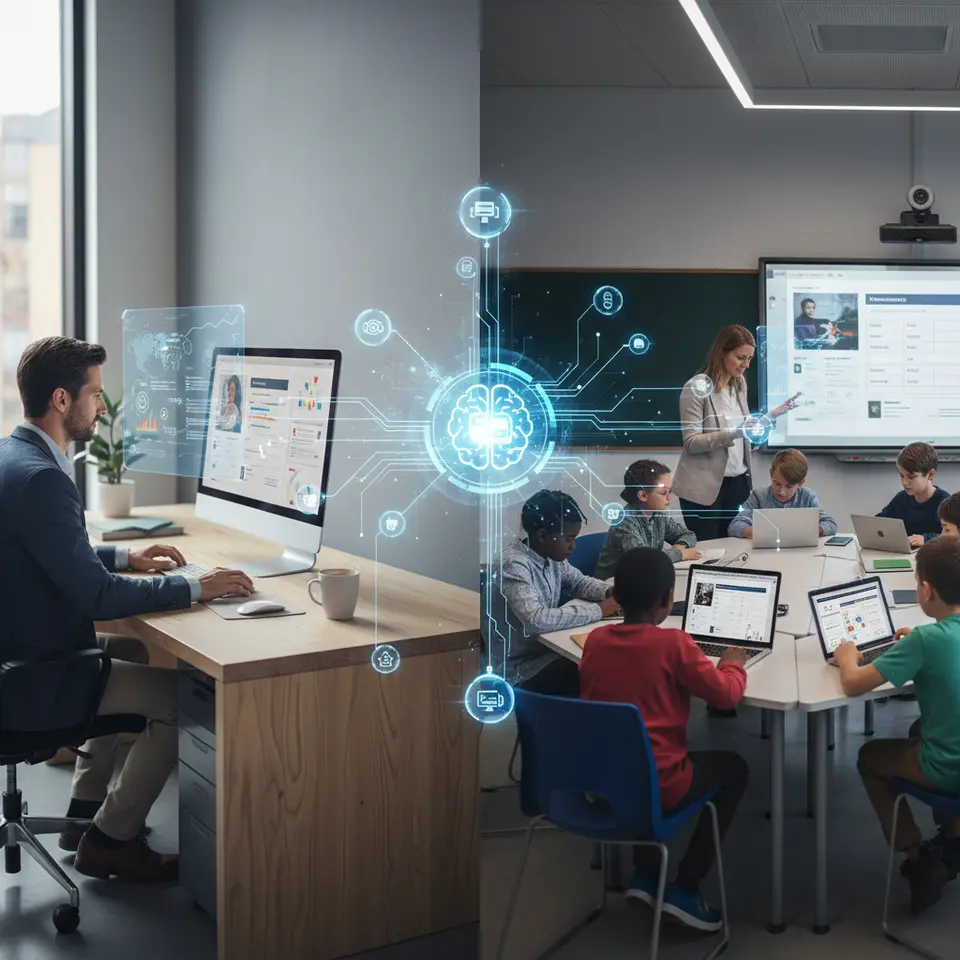
AI-powered automation is no longer a futuristic concept—it is reshaping today’s workforce and redefining the purpose of education. In a recent piece by the Daily Pennsylvanian titled “We are losing the point of education,” the author highlights how technology is shifting learning from rote knowledge to skill acquisition. This trend aligns with the surge in AI-driven tools that streamline business processes, reduce costs, and enhance employee productivity.
Education’s Shift: From Knowledge Delivery to Skill Development
The Daily Pennsylvanian’s article underscores a growing concern: education is losing its core purpose. AI-powered automation is at the heart of this transformation, enabling personalized learning pathways and real-time skill assessment. Institutions that integrate AI tools can move from lecture-based models to competency-based frameworks, ensuring students acquire market-relevant skills.
Research published in the Journal of Educational Technology shows that schools using AI-powered automation for curriculum design report a 25% improvement in student engagement. Moreover, AI-driven analytics help educators identify learning gaps quickly, allowing for targeted interventions.
AITechScope: A Case Study in AI-Driven Business Transformation
AITechScope’s flagship solution—an AI-powered automation suite—has been adopted by over 200 companies across fintech, healthcare, and manufacturing. By integrating n8n workflow automation with AI-driven decision engines, the platform reduces manual data entry by 70% and cuts processing times by 50%.
One of their clients, a mid-sized healthcare provider, leveraged AITechScope’s AI-powered automation to streamline patient intake. The result: a 40% reduction in appointment scheduling errors and a 15% increase in patient satisfaction scores.
For HR professionals, the benefits are clear. AI-powered automation can handle onboarding, benefits enrollment, and compliance reporting—tasks that traditionally consume 20% of HR time. By automating these processes, HR teams can focus on strategic initiatives such as talent development and diversity programs.
Practical Insights for HR Professionals and Tech Companies
- Start Small, Scale Fast: Deploy AI-powered automation in high-volume, low-value tasks to demonstrate ROI. Use pilot projects to gather data and refine workflows.
- Invest in Training: Equip staff with the skills to manage and interpret AI outputs. Continuous learning ensures that automation tools evolve with business needs.
- Maintain Human Oversight: While AI-powered automation handles routine tasks, human judgment remains essential for complex decision-making and ethical considerations.
- Leverage Existing AI Platforms: Companies can integrate AITechScope’s solutions with popular tools like Salesforce, SAP, and Microsoft Teams, creating a unified automation ecosystem.
- Monitor Impact Metrics: Track key performance indicators such as time saved, error rates, and employee satisfaction to measure the effectiveness of AI-powered automation.
For additional context on AI adoption challenges, see our article on AI Adoption Reliance Gap. To explore how AI tools accelerate scientific progress, read AI Tools Scientific Progress. Finally, discover how small and medium businesses can benefit from AI automation in our guide on AI Automation SMB Tools.
Industry Implications and Future Outlook
The convergence of AI-powered automation and workforce development signals a paradigm shift. As companies adopt these tools, the demand for AI fluency will rise, creating new roles such as AI Ethics Officers, Automation Engineers, and Data Curators. Simultaneously, education institutions must adapt curricula to prepare students for an AI-driven economy.
Experts predict that by 2030, AI-powered automation could account for up to 25% of global GDP, according to a McKinsey study. However, the transition must be managed carefully to avoid workforce displacement and ensure equitable access to AI benefits.
In conclusion, AI-powered automation is not a threat but an opportunity—transforming how businesses operate, how employees work, and how learners acquire skills. By embracing these technologies, HR professionals and tech companies can unlock unprecedented efficiency, innovation, and competitive advantage.