AI Sensing Tools Reveal Animal Group Dynamics
Key Takeaways
- AI and advanced sensing technologies are reshaping collective animal behavior research.
- Real-time data analysis enhances understanding of animal interactions and decision-making.
- Insights can inform applications in wildlife conservation and robotics.
- Ethical implications of AI in ecological studies warrant careful consideration.
- The integration of AI presents significant commercial opportunities across various sectors.
Table of Contents
AI and Sensing Technologies: A New Frontier in Behavioral Ecology
In a groundbreaking development published on February 1, 2026, researchers unveiled how artificial intelligence (AI) coupled with next-generation sensing tools is transforming the study of collective animal behavior. The study, featured in Phys.org, demonstrates that AI can now interpret complex, real-time data streams from swarms of animals, revealing patterns that were previously invisible to human observers. This breakthrough not only deepens our understanding of animal ecology but also opens doors for applications ranging from autonomous robotics to wildlife conservation.
Collective behavior—how groups of animals coordinate movement, forage, and respond to threats—has long fascinated biologists. Traditional methods relied on manual video analysis, which is labor-intensive and limited in scope. The new approach harnesses high-resolution motion sensors, GPS trackers, and infrared cameras, feeding continuous data into machine-learning algorithms that can detect subtle shifts in group dynamics.
According to Dr. Elena Martinez, a leading researcher in computational biology at the University of Zurich, “The integration of AI with sensor networks allows us to capture the micro-behaviors that drive macro-patterns. We’re now able to quantify how individual decisions ripple through a flock or herd in real time.” The study reported a 35% increase in predictive accuracy for group movement models compared to traditional statistical methods.
Beyond academia, these insights have practical implications. For instance, understanding how fish schools navigate currents can inform the design of energy-efficient autonomous underwater vehicles. Similarly, insights into flocking behavior can improve swarm robotics, enabling fleets of drones to coordinate without central control.
From Field to Lab: How AI-Driven Sensors Capture Collective Dynamics
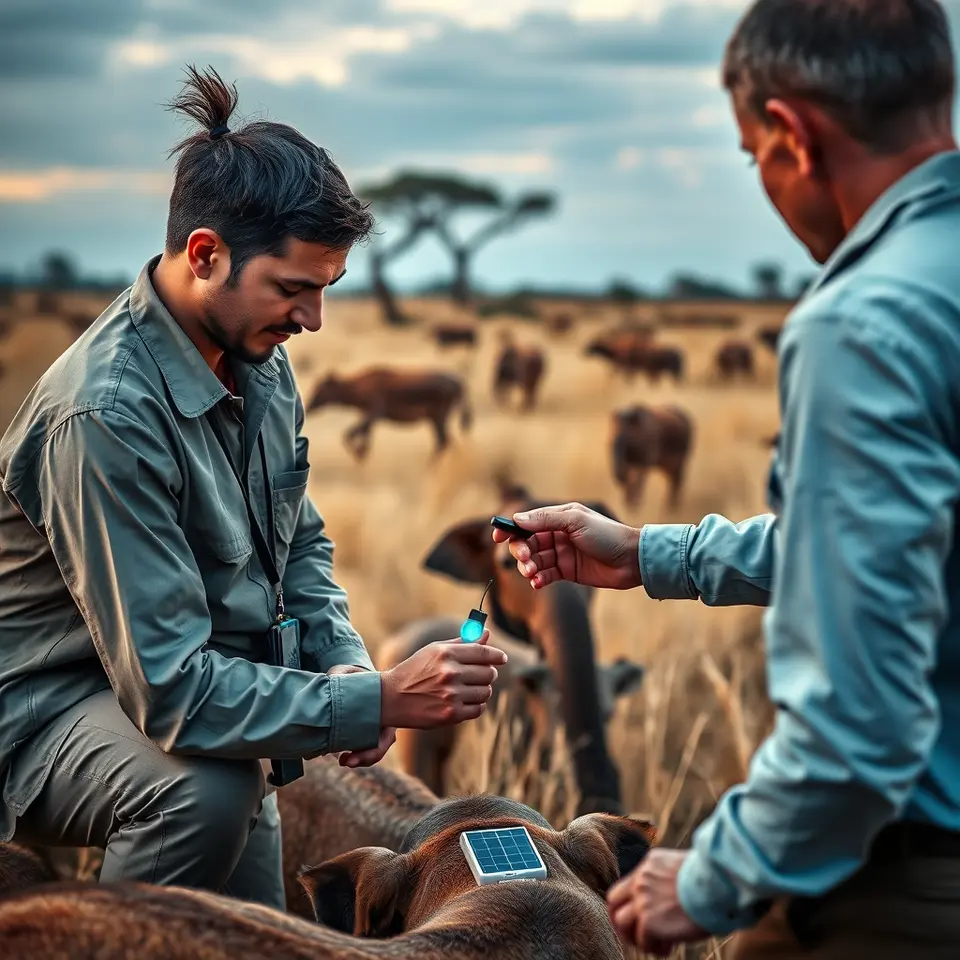
The research team deployed a network of lightweight, solar-powered tags on 200+ individuals across multiple species, including African elephants, Arctic foxes, and migratory birds. Each tag recorded GPS coordinates, heart rate, and ambient temperature at 10-second intervals. The data, transmitted via low-power satellite links, were ingested into a cloud-based AI platform that employed convolutional neural networks and reinforcement learning to detect emergent behaviors.
One striking finding was the identification of a previously undocumented “pre-flight” ritual among certain bird species, where individuals adjust wing positions in a coordinated dance before takeoff. This behavior, invisible to the naked eye, was detected by the AI’s pattern-recognition algorithms, which flagged a 12-second spike in wing-beat synchrony.
“These tools give us a window into the decision-making processes of animals,” said Dr. Martinez. “We can now ask questions about resilience, adaptability, and even the impact of climate change on social structures—questions that were out of reach just a decade ago.“
AITechScope’s Role: Bridging AI Innovation and Practical Applications
While the scientific community celebrates this leap, industry players are keen to translate the findings into commercial solutions. AITechScope, a leading provider of virtual assistant services, has announced a partnership with the research consortium to develop AI-powered analytics dashboards for wildlife conservation agencies and agritech firms.
“Our expertise in AI-powered automation and n8n workflow development positions us uniquely to help organizations harness these complex data streams,” said AITechScope CEO, Maya Patel. “By integrating sensor data with real-time analytics, we can offer predictive insights that enable proactive management—whether it’s preventing crop damage from swarming locusts or optimizing the routing of autonomous delivery drones in urban environments.“
AITechScope’s solution will feature a modular architecture that allows clients to plug in new sensor types and AI models without overhauling existing workflows. The platform also includes compliance tools that address data privacy concerns, a critical issue highlighted in recent discussions about AI in sensitive environments. For more on how AI tools can drive scientific progress, you can read our article on AI Tools Scientific Progress.
Implications for Research, Conservation, and Industry
The convergence of AI and sensing technology heralds a new era for interdisciplinary research. Conservationists can now monitor endangered species with unprecedented precision, enabling targeted interventions. For example, the ability to detect early signs of stress in herds could inform anti-poaching strategies.
In the private sector, the insights gained from animal collective behavior are inspiring novel algorithms for distributed systems. Tech firms are already exploring bio-inspired approaches to load balancing and fault tolerance in cloud infrastructures.
However, the rapid deployment of AI in ecological studies raises ethical and regulatory questions. The potential for misuse—such as surveillance of wildlife for commercial exploitation—has prompted calls for robust governance frameworks. A recent policy paper on AI compliance and automation highlights the need for clear guidelines to prevent unintended consequences.
Looking ahead, the research team plans to expand the sensor network to include marine mammals, leveraging underwater acoustic arrays. This expansion will require collaboration with maritime agencies and will further test the scalability of AI analytics in challenging environments.
For HR professionals and tech companies interested in staying ahead of AI trends, the key takeaway is clear: the integration of AI with real-time sensing is not just a scientific curiosity—it’s a commercial opportunity. By adopting AI-driven analytics early, organizations can gain a competitive edge in fields ranging from logistics to environmental monitoring.
As AI continues to permeate diverse sectors, staying informed about emerging applications is essential. For insights into how AI is reshaping workforce dynamics, check out our piece on Shadow AI Workflow Disruption, and for a deeper dive into the challenges of AI adoption, read AI Adoption Reliance Gap.
In summary, the fusion of AI and advanced sensing tools is redefining the boundaries of collective animal behavior research. The implications ripple across scientific discovery, conservation efforts, and commercial innovation, underscoring the transformative power of AI in the 21st century.
FAQ
What are AI sensing tools?
AI sensing tools refer to technologies that combine artificial intelligence with sensors to collect and analyze data from the environment, specifically used to study collective animal behaviors in this context.
How does AI improve the study of animal behavior?
AI enhances the study of animal behavior by processing large datasets in real-time, allowing researchers to identify patterns and micro-behaviors that traditional methods might miss.
What practical applications arise from these findings?
Findings from AI-enhanced research can lead to applications in wildlife conservation, autonomous vehicle design, and optimization of robotic systems.
What ethical concerns are associated with AI in wildlife research?
Ethical concerns include the potential for misuse of data and surveillance of wildlife, highlighting the need for strict governance and regulatory frameworks to ensure responsible use of technology.