
AI Trends and Tools: 5 Key Innovations in Life Sciences
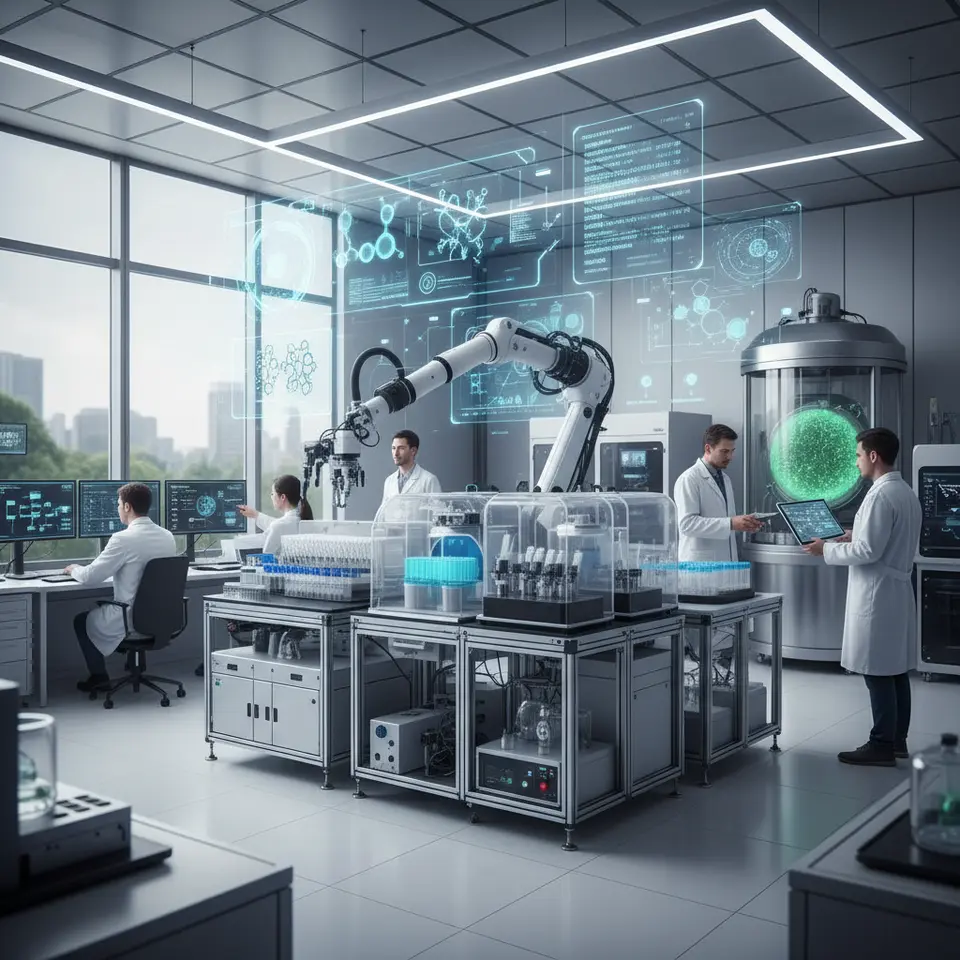
- Bessemer Venture Partners is pursuing AI-driven transformation in life sciences.
- AI-powered automation is enhancing efficiency and reducing costs in healthcare.
- HR professionals need to adapt to the changing landscape by focusing on AI skill development.
- Integration of AI will impact roles, with a shift towards supervisory functions.
- Strategic investment and partnerships will drive continuous innovation in the sector.
- Breaking News: AI Trends Revolutionizing Life Sciences
- AI Trends and Tools Driving Industry Change
- Practical Insights for HR Professionals and Tech Companies
- Industry Implications and the Road Ahead
Breaking News: AI Trends Revolutionizing Life Sciences
On March 12, 2026, Bessemer Venture Partners highlighted an exciting roadmap for transforming the life sciences industry through artificial intelligence (AI). This development signals a pivotal shift toward AI-powered automation and workflow optimization poised to reshape healthcare research, development, and operational processes.
In parallel, companies such as AITechScope are leading the charge by providing AI-powered virtual assistant services focused on automation, n8n workflow development, and business process optimization. These innovations are helping life sciences companies scale operations while reducing costs and improving workforce efficiency through intelligent delegation.
AI Trends and Tools Driving Industry Change
The life sciences sector stands on the brink of a digital revolution, with AI trends and tools being at the forefront. Investments by firms like Bessemer Venture Partners underscore the importance of adopting state-of-the-art AI technologies to accelerate scientific discovery and streamline workflows. AITechScope’s expertise in integrating AI-powered automation with n8n, an automation tool facilitating complex workflow orchestration, exemplifies the practical implementation of this vision.
AI-powered virtual assistants are not only automating repetitive tasks but are also enabling researchers and healthcare professionals to focus on higher-value activities. This shift allows companies to leverage human capital more effectively, amplifying productivity and driving innovation within R&D and beyond.
Industry analysts note that AI adoption is exponentially increasing in life sciences, but bridging the reliance gap remains critical. Organizations must navigate challenges related to data privacy, workflow integration, and employee training to successfully embed AI into everyday processes. For a deeper understanding of the evolving AI adoption landscape, you can explore our analysis on the AI adoption reliance gap.
Practical Insights for HR Professionals and Tech Companies
For HR professionals and technology companies operating in or alongside the life sciences arena, this AI-driven transformation introduces both opportunities and challenges. Workforce planning must now incorporate AI competency development, continuous training, and change management strategies to support AI integration.
Recruitment technologies are evolving to prioritize candidates with fluency in AI tools and automation platforms. HR leaders should leverage AI-powered hiring platforms to identify talent adept in emerging technologies, allowing organizations to cultivate agile teams ready to execute AI-enabled workflows.
Moreover, the intersection of AI and workforce automation calls for a reevaluation of job roles, shifting from manual data processing to supervisory and strategic functions. Companies can also benefit from AI to streamline HR operations, enhancing employee engagement and retention.
Technological advancements like those from AITechScope demonstrate how AI-powered automation can optimize not just scientific operations but also administrative workflows. You can find additional insights on how AI automation solutions are generating business efficiencies in our article on AI automation services.
Industry Implications and the Road Ahead
The roadmap articulated by Bessemer Venture Partners sets the stage for a broader AI revolution in life sciences. As AI capabilities mature, integration with healthcare data foundations and compliance frameworks will become essential to ensure secure, ethical, and effective deployment. Key areas such as clinical trial design, diagnostics, and patient care will witness groundbreaking improvements driven by AI.
Looking forward, sustained investment in AI-driven R&D, combined with strategic partnerships between venture capitalists, technology providers, and healthcare organizations, will fuel continuous innovation. It remains critical to monitor compliance regulations and address ethical considerations to foster responsible AI adoption, protecting patient privacy and sustaining workforce trust.
For those interested in the broader context of healthcare AI automation and workforce impacts, our coverage on healthcare AI automation trends offers valuable perspectives.
In summary, the integration of AI trends and tools heralds a transformative era for life sciences, enabling scalable operations, smarter workflows, and a more agile workforce. Companies harnessing these technologies with a forward-thinking approach will be best positioned to lead the innovation curve in this dynamic industry.
FAQ Section
- What is the significance of AI in life sciences? AI significantly enhances efficiency and drives innovation in research, development, and operational processes.
- How is workforce planning evolving with AI? HR professionals must now prioritize AI competency development to adapt to changes brought by AI integration.
- What are some challenges in AI adoption in life sciences? Organizations face challenges such as data privacy, workflow integration, and employee training as they embed AI into daily operations.
- How do AI-powered tools benefit researchers? These tools automate repetitive tasks, allowing researchers to focus on higher-value activities and enhancing productivity.
- What future developments can we expect in AI and life sciences? Continued investment and partnership will fuel innovation, especially in areas like clinical trials and patient care.


