Amazon’s Cloud Outages: 5 Key Risks of AI Automation
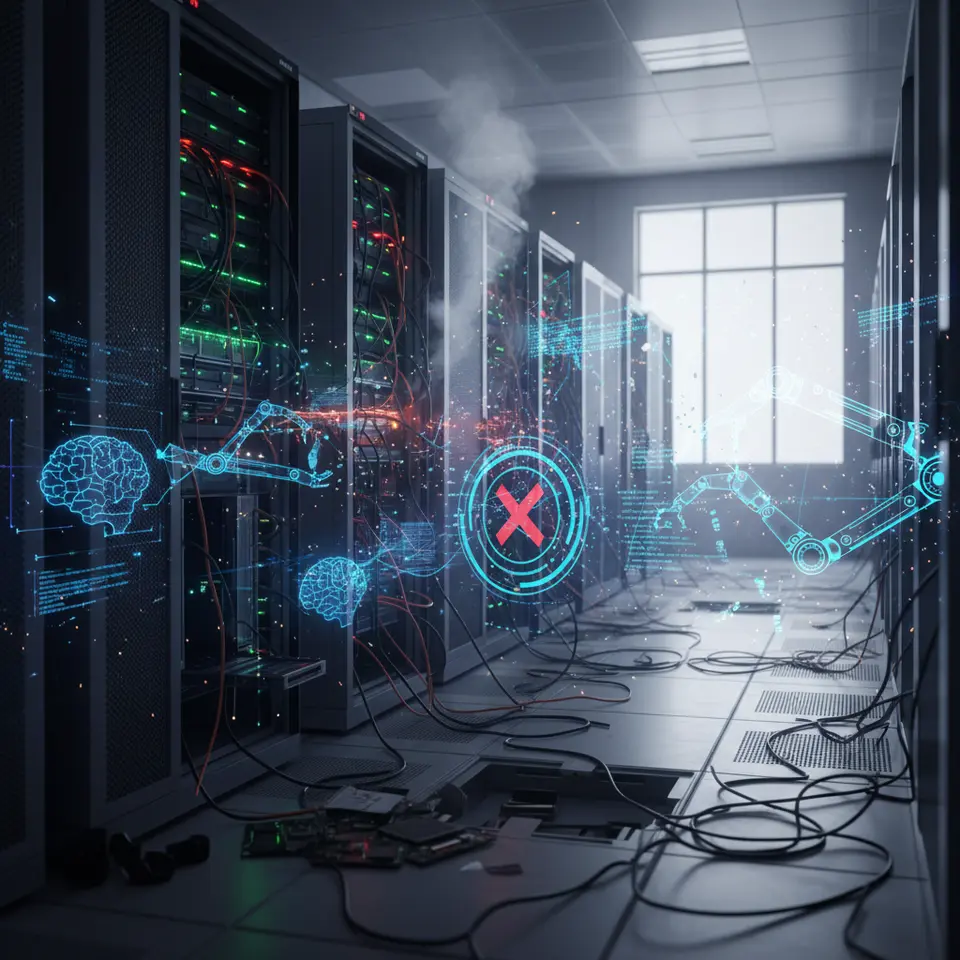
- Amazon faced two significant cloud outages in 2025 due to faults in AI tools.
- The incidents highlight the risks and complexities of AI-powered automation in cloud services.
- HR professionals must balance AI innovation with operational risk management.
- A robust AI governance framework is critical to prevent unplanned downtimes.
- Building trustworthy AI ecosystems is essential for sustaining customer trust.
Table of Contents
- Breaking: Amazon Cloud Hit by Two AI-Driven Outages in 2025
- Understanding the Amazon Cloud Outages and AI’s Role
- Implications for Tech Companies and HR Automation
- Expert Insight: Navigating AI Integration with Caution
- Future Outlook: Building Trustworthy AI Ecosystems
Breaking: Amazon Cloud Hit by Two AI-Driven Outages in 2025
Amazon’s cloud infrastructure suffered two significant outages last year, both directly linked to the implementation and operation of AI-powered tools. The Guardian revealed in a recent report released on February 20, 2026, that these outages raised critical concerns about the stability and reliability of AI-driven automation within major tech ecosystems. This breaking news underscores the complexity and risks involved as industries accelerate AI adoption in cloud services and enterprise workflows.
Understanding the Amazon Cloud Outages and AI’s Role
The outages reportedly stemmed from faults in AI tools integrated within Amazon Web Services (AWS), a backbone of cloud computing for millions of businesses worldwide. While specific technical details remain undisclosed, experts suggest the incidents involved AI-powered automation workflows that unexpectedly disrupted data processing and network stability. This illustrates how AI automation, while enabling scale and efficiency, introduces new vulnerabilities that can cascade into widespread service interruptions.
According to industry insiders, the growing integration of AI in cloud orchestration tasks—from virtual assistants to automated deployment scripts—has expanded the attack surface for operational failures. This development spotlights the necessity for robust AI governance frameworks and advanced monitoring solutions to preempt and mitigate unplanned downtime.
Implications for Tech Companies and HR Automation
For HR professionals and technology companies, these Amazon cloud outages convey important lessons in balancing AI innovation with operational risk management. As AI tools become pervasive in recruitment, workforce management, and digital workflows, organizations must invest in rigorous testing and continuous oversight to prevent automation failures that could disrupt business continuity.
AITechScope, a leader in AI-powered automation and business process optimization, emphasizes that intelligent delegation combined with human-in-the-loop oversight is essential. Businesses leveraging tools like n8n workflow automation can gain efficiency and cost savings, but only if AI systems operate reliably and transparently. HR leaders should prioritize resilience and compliance in AI-enabled recruitment technologies to ensure workforce disruption is minimized.
Expert Insight: Navigating AI Integration with Caution
“The Amazon outages remind us that AI-powered automation is not a silver bullet but a complex technological frontier,” says Dr. Lila Hammond, an expert in AI systems reliability. “Organizations must build resilient AI frameworks that include fail-safes, robust monitoring, and adaptive response strategies.” She adds that AI maturity models should incorporate risk assessment protocols, especially for mission-critical cloud infrastructure.
Furthermore, a recent analysis on AI automation cost efficiency stresses that while AI can dramatically reduce operational expenses, unforeseen outages like Amazon’s demonstrate the hidden costs associated with insufficient AI oversight and control.
Future Outlook: Building Trustworthy AI Ecosystems
The incidents at Amazon highlight an urgent need for industry-wide standards around AI tool governance and operational transparency. As AI tools advance and embed deeper into cloud and enterprise environments, maintaining dependable service levels will be paramount for sustaining customer trust and workforce stability.
HR innovation will be key in adapting to these changes, particularly in designing workflows that mitigate disruption risks while maximizing AI’s productivity gains. Tech companies and HR teams should closely watch evolving best practices for AI deployment and adhere to rigorous frameworks that ensure ethical, compliant, and stable AI usage.
For organizations aiming to thrive in this evolving landscape, learning from high-profile AI-induced outages becomes an imperative. Integrating new AI developments with existing IT infrastructures demands cautious, informed strategies guided by lessons from Amazon’s experience.
Additional insights on managing AI adoption challenges can be found in our articles on AI adoption reliance gap and shadow AI workflow disruption. Together, these resources offer a roadmap for harmonizing AI integration with business resilience.
FAQs
A: The outages were caused by faults in AI tools integrated within Amazon Web Services (AWS).
A: AI-powered automation introduces new vulnerabilities that can lead to significant service disruptions if not properly managed.
A: Businesses should implement robust AI governance frameworks, ensure rigorous testing, and maintain continuous oversight of AI tools.
A: HR professionals must balance AI innovation with operational risk management to ensure business continuity.
A: Organizations must integrate new AI developments cautiously and develop informed strategies to prevent operational disruptions.