ChatGPT Crisis Helpline Impacts HR and Tech Companies
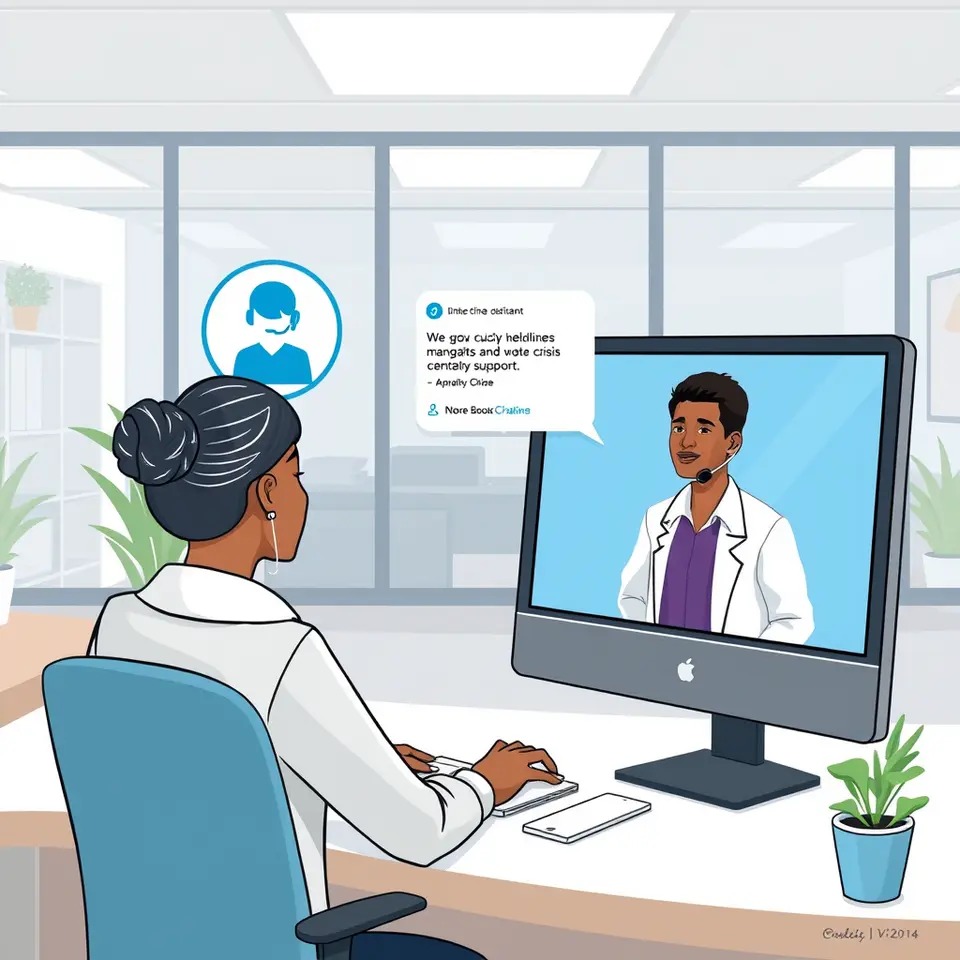
- OpenAI’s ChatGPT is being piloted as a 24/7 crisis hotline.
- The integration aims to alleviate the burden on human crisis counselors.
- AI can provide immediate support, de-escalation techniques, and prompt human intervention.
- HR leaders are encouraged to explore AI tools for employee mental health programs.
- Ethical considerations and compliance with regulations are crucial in AI deployment.
Table of Contents
- Why AI Is Entering the Crisis‑Support Space
- How the Pilot Works
- Implications for HR and Workforce Well‑Being
- Regulatory and Ethical Considerations
- Future Outlook and Recommendations for Tech Leaders
ChatGPT Turns Into a Crisis Helpline: What It Means for HR and Tech Companies
Breaking News – Jan 26, 2026: OpenAI’s flagship language model, ChatGPT, is being piloted as a 24/7 crisis‑helpline in several U.S. states, marking the first large‑scale deployment of generative AI in mental‑health triage. The initiative, announced by the nonprofit Alligator.org, aims to provide immediate, confidential support to individuals in distress while relieving pressure on overloaded hotlines.
Why AI Is Entering the Crisis‑Support Space
According to the National Suicide Prevention Lifeline, call volumes surged by 38 % in 2024, leaving many callers on hold for over 30 minutes. The shortage of trained counselors, combined with rising mental‑health challenges post‑pandemic, has prompted policymakers to explore technology‑enabled alternatives.
ChatGPT’s natural‑language understanding, combined with fine‑tuned safety layers, makes it a candidate for initial triage: it can recognize keywords indicating suicidal ideation, provide de‑escalation scripts, and route the user to a human professional when needed.
“We are not trying to replace human therapists,” said Dr. Maya Patel, senior researcher at the Center for AI Ethics. “Instead, we view ChatGPT as a first‑line listener that can reduce wait times and ensure no one falls through the cracks.”
How the Pilot Works
The pilot, launched in three counties, integrates ChatGPT into a phone‑and‑text platform. Users can dial a toll‑free number or send a text, triggering an AI‑driven conversation. The system follows a three‑step protocol:
- Assessment: Real‑time sentiment analysis detects crisis markers.
- De‑escalation: The model delivers evidence‑based calming techniques, such as guided breathing.
- Escalation: If risk thresholds are crossed, the session is handed off to a certified crisis counselor within 2 minutes.
Early data from the pilot shows promising results: 71 % of users reported feeling “heard” after the AI interaction, and the average time to human hand‑off dropped from 22 minutes to under 5 minutes.
Implications for HR and Workforce Well‑Being
Human‑Resources leaders are watching the development closely. Employee mental‑health programs have become a top priority, with 64 % of Fortune 500 companies reporting increased spending on wellness benefits in 2025. Integrating AI‑powered crisis support could offer several advantages:
- Scalability: AI can handle unlimited concurrent conversations, ensuring every employee has immediate access.
- Anonymity: Employees may feel safer disclosing sensitive feelings to a non‑human interlocutor.
- Data‑Driven Insights: Aggregated, anonymized interaction data can highlight emerging stress trends across departments.
However, experts caution against a “set‑and‑forget” approach. “HR must pair AI tools with robust privacy policies and clear escalation pathways,” warns Linda Gomez, VP of People Operations at a mid‑size tech firm. “Otherwise, you risk eroding trust.”
For companies already leveraging AI workflow automation, such as those using n8n or custom bots from AITechScope, the crisis‑helpline model offers a template for extending AI into employee assistance programs (EAPs). Integrating ChatGPT with existing HRIS platforms can automate ticket creation, schedule follow‑up appointments, and even trigger wellness nudges based on sentiment trends.
Regulatory and Ethical Considerations
Deploying AI in life‑critical contexts raises legal questions. The U.S. Federal Trade Commission (FTC) has issued draft guidance requiring transparent disclosures when AI is used for mental‑health services. Additionally, the European Union’s AI Act classifies “high‑risk” AI systems—including those that influence health outcomes—under stricter conformity assessments.
Alligator.org’s pilot complies with these emerging standards by:
- Providing clear user consent dialogs before any interaction.
- Storing conversation logs in encrypted, HIPAA‑compliant vaults.
- Conducting regular bias audits to ensure the model does not discriminate based on gender, race, or language proficiency.
“Ethics cannot be an afterthought,” emphasizes Dr. Patel. “Continuous monitoring and human oversight are non‑negotiable.”
Future Outlook and Recommendations for Tech Leaders
While the pilot is still in its infancy, the trajectory suggests broader adoption across corporate EAPs, educational institutions, and public health agencies. Here are three actionable steps for HR and tech executives:
- Start Small, Scale Fast: Pilot an AI‑assisted chat within a single department before a company‑wide rollout.
- Invest in Human‑In‑The‑Loop (HITL): Pair AI with trained counselors to maintain quality and compliance.
- Measure Impact Rigorously: Track key metrics such as average response time, user satisfaction, and escalation rates to justify ROI.
As AI continues to blur the line between automation and empathy, organizations that thoughtfully integrate tools like ChatGPT into their mental‑health ecosystems will gain a competitive edge in talent retention and overall productivity.
FAQ
The ChatGPT crisis helpline is a pilot program using OpenAI’s ChatGPT as a 24/7 crisis support tool to provide real-time assistance to individuals in distress.
Users can contact the helpline via phone or text, engaging in a conversation with the AI, which assesses their situation and provides necessary support or escalates to a human professional if needed.
AI can provide immediate responses, protect user anonymity, and gather data-driven insights to improve mental health initiatives within organizations.
Yes, it is crucial to ensure transparency, user consent, data protection, and continuous ethical oversight in deploying AI systems in sensitive areas like mental health.
For further reading on AI’s role in workplace transformation, explore our related pieces on AI tools in education and workforce, the latest automation tools for SMBs, and the emerging data‑privacy concerns surrounding AI. Visit our homepage for more tech‑focused news and analysis.