Google AI Detection Tool Stumped by Deepfake
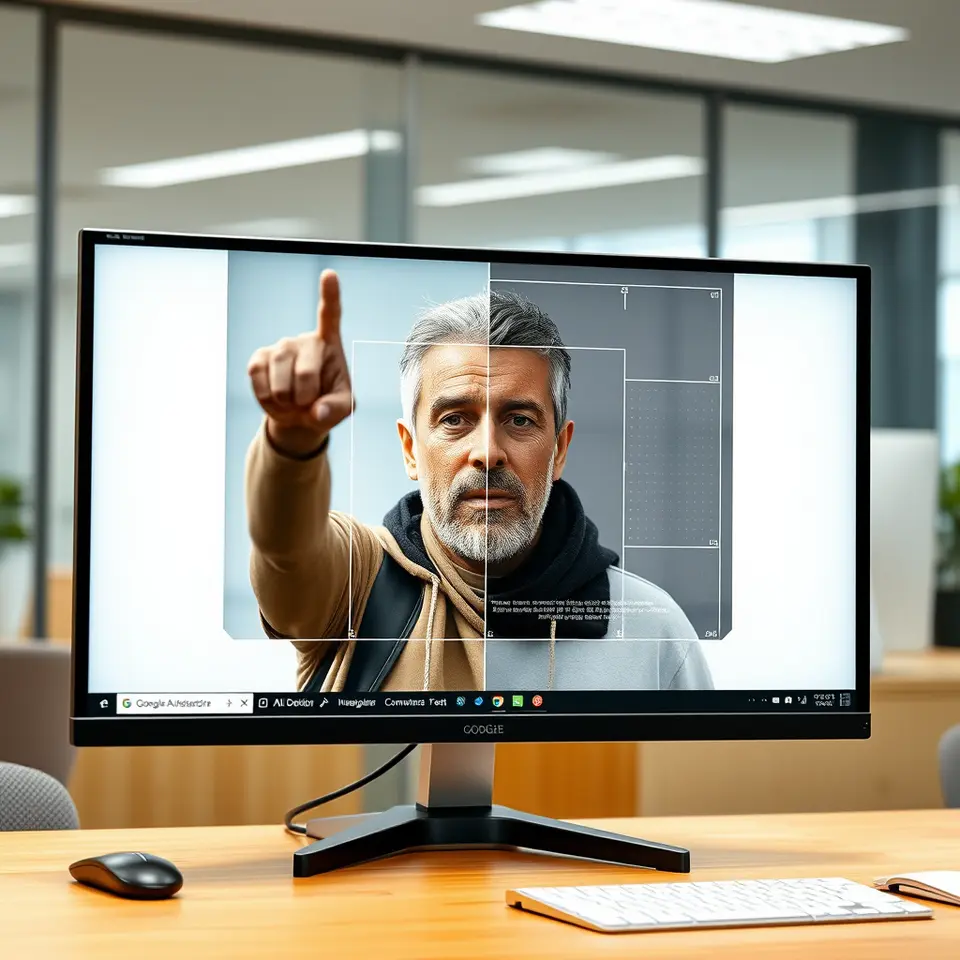
- Google’s AI detection tool was unable to classify a viral image of a crying activist.
- The incident raises concerns about the reliability of AI verification in hiring processes.
- There is a growing need for human oversight in AI-driven verification systems.
- Continuous updates and cross-functional governance are essential for AI detection success.
- The landscape of verification technology is rapidly evolving, necessitating proactive measures.
- What Happened? The Photo, the Tool, the Stalemate
- Technical Deep‑Dive: How Google’s Detector Works (and Why It Struggles)
- Why This Matters to HR and Recruitment Technology
- Industry Implications and the Road Ahead
What Happened? The Photo, the Tool, the Stalemate
Breaking News – 25 January 2026 – In a surprising turn of events, Google’s own AI‑powered image‑verification system could not conclusively decide whether a widely circulated photo of a crying activist was fabricated by artificial intelligence. The episode, first reported by The Intercept, has ignited a fresh wave of skepticism around the reliability of AI‑based authenticity tools, a concern that resonates deeply with HR professionals, recruitment technologists, and enterprise leaders who increasingly rely on automated verification in hiring pipelines.
Technical Deep‑Dive: How Google’s Detector Works (and Why It Struggles)
Google’s detection suite leverages a combination of convolutional neural networks (CNNs), frequency‑domain analysis, and metadata cross‑checking. The system was trained on millions of synthetic and authentic images, achieving an average 92% accuracy in controlled tests. However, the photo of the activist appears to have been processed through a newer diffusion model that adds subtle noise patterns designed to evade conventional detectors.
According to Dr. Maya Patel, an AI ethics researcher at Stanford, “The arms race between generative AI and detection algorithms is accelerating. When a model like Stable Diffusion 3.0 introduces adaptive watermarking, traditional classifiers can miss the cues they rely on.”
Google’s internal memo, leaked to the press, reveals that the tool’s confidence threshold is set at 85% before an automated label is applied. The ambiguous result fell just below that line, prompting the system to defer to human analysts – a process that can take days, if not weeks.
Why This Matters to HR and Recruitment Technology
HR departments have been quick adopters of AI‑driven verification tools, from background‑check automation to video interview analysis. A recent survey on AI adoption gaps showed that 68% of talent acquisition leaders plan to integrate AI‑based image verification into their candidate screening workflows by the end of 2026.
John Liu, Head of Talent Acquisition at a multinational fintech firm, explains, “We already use AI to validate ID documents and detect deepfakes in video interviews. If the technology can’t reliably flag a high‑profile image, it raises questions about its suitability for vetting candidate media.”
The incident underscores three practical concerns for HR tech teams:
- Over‑reliance on black‑box models: Without transparent confidence scores, recruiters may either miss fraudulent content or flag legitimate media, leading to bias and compliance risks.
- Need for human‑in‑the‑loop (HITL) safeguards: Organizations should maintain a verification layer where trained analysts review borderline cases, especially for high‑stakes hiring decisions.
- Regulatory exposure: Emerging data‑privacy regulations, such as the EU’s AI Act, require demonstrable accuracy for automated decision‑making tools. Ambiguous outcomes could trigger audits.
For companies seeking to balance efficiency with accuracy, integrating multi‑modal verification – combining facial‑recognition, voice‑analysis, and provenance metadata – may provide a more robust defense against sophisticated deepfakes.
Industry Implications and the Road Ahead
The Google episode is a reminder that AI detection is not a solved problem. As generative models become more accessible, the likelihood of counterfeit media entering corporate pipelines – from fraudulent CV photos to manipulated interview footage – will rise.
Experts recommend a three‑pronged strategy for tech firms and HR departments:
- Continuous model updates: Partner with AI vendors that commit to regular retraining cycles based on the latest generative techniques.
- Cross‑functional governance: Establish AI ethics committees that include legal, HR, and technical stakeholders to evaluate detection tool performance and set escalation protocols.
- Employee education: Train hiring managers to recognize signs of synthetic media and to understand the limitations of automated tools.
In the broader tech ecosystem, the incident may accelerate investment in next‑generation detection methods, such as blockchain‑based provenance tracking and watermark‑embedding standards. Companies like OpenAI and Adobe are already piloting solutions that embed cryptographic signatures directly into generated assets, offering a potential path to verifiable authenticity.
For a deeper look at how AI tools are reshaping productivity, see our coverage of AI tools driving scientific progress. To understand the privacy challenges these technologies raise, read our analysis on AI data privacy concerns. And for the latest on AI’s impact across industries, visit our homepage.
As the line between authentic and synthetic blurs, the onus is on organizations to adopt a vigilant, layered approach to verification. Google’s own stumble may serve as a cautionary tale – and a catalyst for more resilient, transparent AI governance in the workplace.
Q1: What is the significance of Google’s AI detection tool failure?
The incident reveals vulnerabilities in AI verification systems and raises concerns about their reliability in critical areas such as recruitment and hiring.
Q2: How does Google’s AI detection tool work?
It employs convolutional neural networks, frequency‑domain analysis, and metadata cross‑checking, but struggles with more sophisticated generative models.
Q3: Why is human oversight important in AI verification?
Human analysts can provide crucial checks and balances on AI outputs, especially in high-stakes or ambiguous situations.