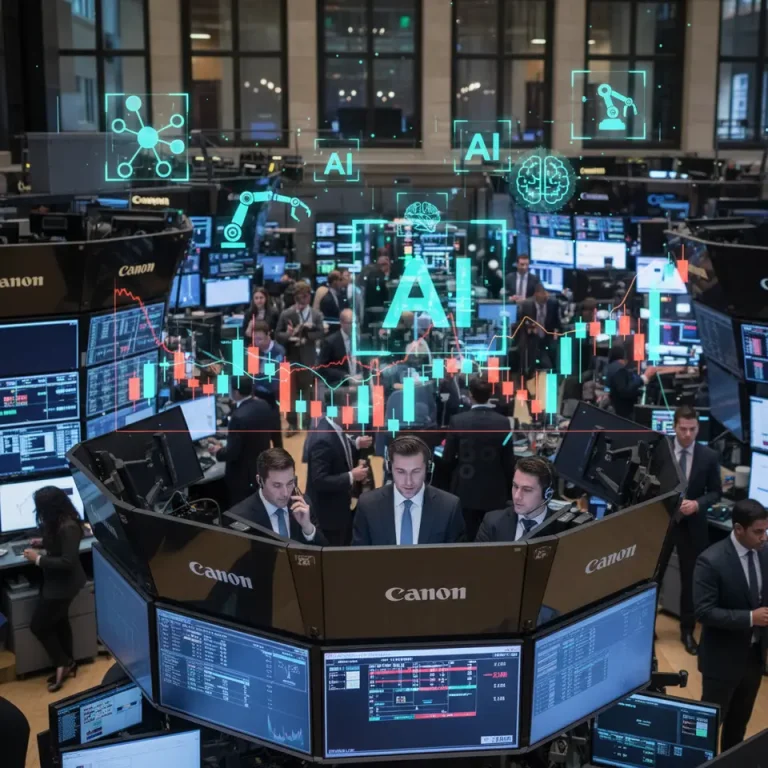
AI Media Buying Automation: 6 Key Insights for 2026

- AI integration is revolutionizing media buying and agency operations.
- C-suite leaders are leveraging AI for strategic media planning and execution.
- Workforce dynamics are transforming, emphasizing AI literacy and collaboration.
- The future of media buying is data-driven and reliant on ethical AI practices.
- Agencies must balance innovation with workforce support and governance.
- AI Integration Takes Center Stage at DMBS Spring 2026
- AI Media Buying Automation Drives Strategic and Operational Efficiency
- Practical Insights for HR and Tech Firms: Workforce Transformation
- Looking Ahead: Future Trends and Industry Implications
AI Integration Takes Center Stage at DMBS Spring 2026
The DMBS Spring 2026 event has put artificial intelligence at the forefront of media buying and agency operations. Industry insiders overheard throughout the conference revealed a clear trend: AI is now embedded from the highest echelons of leadership down to every operational process within agencies. This sweeping adoption marks a fundamental shift in how media buying and digital agencies are structuring their workflows, strategy, and client engagements.
AI Media Buying Automation Drives Strategic and Operational Efficiency
Artificial intelligence’s impact is felt “from the top to the bottom” of agencies, shaping decision-making and tactical execution. C-suite leaders are increasingly relying on AI-powered analytics and forecasting tools to refine media strategies with precision and agility. Meanwhile, automation solutions manage campaign execution, budget allocation, and performance tracking in real time. This comprehensive AI enablement streamlines complex workflows, reduces human error, and scales media buying efficiency.
A prominent player exemplifying this is AITechScope, specializing in AI-powered automation and business process optimization. The company helps enterprises develop intelligent workflows incorporating tools like n8n, an open-source workflow automation platform. By leveraging AI-driven virtual assistants and automation, businesses achieve both cost reduction and operational scalability.
Practical Insights for HR and Tech Firms: Workforce Transformation
The rise of AI-driven automation is also reshaping workforce dynamics within agencies and tech companies. For HR professionals, understanding how AI augments roles, redistributes tasks, and creates new workforce demands is critical. Staff training programs now must emphasize AI literacy and managing collaborative human-AI workflows.
Tech firms developing or implementing AI in media buying and business automation should prioritize transparency and ethical AI use to maintain trust and compliance. Effective adoption involves combining AI’s efficiency gains with human creativity and critical judgment, rather than replacing employees outright.
Looking Ahead: Future Trends and Industry Implications
The market momentum towards AI-infused media buying and workflow automation is expected to accelerate throughout 2026 and beyond. Agencies embracing AI at all organizational layers are positioned to outpace competitors by delivering faster, more data-driven campaigns and reducing operational costs.
However, successful integration requires balancing AI innovation with comprehensive workforce support and governance frameworks. The continued evolution of AI tools for recruitment, process automation, and business intelligence signals a dynamic future where AI reshapes the media and technology landscape comprehensively.
Industry leaders and HR professionals aiming to stay ahead should monitor developments such as AI-powered reporting, workflow optimization, and governance best practices. For additional insights into AI automation and workforce innovation, read our detailed analysis on AI automation services business efficiency, explore challenges of shadow AI workflow disruption, and understand how AI workforce automation is changing recruitment.