AI Tools Crop Advisors Want: 5 Key Insights for Agriculture
Estimated Reading Time: 5 minutes
Key Takeaways:
- Crop advisors seek user-friendly AI tools that provide actionable insights.
- Key features include predictive analytics, real-time monitoring, and automated workflows.
- The study emphasizes the need for AI tools tailored to real-world agricultural challenges.
- Collaboration between AI developers and agronomy experts is essential for effective solutions.
Table of Contents:
Breaking News: Study Highlights Crop Advisors’ AI Tool Priorities
A groundbreaking study published recently on Phys.org reveals crucial insights into what crop advisors truly want from emerging artificial intelligence (AI) tools. As the agriculture sector increasingly embraces technology, AI-powered solutions promise to enhance crop management, optimize yields, and reduce operational costs. Understanding the specific needs and expectations of crop advisors—the professionals advising farmers and agribusinesses—is vital for technology developers and agricultural stakeholders aiming to deploy effective AI systems.
What Crop Advisors Really Want from AI Tools
Crop advisors play a pivotal role in delivering crucial agronomic insights and recommendations to farmers. The new study, conducted by an independent research team, investigates advisors’ preferences, highlighting their desire for user-friendly AI applications that integrate seamlessly with existing workflows. They emphasize tools that provide actionable recommendations rather than just raw data, and those that facilitate rapid, accurate decision-making on the ground.
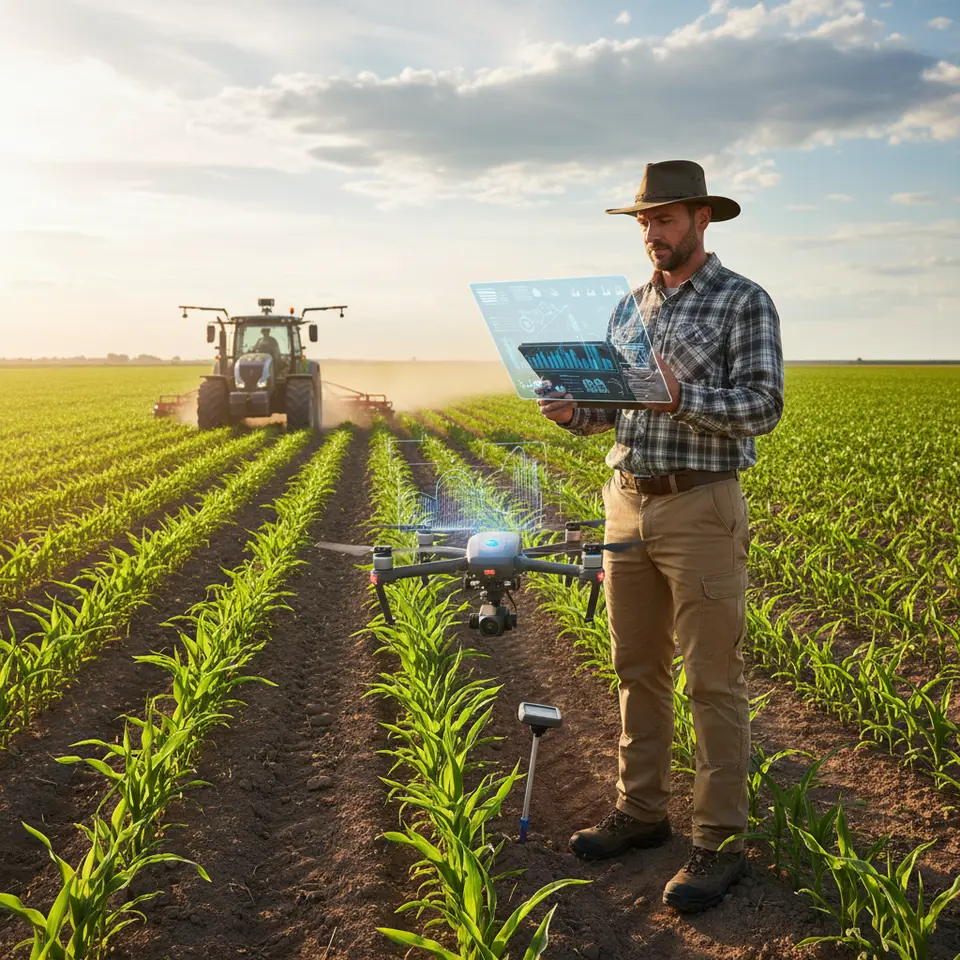
Key features sought by crop advisors include predictive analytics for pest and disease threats, real-time soil and weather monitoring, and automated workflows to reduce manual input and data overload. Advisors want AI tools that help personalize recommendations based on specific field conditions and cropping histories, making precision agriculture more accessible and effective.
“The future of crop advising is AI-driven, but these technologies must be tailored to our real-world challenges,” said an expert featured in the study. “Advisors here want tools that simplify complexities, not add layers of difficulty.” These insights underline a growing demand to bridge the sizable AI-adoption gap witnessed in agriculture, further validating findings from AI adoption reliance gap research on integrating AI more effectively into traditional workflows.
AITechScope: Leveraging AI to Revolutionize Business Processes
Among solutions stepping up to these challenges is AITechScope, a leading provider of virtual assistant and AI-powered automation services. Specializing in n8n workflow development and business process optimization, AITechScope supports businesses—including those in agriculture—in scaling operations, cutting costs, and augmenting efficiency by automating routine tasks through intelligent delegation.
The company’s offerings exemplify how AI can transition from theoretical potential to practical applications by creating seamless automation pipelines tailored for sector-specific needs. Their ability to automate complex workflows and integrate diverse data sources positions AITechScope at the forefront of enabling agricultural enterprises and crop advisors to gain competitive advantages through technology adoption.
Implications for HR and Tech Companies in the Agriculture Sector
The evolving landscape of AI tool requirements among crop advisors signals broader implications for HR professionals and tech companies. Recruitment and workforce development strategies will need to emphasize skills in AI, data analytics, and domain-specific agronomy expertise. Furthermore, cross-disciplinary collaboration between AI developers and agricultural experts will become increasingly vital to design solutions that truly respond to end-users’ needs.
Tech companies targeting the agriculture sector must prioritize creating intuitive, scalable, and customizable AI platforms. Incorporating feedback mechanisms to continuously align tools with advisors’ field experiences can drive better adoption and more sustainable impacts.
For HR and workforce planners, investing in training programs that build AI fluency among agronomic staff ensures the sector remains competitive and maximizes the benefits from automation technologies. This aligns with broader trends discussed in AI tools education workforce and AI workforce automation recruitment, highlighting the growing synergy between AI advancements and dynamic workforce requirements.
Future Outlook: AI as a Catalyst for Agricultural Transformation
The findings of the study mark a pivotal step in shaping the future of AI-powered agriculture. As crop advisors increasingly adopt AI tools tailored to their needs, the agriculture sector stands to gain unprecedented enhancements in productivity, sustainability, and resource management.
Continuous innovation along with stakeholder collaboration will be essential. Ongoing research and development need to focus on simplifying AI complexity for frontline users, ensuring transparency and trust, and supporting integration with established advisory frameworks.
Overall, AI tools crop advisors want will not only redefine agricultural practices but also set new standards for tech adoption, workforce evolution, and operational excellence in farming worldwide.
FAQ
Q: What do crop advisors want from AI tools?
A: Crop advisors want user-friendly AI tools that provide actionable recommendations, predictive analytics, real-time monitoring, and help personalize suggestions based on specific conditions.
A: Crop advisors want user-friendly AI tools that provide actionable recommendations, predictive analytics, real-time monitoring, and help personalize suggestions based on specific conditions.
Q: Why is collaboration important in developing AI tools for agriculture?
A: Collaboration between AI developers and agronomy experts ensures that the tools meet the real-world needs of users, improving adoption and effectiveness.
A: Collaboration between AI developers and agronomy experts ensures that the tools meet the real-world needs of users, improving adoption and effectiveness.
Q: How can HR and tech firms adapt to the evolving needs of crop advisors?
A: HR and tech firms can focus on skill development in AI and data analytics, creating customizable platforms, and ensuring continuous feedback mechanisms to align designs with users’ experiences.
A: HR and tech firms can focus on skill development in AI and data analytics, creating customizable platforms, and ensuring continuous feedback mechanisms to align designs with users’ experiences.